· Updated · Venture Capital Tracker Editorial · investment-strategies
Temporal's $300M Series D: Durable Execution Is the Unsexy AI Infrastructure Winner
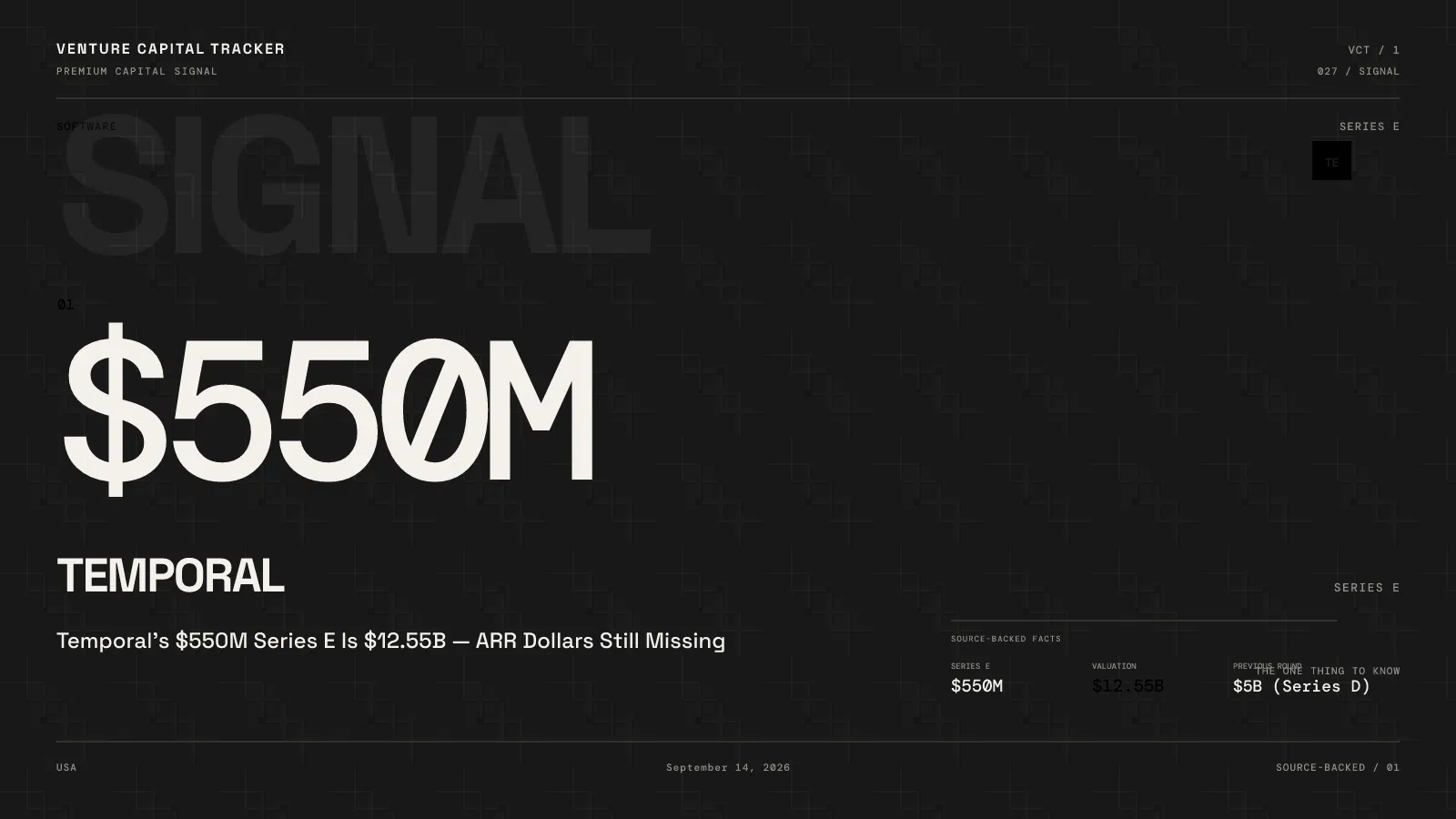
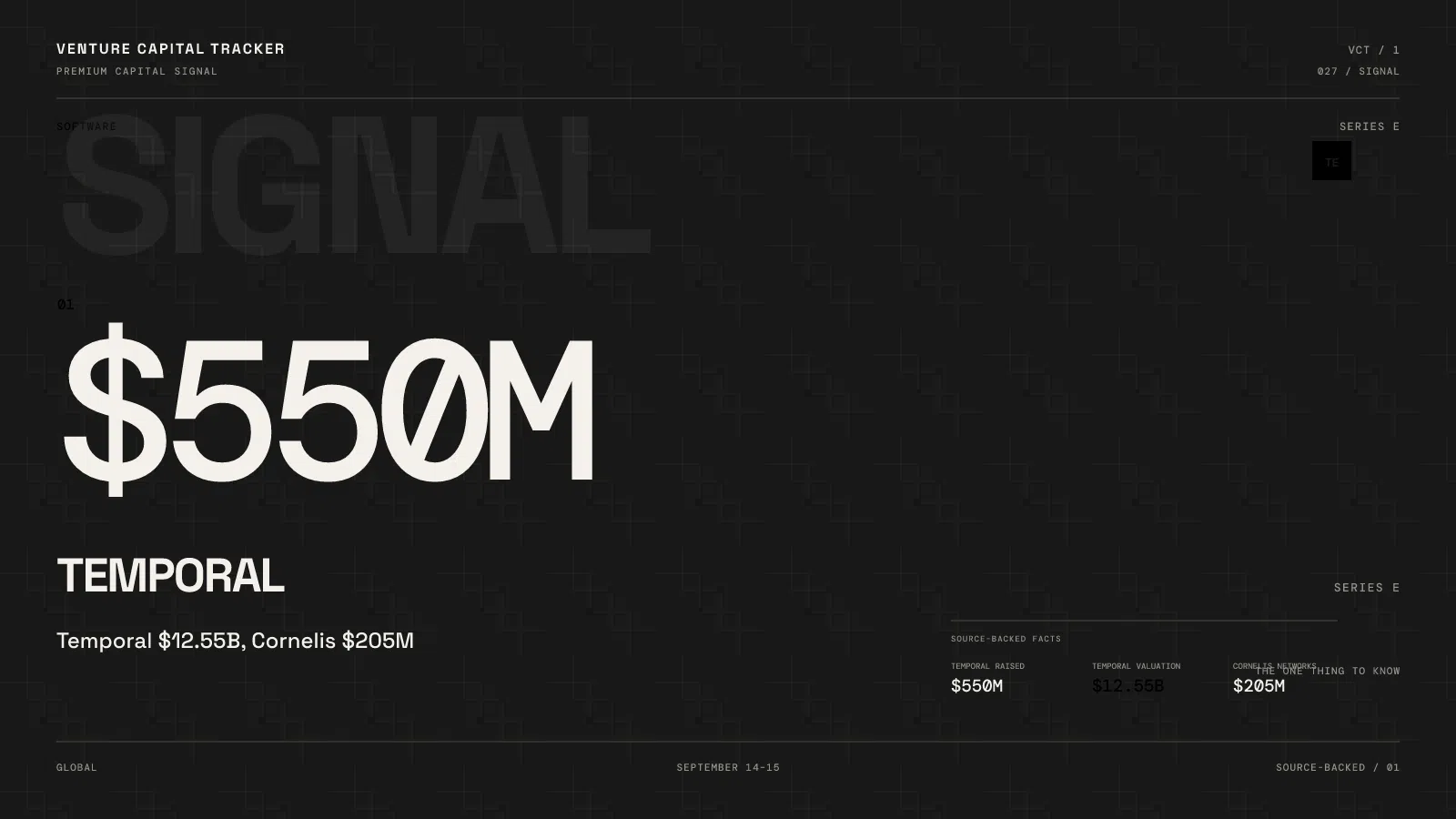
February 2026 Series D was $300 million at $5 billion post-money, a16z-led. That mark is historical. On September 14, 2026 Temporal announced a $550 million Series E at $12.55 billion.
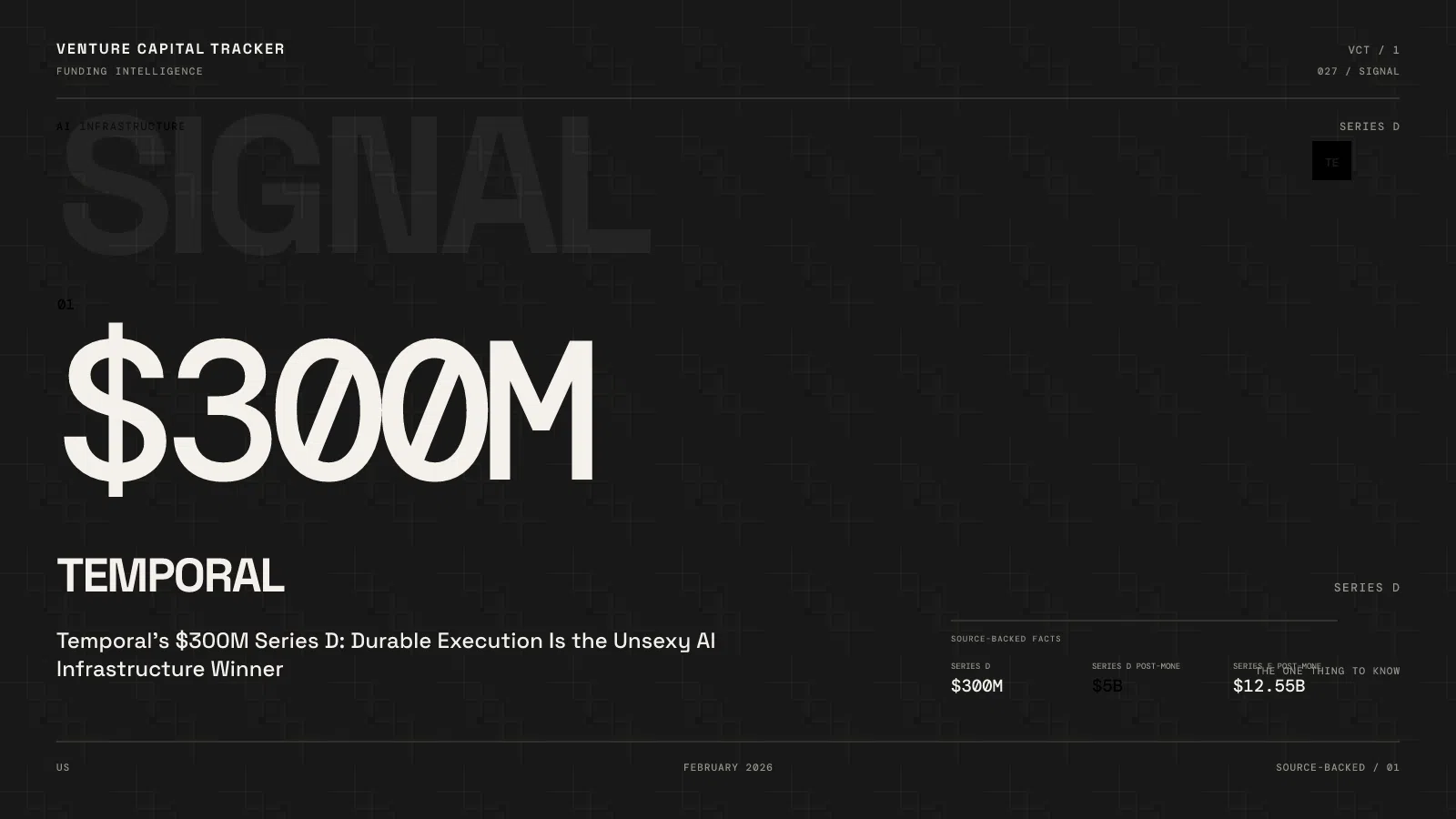
Temporal, the Seattle-based durable execution platform, raised a $300 million Series D at $5 billion post-money on February 17, 2026, led by Andreessen Horowitz (company). That is the historical D. On September 14, 2026 Temporal announced a $550 million Series E at $12.55 billion — see the Series E memo. August 18 Bloomberg talks are superseded. Last verified September 15, 2026.
Rillet named Temporal as a customer in its August 17 Series C.
The problem this startup is attacking
AI agents and background workflows routinely run for minutes to hours, call dozens of tools, and cross process/machine boundaries. Handling retries, partial failures, and state without hand-rolled logic is one of the biggest hidden costs in production AI engineering.
Why this is a live problem now
- Agentic workloads are exploding — each agent run is, in effect, a distributed workflow.
- Cloud-native data stacks (ETL, payments, messaging) still require reliable orchestration.
- Platform teams want a single primitive for both transactional business workflows and AI tool-chains.
Competitive map
- AWS Step Functions, Google Workflows, Azure Durable Functions.
- Inngest, Trigger.dev, Restate (newer entrants).
- Orchestration stacks: Airflow, Dagster, Prefect.
Market signal (the number to remember)
- A $300M Series D in a non-ML engineering platform is evidence that reliability infrastructure is still a durable, fundable space alongside flashier AI rounds.
Practical takeaway (operator + investor)
- Operators: Evaluate durable-execution adoption against cost of engineer time spent debugging flaky distributed systems.
- Investors: Infrastructure layers that intersect with agentic AI usage — observability, retries, orchestration — remain strong defensible bets.
Sources
- Puget Sound Business Journal: https://www.bizjournals.com/seattle/news/2026/04/14/venture-capital-puget-sound-ascend-pitchbook.html
- GeekWire Seattle Q1 2026: https://www.geekwire.com/2026/bigger-checks-fewer-bets-seattle-startup-deal-count-drops-to-lowest-level-since-2020/
Last updated:
Editorial note: AI tools assisted with research, structure, or drafting. Venture Capital Tracker retains human editorial responsibility for factual accuracy, relevance, and source quality before publication.