· Venture Capital · 4 sources · Verified
X-Bow Systems Closed $105M+ With a Lockheed Supplier Pact
X-Bow's $105M-plus Series B came with a Lockheed Martin supplier agreement. The financing, manufacturing model and closest propulsion rivals explained.

By VCT Editorial
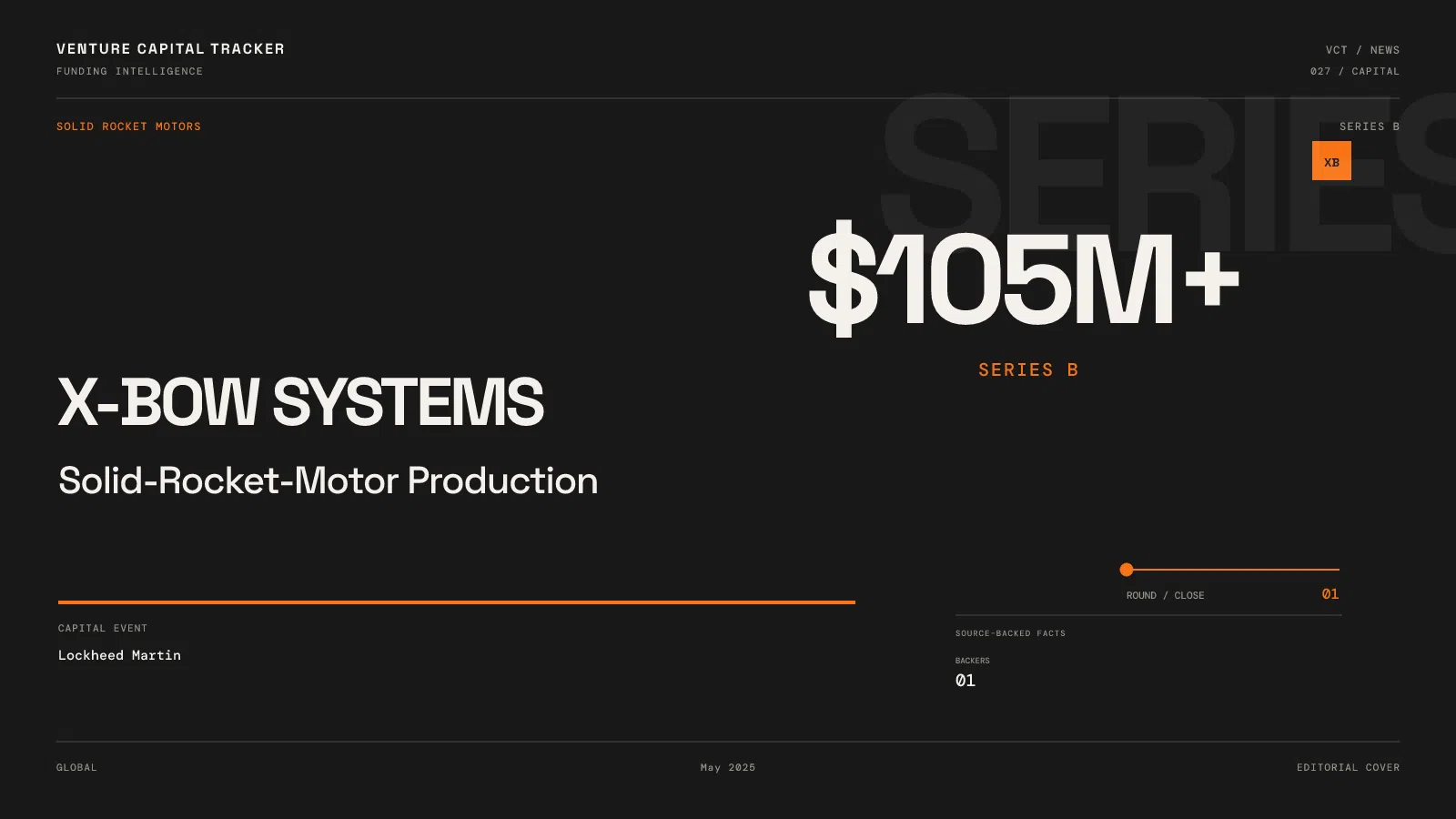
X-Bow Systems closed a Series B of more than $105 million on May 12, 2025, pairing the financing with a strategic agreement that could make it an independent solid-rocket-motor supplier to Lockheed Martin. Lockheed led the strategic portion; Razor's Edge Ventures, Crosslink Capital, Balerion Space Ventures, Boeing Ventures and five other investors also participated. The company did not disclose its valuation, exact round size or individual allocations.
The combination matters more than the headline amount. A propulsion startup needs capital to build hazardous-materials facilities, qualify motors and carry inventory, but it also needs programs that can absorb that capacity. The Lockheed agreement gives X-Bow a potential route from manufacturing technology into a major defense prime's current and future systems.
What X-Bow is manufacturing
X-Bow makes solid propellant grains, modular rocket motors and small launch vehicles. Its Advanced Manufacturing of Solid Propellant process uses additive manufacturing to form energetic material, an approach the company says can reduce tooling and support faster design changes than conventional cast-and-cure production.
For a customer, the intended workflow is straightforward: specify the motor's performance and geometry, use a common manufacturing platform to produce a tailored propellant grain, then qualify that motor for a weapon or launch system. X-Bow also promotes a mobile production concept called Rocket Factory in a Box for distributed energetics manufacturing.
The company said the Series B would expand production capacity, innovation and its Texas energetics campus south of Austin. It also claimed integration into more than eight strategic and tactical solid-rocket-motor programs and a multiyear backlog in hypersonic component testing. Those are company statements; revenue, margins, booked value and production volume were not disclosed.
Why Lockheed invested alongside a supplier agreement
Lockheed Martin Ventures said X-Bow's technology fits its strategy of supporting national-security capabilities. The follow-on investment came with a commercial relationship: Lockheed agreed to help establish X-Bow as an independent supplier of solid rocket motors and related services.
That structure shows why propulsion financing has accelerated. Defense customers want more suppliers, while primes need qualified capacity outside the incumbent base. The capital funds factories and engineering; the strategic agreement can help direct those assets toward real programs. It is still not a purchase order, and qualification remains a separate hurdle.
The closest venture-backed comparisons
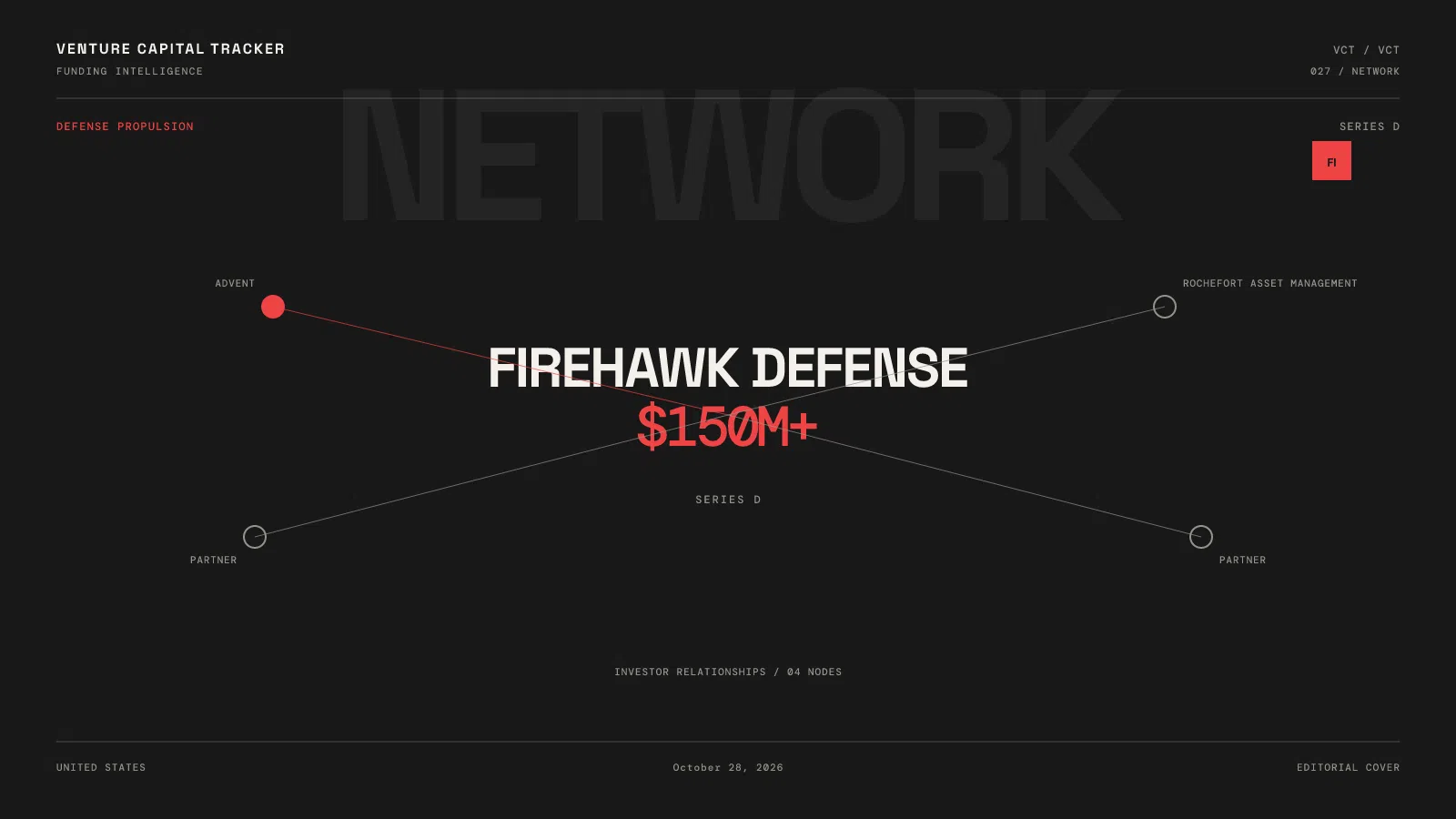
Firehawk Defense's $150 million-plus Series D is the closest manufacturing comparison. Firehawk uses thermoplastic feedstock for small-diameter motors and entered its round at a valuation above $1.4 billion.
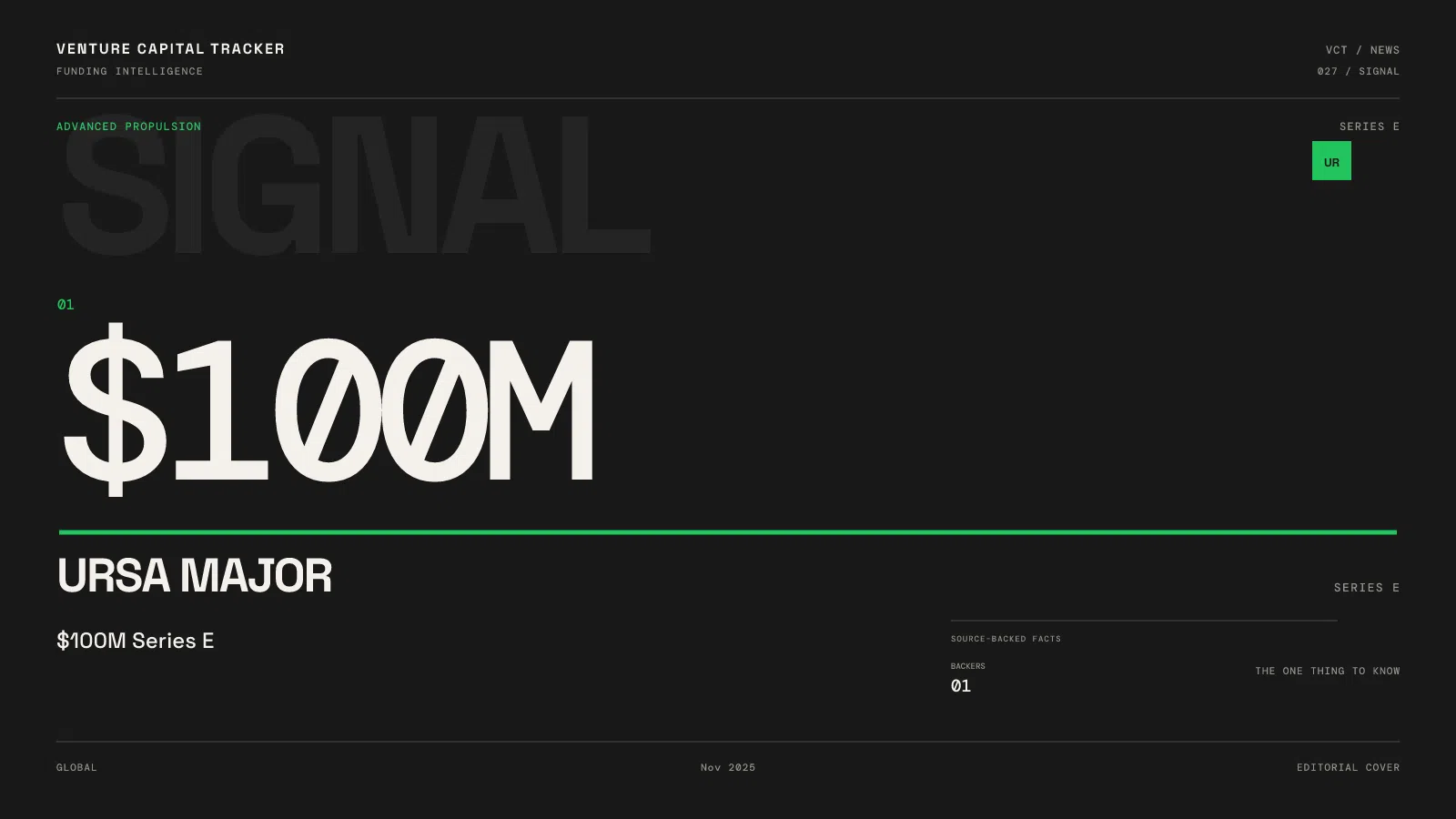
Ursa Major's $100 million Series E included a separate $50 million of debt commitments and covers solid motors, hypersonics and space propulsion. Castelion's 2026 financing is broader again because Castelion builds complete hypersonic weapons.
X-Bow's next evidence should be operational: qualified programs, factory output, yield, delivery performance and revenue attributable to propulsion production. The Series B finances a credible route into the defense supply chain, but the supplier agreement becomes valuable only when X-Bow delivers repeatable motors at the promised speed and cost.
Follow Venture Capital Tracker on Google
Add VCT as a preferred source to see more of our venture-capital reporting in Google Search.
Editorial note: AI tools assisted with research, structure, or drafting. Venture Capital Tracker retains human editorial responsibility for factual accuracy, relevance, and source quality before publication.