· Venture Capital · 3 sources · Verified
Ursa Major Raised $100M Equity Plus $50M in Debt Commitments
Ursa Major separated a $100M Series E from $50M of debt commitments. The financing, bookings, product model and closest propulsion rivals explained.

By VCT Editorial
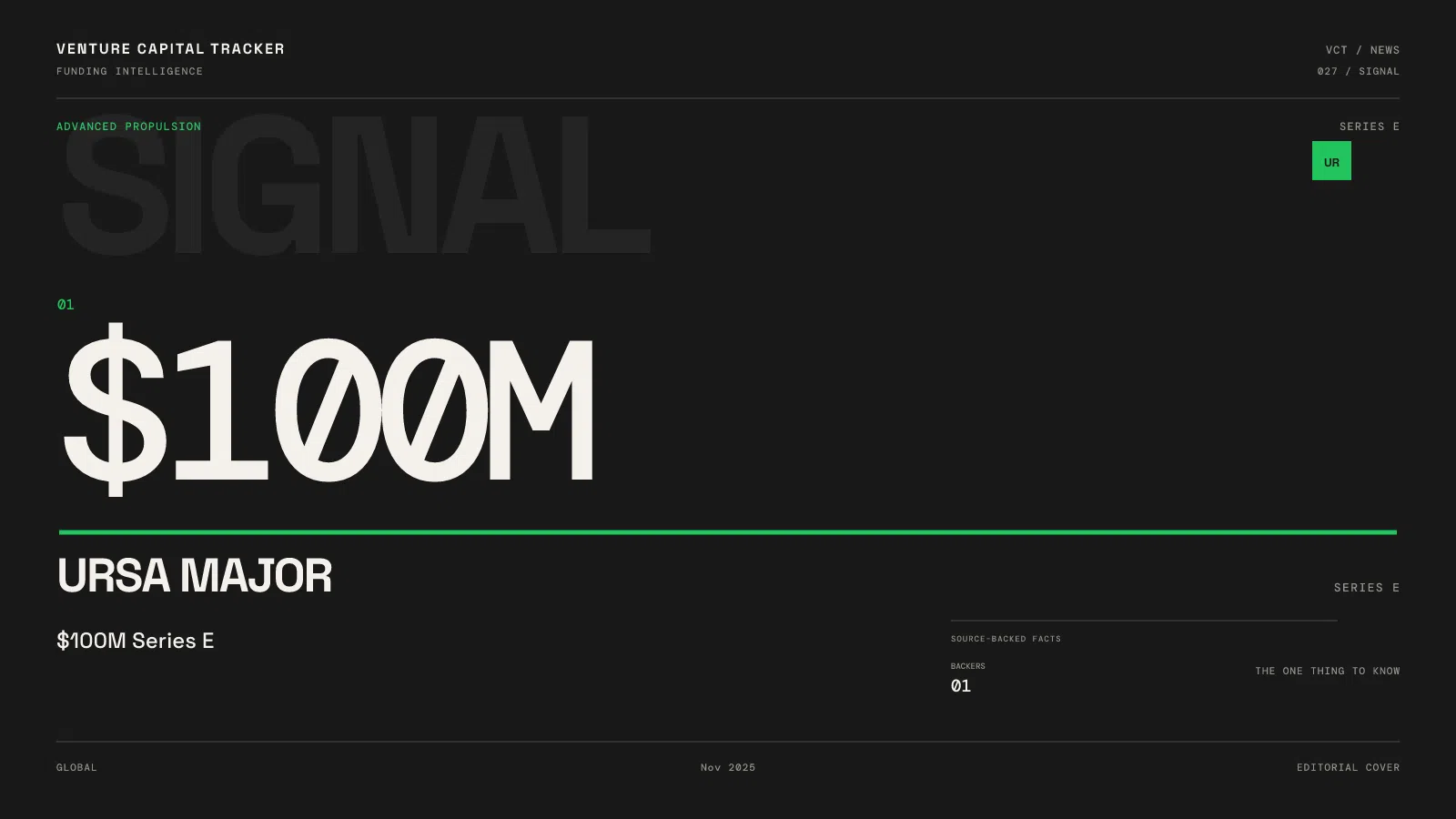
Ursa Major closed a $100 million Series E on November 18, 2025 and separately received $50 million in debt commitments. Eclipse led the equity round, joined by Woodline Partners, Principia Growth, XN and Alsop Louie Partners. The company did not identify the lenders, say how much debt was drawn or disclose a valuation, so the transaction should not be described as $150 million of equity.
Ursa Major also reported more than $115 million in bookings through the first three quarters of 2025. Bookings are contracted or expected business, not recognized revenue, and the company did not publish cancellation terms, delivery schedules or gross margins. The figure nevertheless gives the financing a clearer demand signal than an unsourced pipeline claim.
A propulsion supplier across several markets
Ursa Major develops liquid and solid propulsion for hypersonic vehicles, missiles, launch systems and sustained space mobility. Its customers include government agencies and aerospace companies that would otherwise design a propulsion system internally or source one from a large incumbent.
The before-and-after workflow is a move from a bespoke engine program toward a reusable propulsion platform. A vehicle developer can select an existing engine architecture, adapt interfaces and mission requirements, then test and integrate it without funding every component from scratch. Ursa Major uses additive manufacturing to consolidate parts and shorten iteration cycles, while its solid-motor work extends the model into tactical production.
The company said the new capital would scale manufacturing across product lines. It cited flights of hypersonic engines and tactical missiles, tests of space propulsion systems and bookings involving the U.S. Department of Defense, Air Force Research Laboratory, Stratolaunch and BAE Systems. These milestones support technical credibility, but they do not establish current profitability or production economics.
Why Eclipse invested at the production stage
Eclipse founder Lior Susan framed the investment around manufacturing and supply-chain scale. That fits the fund's broader focus on industrial businesses where software, automation and advanced production improve physical output.
For Ursa Major, the timing reflects a shift from engine development toward multi-program delivery. Equity can fund engineering, facilities and working capital; debt can finance equipment or production assets with less dilution. The company did not disclose the debt terms or providers, so no conclusion can be drawn about cost, collateral or availability.
How the round compares
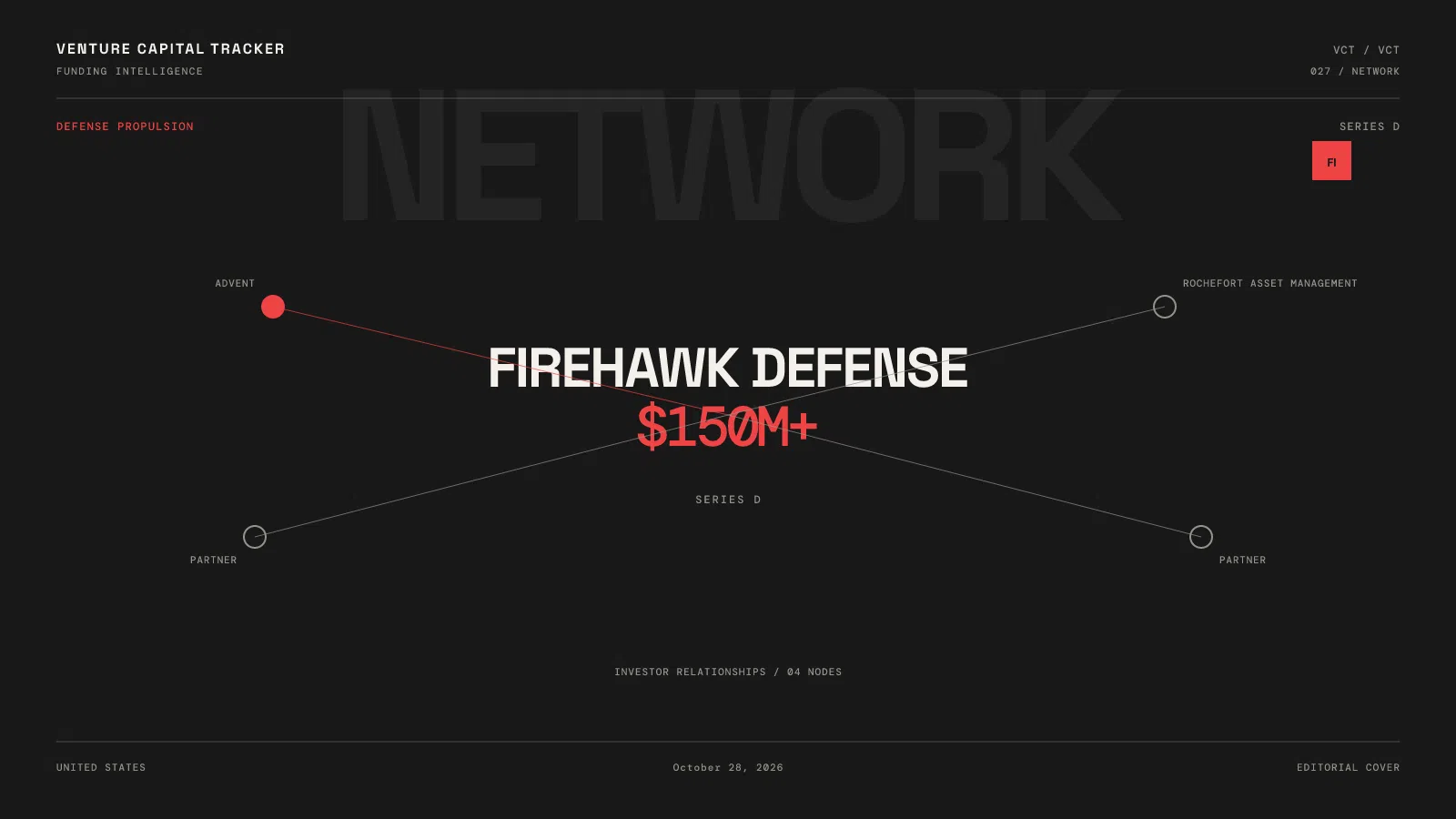
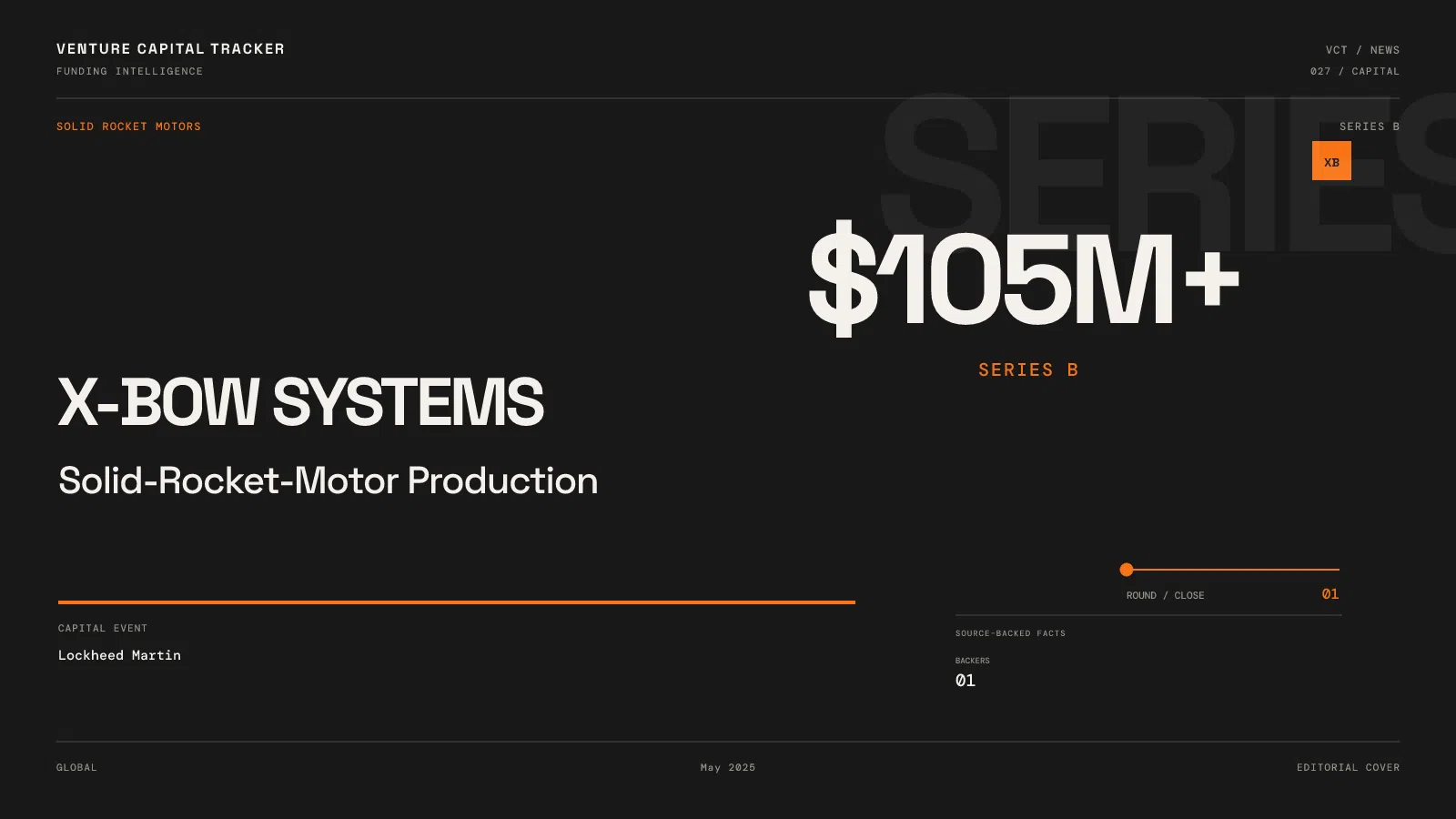
X-Bow Systems closed more than $105 million in May 2025 alongside a Lockheed Martin supplier agreement for solid rocket motors. Firehawk Defense raised more than $150 million in October 2026 to scale thermoplastic propellant and small-diameter motor production. Ursa Major is broader than both because it spans liquid engines, solid motors, hypersonics and space systems.
The breadth creates opportunity and execution risk. Investors should watch qualified programs, unit output, backlog conversion, on-time delivery, gross margin and how much of the debt facility is actually used. The Series E supports an industrial-scale ambition; those measurements will show whether the company is becoming a durable propulsion supplier rather than a collection of promising programs.
Follow Venture Capital Tracker on Google
Add VCT as a preferred source to see more of our venture-capital reporting in Google Search.
Editorial note: AI tools assisted with research, structure, or drafting. Venture Capital Tracker retains human editorial responsibility for factual accuracy, relevance, and source quality before publication.