· Venture Capital · 8 sources · Verified
Firehawk Defense Raises $150M+ to Scale Rocket-Motor Production
Firehawk Defense closed a $150M-plus Series D above a $1.4B valuation. Its factory process, government programs, financing structure and closest rivals explained.

By VCT Editorial
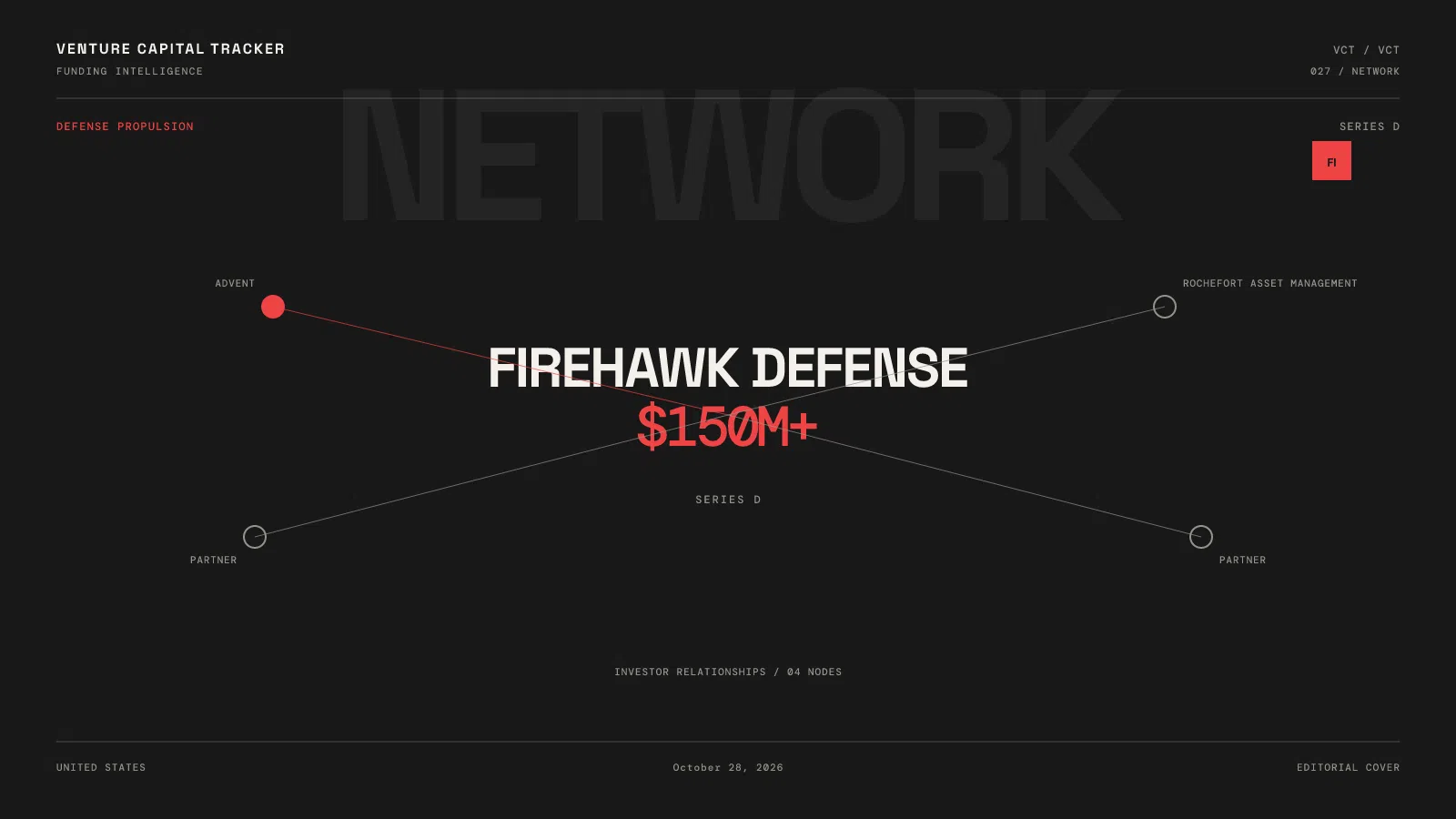
Firehawk Defense closed an upsized Series D of more than $150 million at a valuation above $1.4 billion, turning a rocket-propellant manufacturing process into one of this year's larger defense-production bets. Advent and Rochefort Asset Management co-led the October 28 financing. The company did not identify the other investors or disclose how the round is divided among equity and any other instruments, so the full amount should not be treated as confirmed equity.
The capital will expand Firehawk's propellant and motor campus in Lawton, Oklahoma, and its rocket-integration facility in Crawford, Mississippi. The question is no longer whether the technology can produce a working motor. It is whether Firehawk can qualify products, deliver them at high volume and earn acceptable margins while competing with established suppliers.
What Firehawk changes in the factory
Solid rocket propellant is traditionally mixed in batches, cast into a motor casing and cured for days or weeks. Firehawk uses a continuous thermoplastic process that produces energetic feedstock in hours. The material can be stored and later formed into application-specific propellant grains through compression molding, extrusion or 3D printing.
For a customer, that changes the production workflow. A defense prime or government program ordinarily commits to a specific motor design and waits through a tightly controlled cast-and-cure cycle. Firehawk's approach separates production of the feedstock from final shaping, which could shorten changeovers and support several small-diameter motor programs from the same manufacturing base.
Firehawk earns revenue through government awards and commercial agreements with defense manufacturers. Its products include artillery base-bleed motors, Hydra-70 rockets, rocket-assisted takeoff motors and other solid rocket motors below 10 inches in diameter. Public pricing and revenue are not disclosed.
The strongest current example is a teaming agreement with General Dynamics Ordnance and Tactical Systems for 155mm base-bleed motors. Reuters reports that Firehawk plans to produce more than 100,000 artillery motors in 2027 under that commercial arrangement, beginning with allied sales while completing a 12-to-18-month U.S. Army qualification process. That is a production target, not current output.
Contracts establish demand, not full production readiness
Firehawk separately received a $24 million, 22-month government prototype award to expand thermoplastic-propellant production for the M1128 155mm base-bleed system. This is government program funding, not part of the Series D. The company says the resulting installed capacity could reach 740,000 pounds of propellant annually and later scale above 3.1 million pounds.
The U.S. Army also selected Firehawk and three other vendors to deliver 24 Hydra-70 prototype rockets and an updated technical-data package. Firehawk subsequently reported a successful six-rocket live-fire test. The Army's own announcement makes the commercial position clear: the program is creating multiple qualified supply sources and intends follow-on agreements after successful prototype demonstrations. Firehawk has technical evidence and a route to production, but it does not yet have the incumbent's guaranteed volume.
Why Advent and Rochefort invested now
Advent managing partner Shonnel Malani argues that Firehawk addresses a propulsion-supply bottleneck and already has traction with primes and end users. Advent's portfolio now includes several aerospace and defense businesses, while its broader model supplies operational support to companies scaling physical production.
Rochefort's thesis is even more specific. The firm provides capital to businesses in U.S. critical-technology sectors and says founders often need nontraditional financing while expanding production. Its co-lead role is one reason VCT is not assuming the Series D is entirely equity without a disclosed breakdown. Rochefort founder Kyle Bass frames Firehawk as a factory-capacity investment: deterrence depends on replenishing weapons quickly enough.
Firehawk's September 2025 $60 million Series C, led by 1789 Capital, funded the move from prototyping toward scaled production. The new round is 2.5 times larger at the disclosed minimum and arrives after the General Dynamics agreement, government award and Hydra test.
The closest propulsion financings
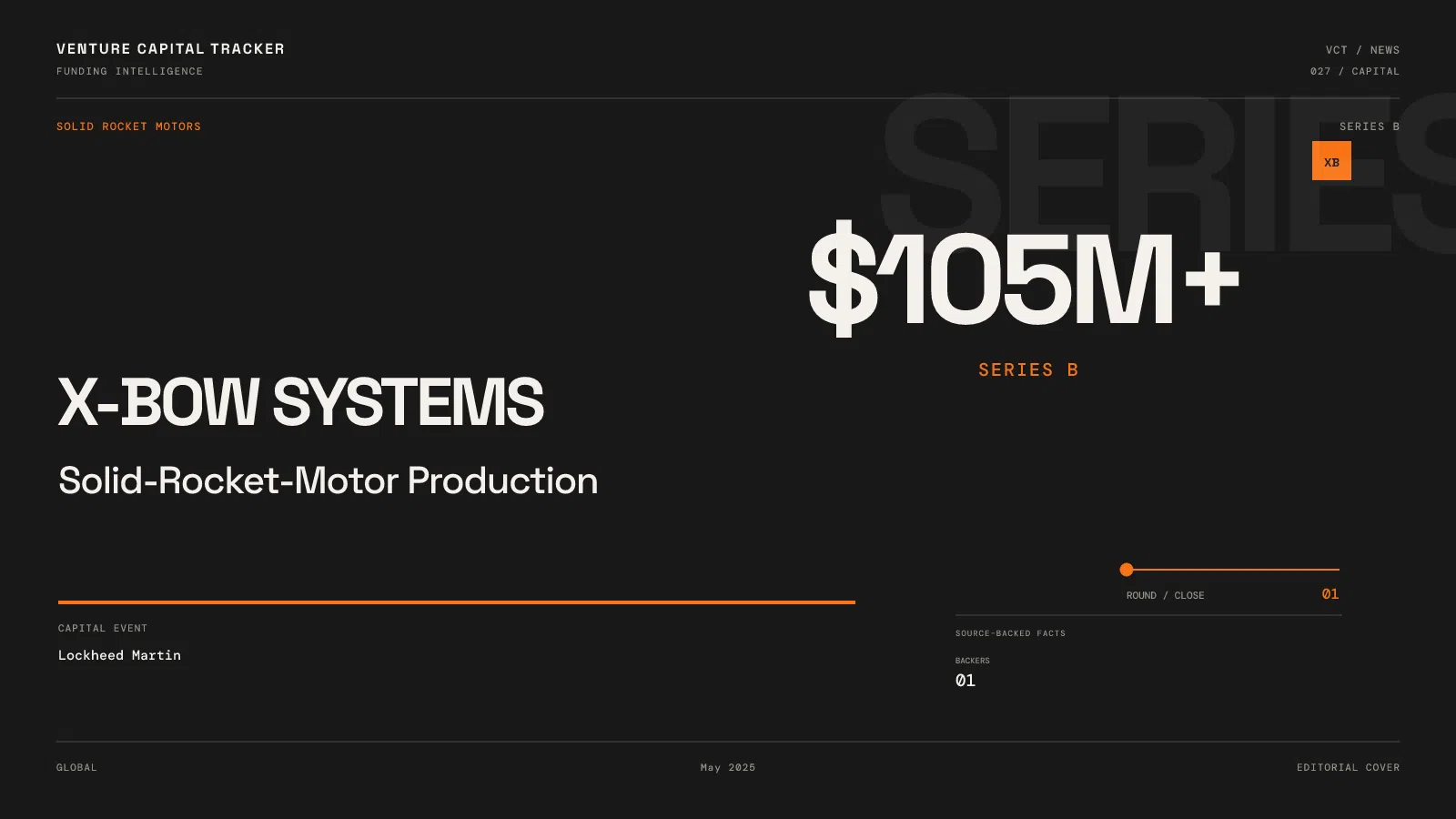
X-Bow Systems closed more than $105 million in May 2025. Lockheed Martin led the strategic portion and agreed to help establish X-Bow as an independent solid-rocket-motor supplier. This is the closest private financing comparison by product and customer base.
Ursa Major raised $100 million of Series E equity plus $50 million of debt commitments in November 2025. It reported more than $115 million in bookings and spans solid motors, hypersonics and space propulsion. Its disclosed equity-and-debt split is a useful contrast with Firehawk's unspecified round structure.
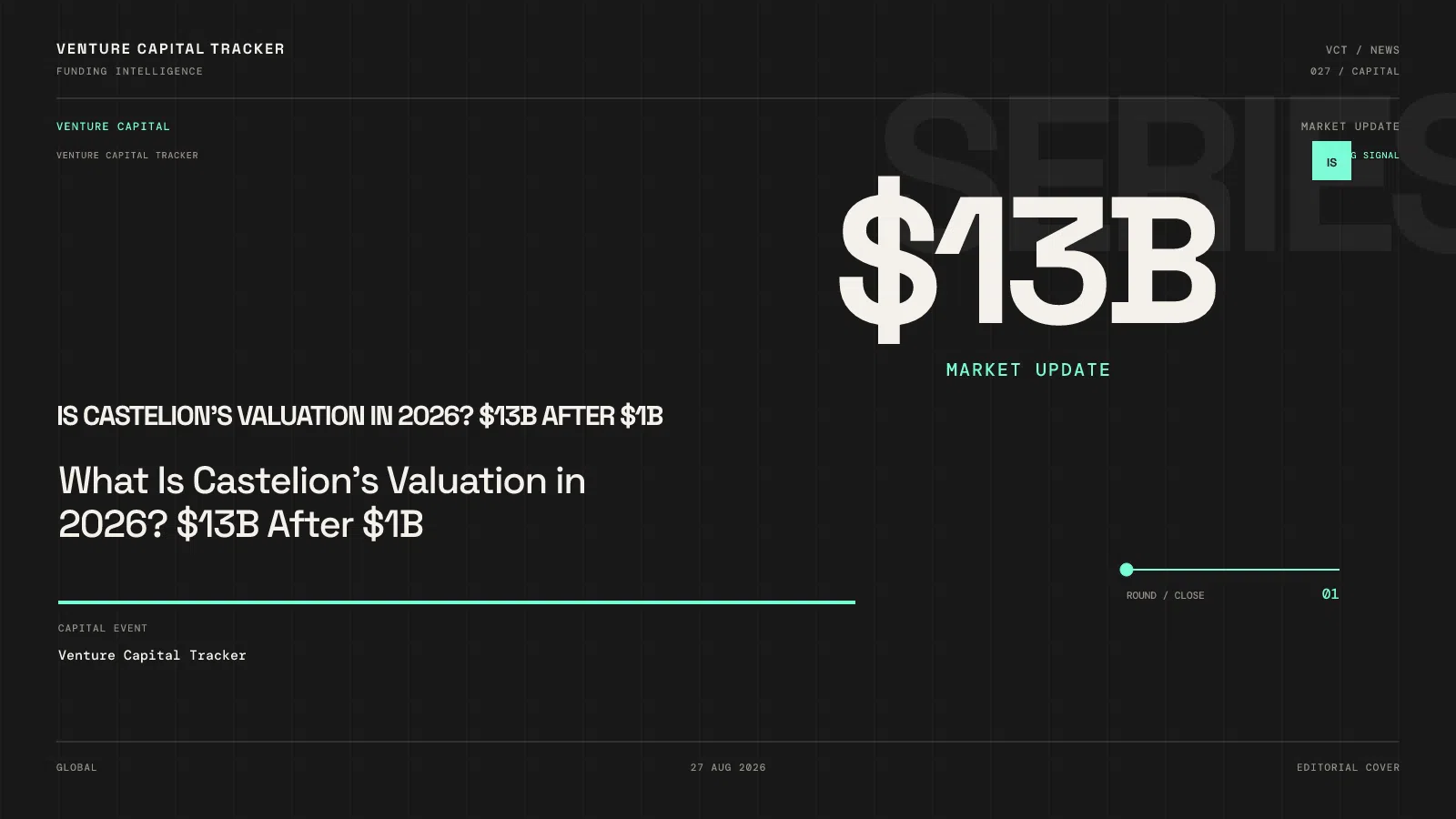
Castelion's 2026 financing is a broader missile-manufacturing comparison: $800 million of equity and a separate $250 million revolver at a $13 billion valuation. Castelion builds complete hypersonic weapons; Firehawk is concentrating on propulsion and high-volume, small-diameter systems.
Firehawk's valuation assumes its process will survive qualification and translate into dependable factory output. The next useful measurements are qualified programs, monthly motor production, yield, delivery performance, contract backlog and gross margin after safety, labor and facility costs. A faster propellant process matters only when it becomes repeatable supply.
Follow Venture Capital Tracker on Google
Add VCT as a preferred source to see more of our venture-capital reporting in Google Search.
Editorial note: AI tools assisted with research, structure, or drafting. Venture Capital Tracker retains human editorial responsibility for factual accuracy, relevance, and source quality before publication.