
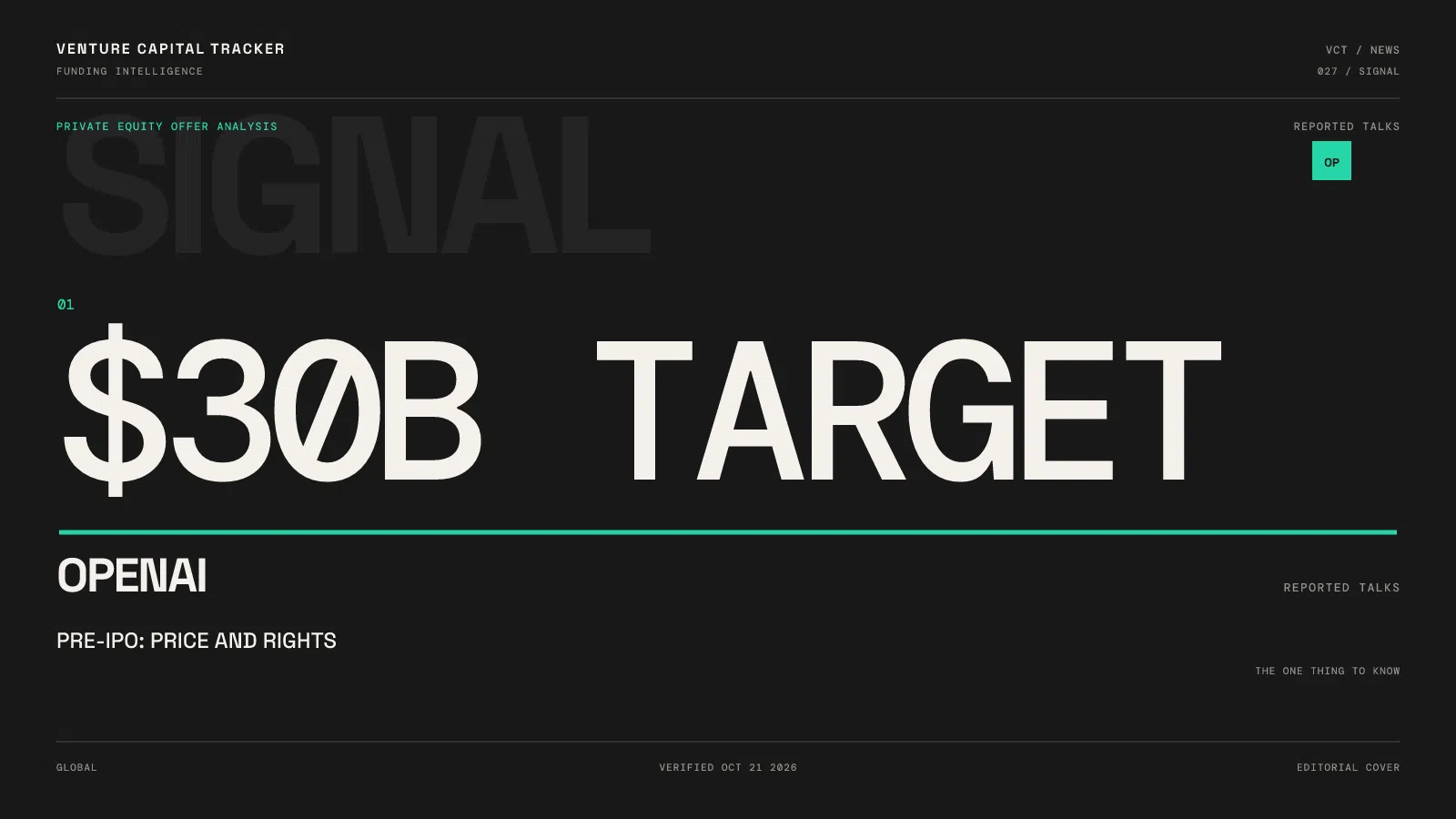
OpenAI Pre-IPO: What $30 Billion Funding Talks Mean for Investors
OpenAI is reportedly seeking $30B at a $1.4T valuation while preparing for a potential IPO. What is confirmed, what isn't, and why private-share terms matter.
Explore our latest articles on ipo — covering venture capital deals, fund activity, startup fundraising strategy, and investor research relevant to this topic.
Whether you're a founder building an investor target list, an analyst tracking deal flow, or an operator researching market trends, the articles below provide practical, up-to-date venture capital intelligence.
Browse all ipo articles below, or use our investor list to research active investors by stage and sector.
OpenAI is reportedly seeking $30B at a $1.4T valuation while preparing for a potential IPO. What is confirmed, what isn't, and why private-share terms matter.
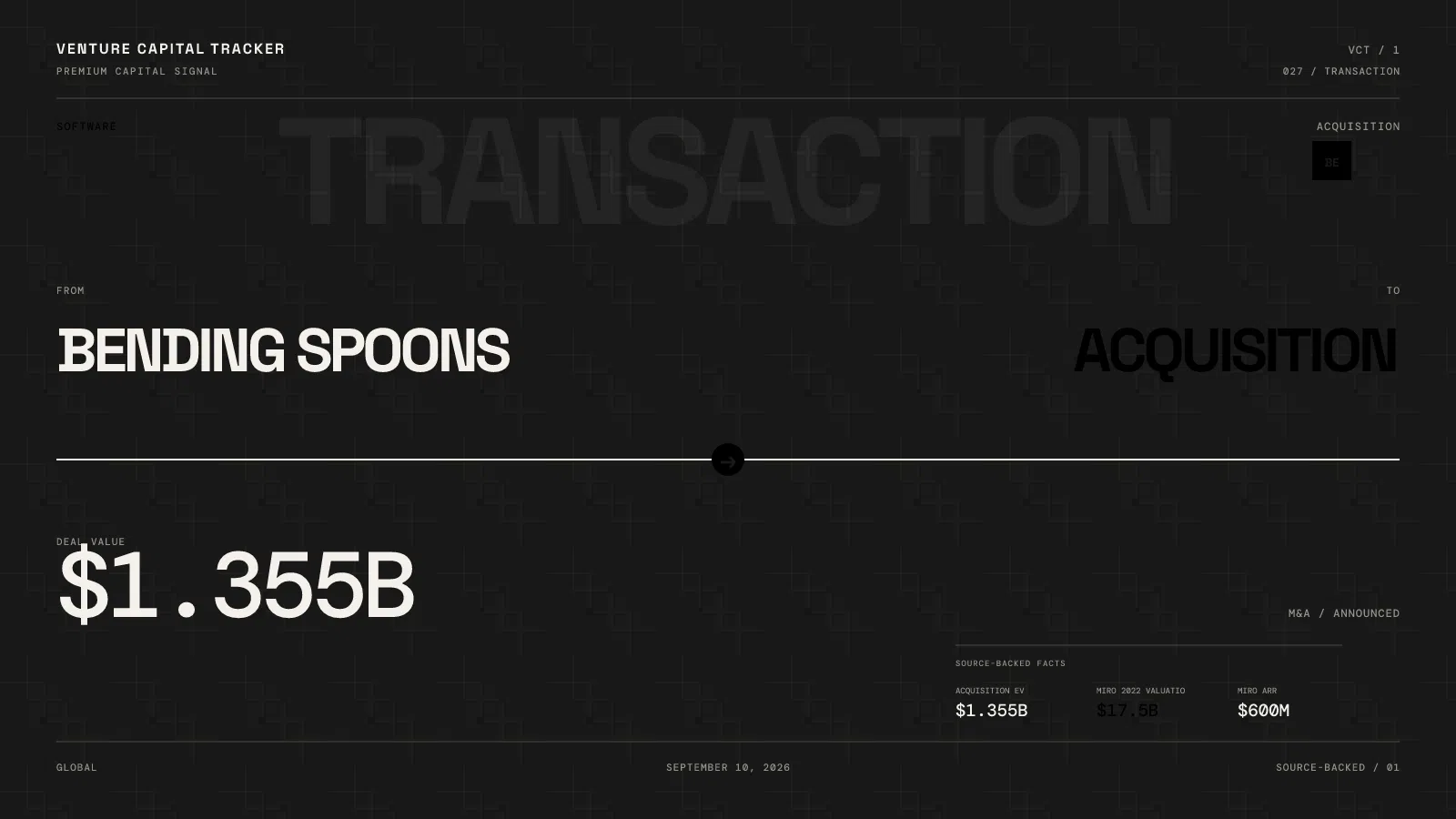
Miro’s acquisition closed on October 26, 2026. The September agreement set $1.355B enterprise value and approximately $1.79B equity value.
A SPAC is a blank-check company that takes a private target public. Here's how SPACs actually work, why the 2020-2021 bubble matters, and when a SPAC still makes sense.
A pre-IPO company is still private; “pre-IPO” describes a possible path to a public listing, not a guarantee, a stock ticker, or a fixed price. Learn how to read the signals.
Exits create the cash VCs return to LPs. Here are the five real exit paths, 2026 market conditions, and what each implies for founder and employee outcomes.
China's StepFun filed for a Hong Kong IPO at ~$12B in June 2026 after a $2.5B May raise, embedding its models in 40M+ phones and a Geely vehicle deal.
Anthropic's confidential IPO filing, SpaceX's $80B prospectus, Cerebras' listing, and StepFun's Hong Kong filing signal the largest liquidity event in venture history may be near.
First Round Capital saw portfolio momentum as K2 Space became a unicorn, Merlin Labs went public, and Cocoon was acquired by TriNet.
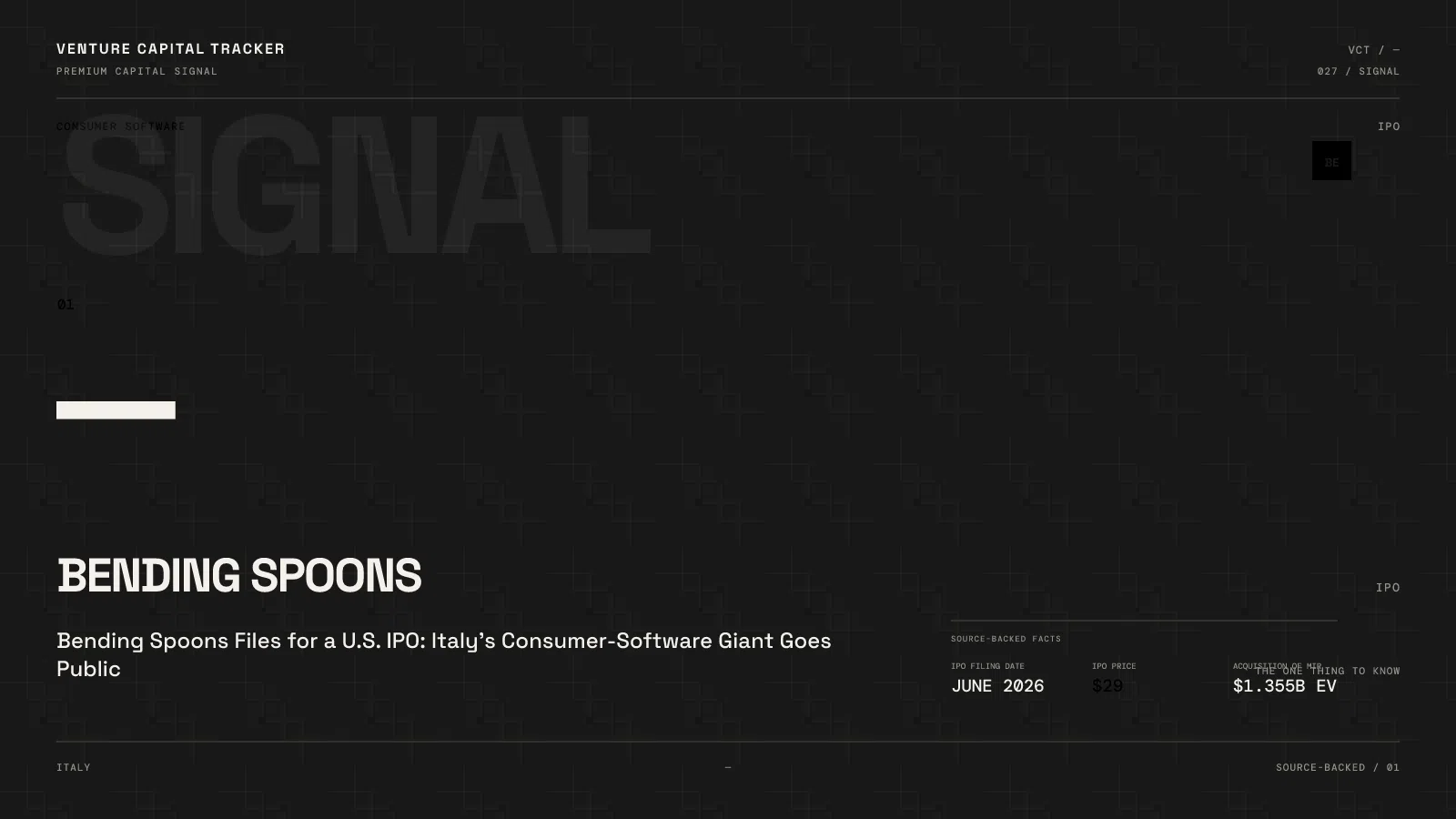
Bending Spoons began Nasdaq trading as BSP on July 1, 2026, at a $29 IPO price. Here is how later share placements and acquisitions differ from the IPO.
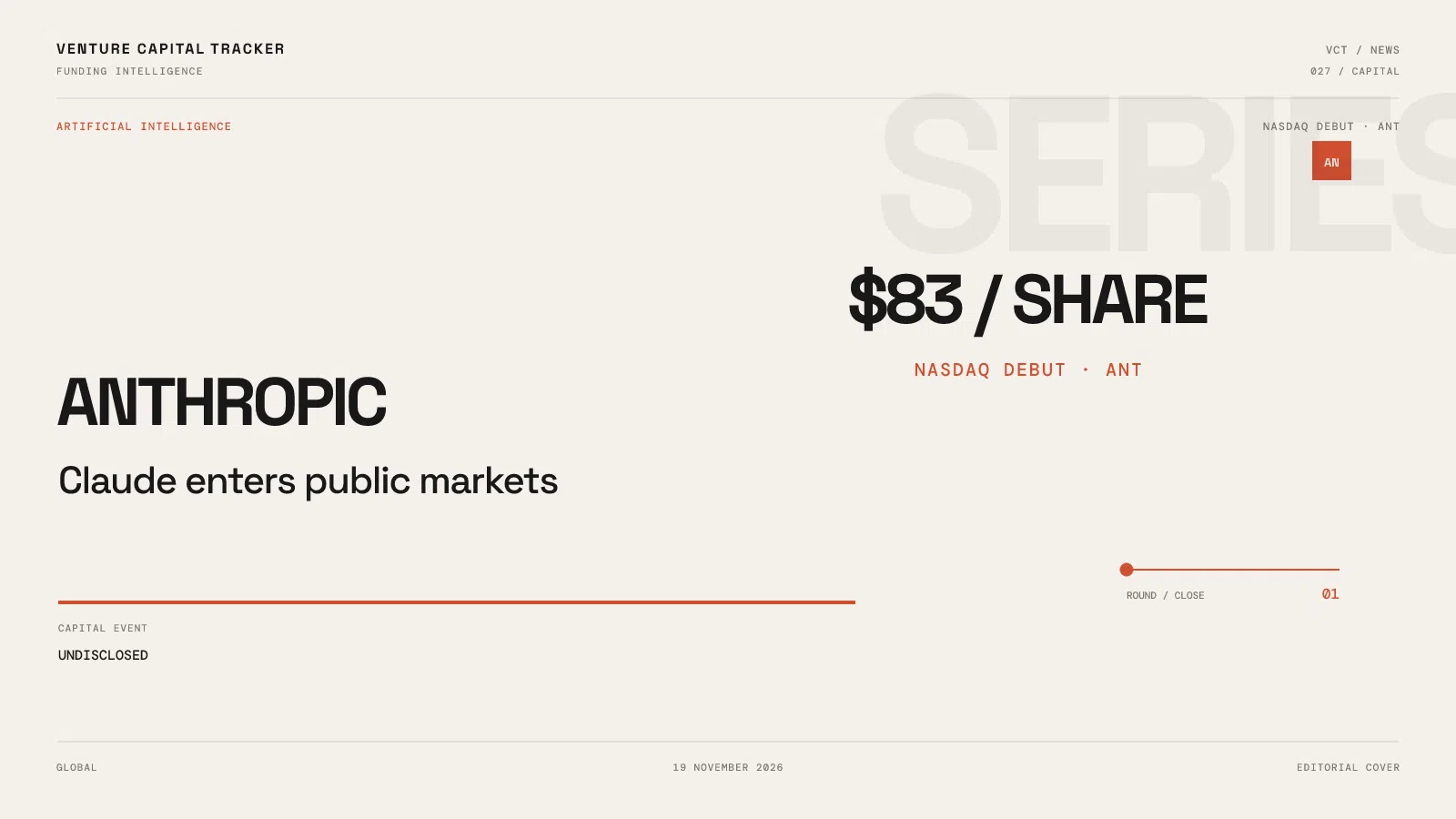
Claude's maker has reached Nasdaq. The filing separates company capital from selling shareholders' proceeds—and leaves important questions about costs and control.