· Venture Capital · 2 sources · Verified
IBM Acquires HRL Laboratories: What the Undisclosed Quantum Deal Means
IBM completed its HRL Laboratories acquisition in August 2026. The price was undisclosed—not $237B. Here's what its silicon-spin expertise changes for the quantum industry.

By Venture Capital Tracker
IBM completed its acquisition of HRL Laboratories on August 26, 2026, after announcing the agreement on July 23. The purchase price was not disclosed. Claims that IBM paid $237 billion confuse a figure reported for IBM's market capitalization with the price of the transaction.
This is a strategically interesting deal, even without a headline valuation. HRL adds experience in silicon-spin qubits, quantum sensing, materials, cryogenics and the difficult engineering required to manufacture and connect processors.
The deal in 30 seconds
| Question | Answer |
|---|---|
| Who bought whom? | IBM acquired HRL Laboratories |
| When was it announced? | July 23, 2026 |
| When did it close? | August 26, 2026 |
| Sellers | Boeing and General Motors |
| Acquisition price | Not disclosed |
| What does IBM gain? | Silicon-spin qubit expertise, quantum sensing, materials and manufacturing know-how |
| Does it prove useful quantum computing is here? | No |
The reason the story is circulating again in October is a fresh Forbes Ukraine interview about the technology and the possible timing of a breakthrough. That interview is not a new acquisition announcement.
Why buy a laboratory when IBM already builds quantum computers?
IBM's main quantum-computing path uses superconducting qubits: circuits operating in extremely cold environments. HRL specializes in silicon-spin qubits, which encode quantum information in the state of individual electron spins in semiconductor structures.
Both rely on advanced fabrication. Yet they pose different engineering challenges, and success in one does not guarantee success in the other.
The acquisition is therefore more than a simple expansion of IBM's qubit count. It gives IBM a second deep research capability and adjacent expertise in packaging, control electronics, sensing and quantum materials. These technologies matter because commercially useful processors must work as complete systems, not isolated laboratory chips.
IBM also plans manufacturing work through its Anderon quantum wafer-foundry initiative. HRL's silicon expertise may be valuable there, although IBM has not published a complete integration or production roadmap for that architecture.
What does the acquisition mean for quantum startups?
Three different parts of the industry now overlap:
- Full-stack hardware companies build processors and entire machines. Examples in our coverage include Oxford Quantum Circuits, Quobly, Universal Quantum and Oratomic.
- Enabling suppliers create control software, test tools, fabrication processes and cooling or packaging infrastructure. QuantrolOx is an example in automated calibration and control.
- Industrial labs and established manufacturers can acquire technology, finance long development cycles and provide fabrication infrastructure; IBM's purchase of HRL fits here.
The deal may increase the strategic value of companies with hard-to-reproduce engineering capabilities. But the undisclosed price means it cannot be used as evidence of a quantum M&A valuation multiple.
Comparing the main hardware approaches
| Approach | Example companies | Potential advantage | Main scaling challenge |
|---|---|---|---|
| Superconducting circuits | IBM, Oxford Quantum Circuits, Qilimanjaro | Mature chip-fabrication and control research | Noise, wiring, cooling and modular scale |
| Silicon-spin qubits | HRL, Quobly, Diraq, Quantum Motion | Potential compatibility with semiconductor manufacturing | Consistent control, yield and multi-qubit operation |
| Neutral atoms | Oratomic, QuEra, Pasqal, Atom Computing | Large atomic arrays and configurable interactions | Fidelity and error correction across complex arrays |
| Trapped ions | Universal Quantum, Quantinuum, IonQ | High-fidelity operations and long-lived qubits | Speed, interconnects and large-system integration |
| Photonics | PsiQuantum, Xanadu | Optical-network and manufacturing possibilities | Loss, component scale and fault-tolerant overhead |
Physical-qubit numbers alone are not comparable across architectures. More useful evidence includes logical error rates, circuit depth, operation speed, stability, manufacturability and independently reproduced application results.
Will quantum computing have a “ChatGPT moment” within five years?
Possibly, but this is a forecast, not a schedule or demonstrated result. Quantum computers do not replace general-purpose AI chatbots. A genuine inflection would more likely mean repeatable, economically worthwhile results in particular scientific or industrial tasks.
IBM has set a public target to deliver its fault-tolerant Starling system in 2029. The roadmap is important for judging ambition but is not a guarantee of delivery or commercial superiority.
Applications often discussed include chemistry, materials and selected optimization problems. The relevant proof is not a dramatic product demo: it is a result that beats a strong classical approach when total cost, accuracy and runtime are considered.
Follow the money, but count it correctly
The 2026 financing stories tell a different story from this acquisition:
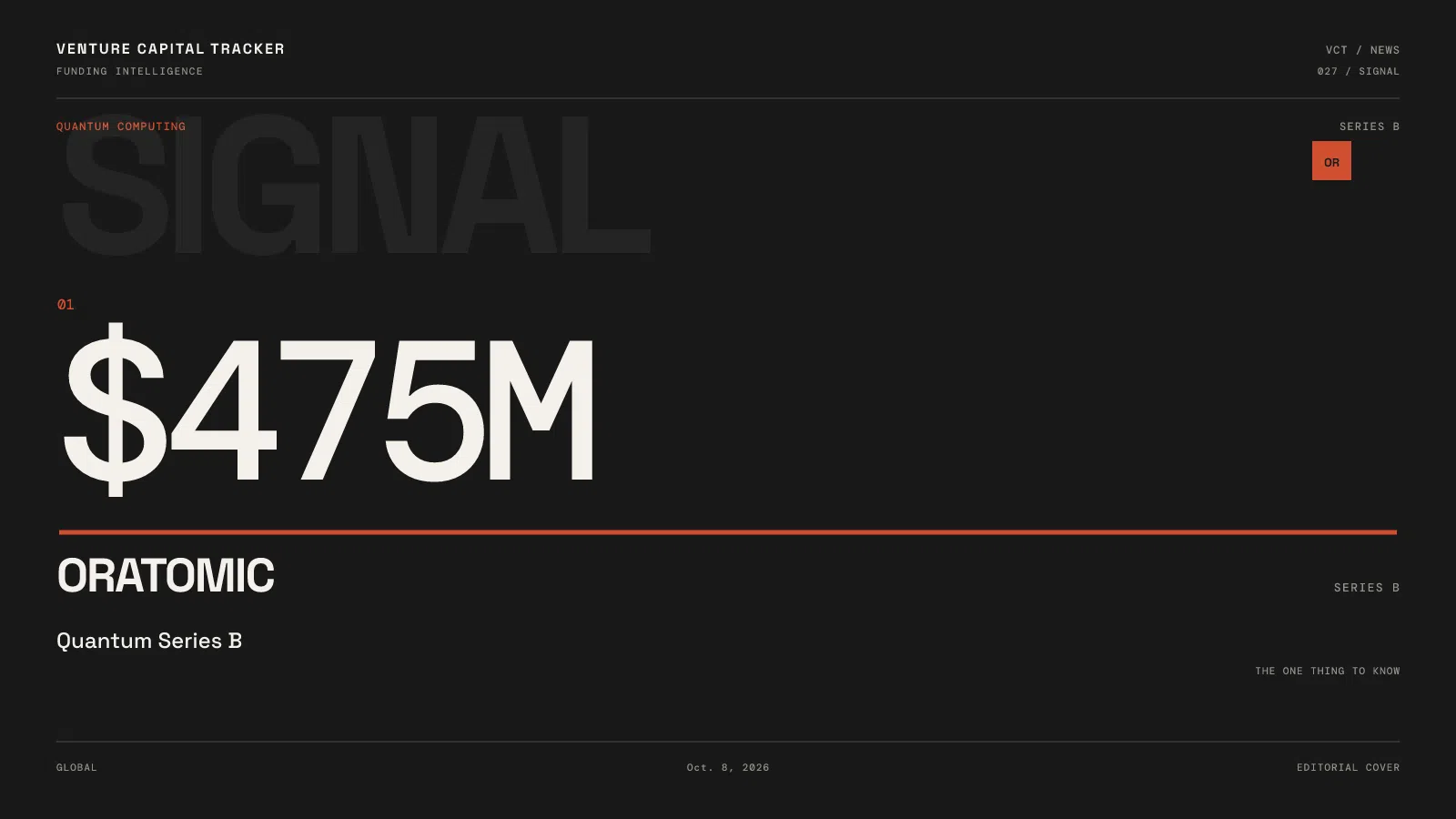
- Oratomic's reported $475 million Series B finances a neutral-atom architecture.
- Oxford Quantum Circuits' £260 million Series C supports superconducting hardware.
- Quobly's €115 million Series A backs silicon-based computing.
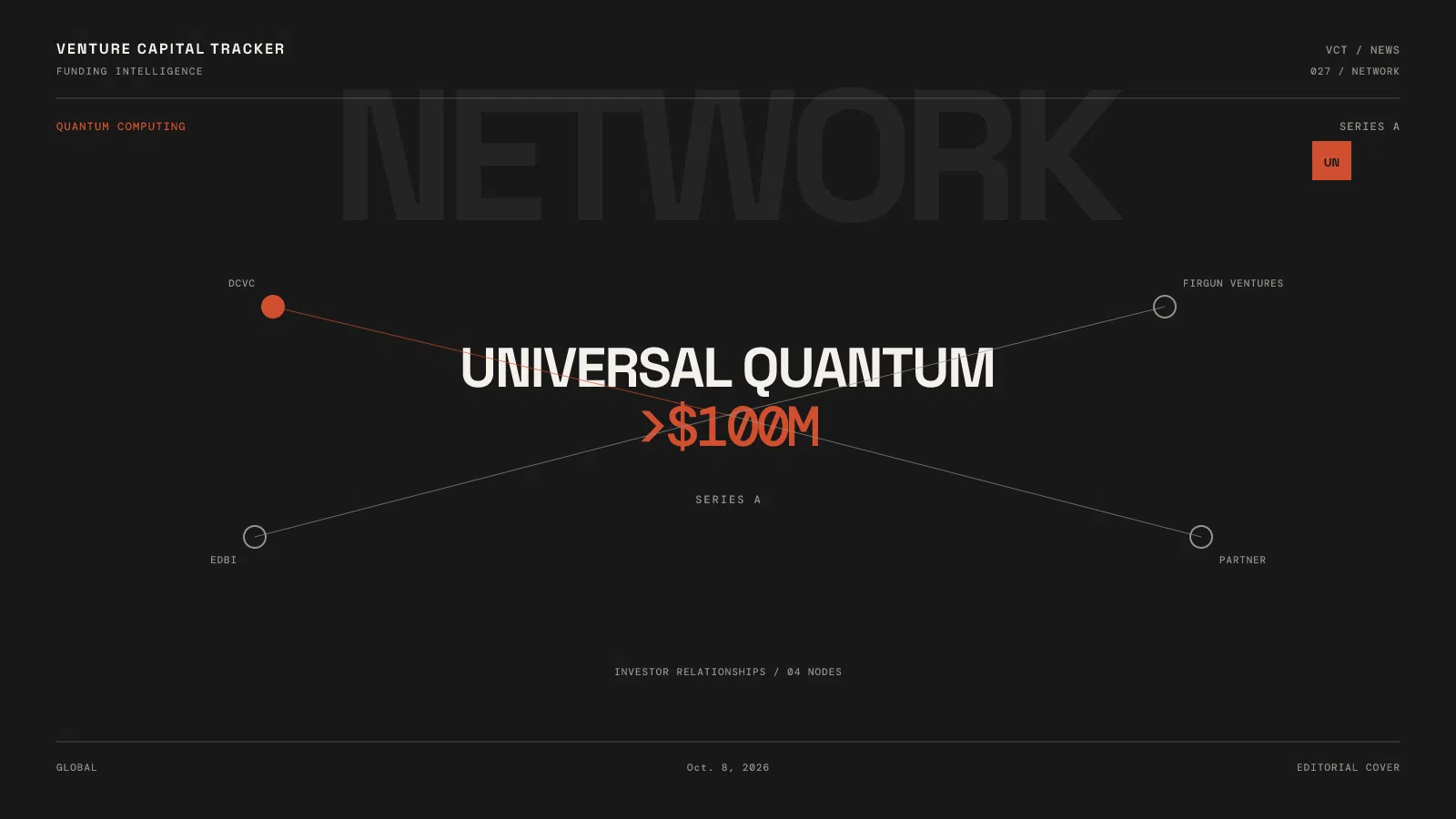
- Universal Quantum's more than $100 million Series A backs modular trapped-ion systems.
- Qilimanjaro's €19.6 million first close and QuantrolOx's reported €12 million financing show smaller financing in hardware and enabling software.
These are different currencies, deal stages and reporting standards. They cannot simply be summed into a market-wide funding figure.
Read our accompanying 2026 quantum-funding analysis for an architecture-by-architecture comparison.
Four questions that matter more than an undisclosed acquisition price
Does the technology improve a measurable bottleneck? HRL's silicon-spin expertise matters if it makes manufacturing or scaling quantum processors materially easier.
Can the buyer integrate it? Quantum research teams operate differently from commercial product engineering. IBM needs to preserve deep scientific work while connecting it to deployable systems.
Will customers pay for useful outcomes? Procurement, pilots and research collaborations are relevant evidence but not the same as a proven commercial advantage over classical computers.
Is capital buying technical progress or only time? Hardware development is expensive; the next milestone should be measurable and independently interpretable.
Sources and verification
IBM's July 23 announcement establishes the agreement, sellers, strategic rationale and absence of disclosed financial terms. Its August 26 completion announcement confirms closing. The October interview is secondary context, not the transaction source.
Last verified: October 26, 2026. Acquisition price remains undisclosed.
Editorial note: AI tools assisted with research, structure, or drafting. Venture Capital Tracker retains human editorial responsibility for factual accuracy, relevance, and source quality before publication.