Neros’s $250M Series C at $2.5B: Sequoia and ASTF Scale Attritable Drones
Torrance defense startup Neros raised $250M Series C at $2.5B post-money co-led by Sequoia and the American Strategic Technology Fund to ramp Archer AI strike and Bandit interceptor drones.
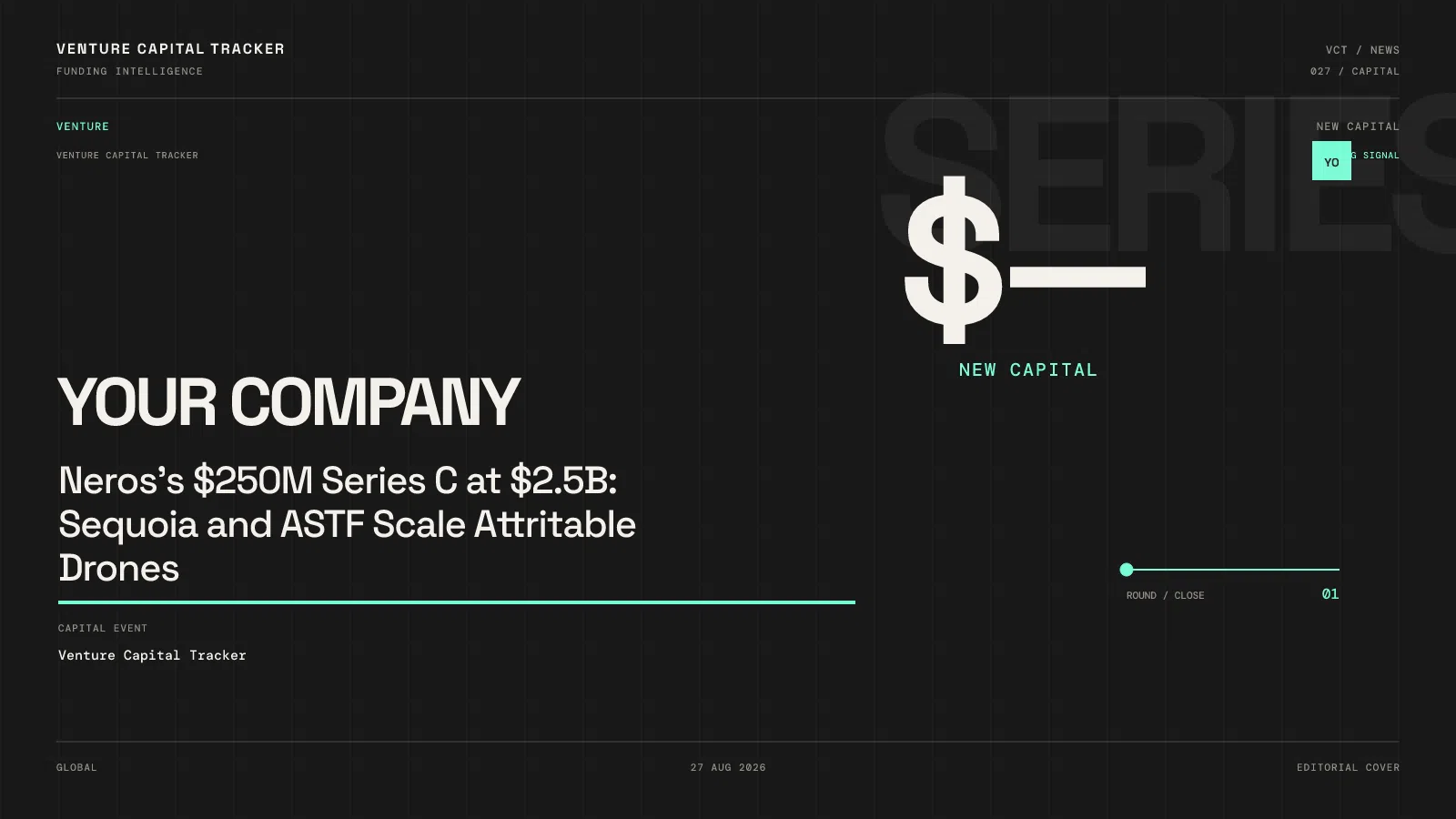
Sequoia and the American Strategic Technology Fund (ASTF) co-led Neros Technologies’ $250 million Series C at a $2.5 billion post-money valuation on August 11, 2026. Participants include Interlagos, Valor, Allen & Company, Thiel Capital, Spark Capital, and Dylan Field.
Key facts
| Field | Detail |
|---|---|
| Company | Neros Technologies (Torrance, CA) |
| Round | $250M Series C · $2.5B post-money |
| Date | August 11, 2026 |
| Co-leads | Sequoia Capital, ASTF |
| Products | Archer AI (strike FPV + autonomy), Bandit (c-UAS interceptor) |
| Stated goal | 1M drones/year by 2028; theater deploy by end of 2026 |
| Customers (company) | Army, Marine Corps, every SOCOM component; ~half-dozen allies |
Who uses the product — and for what job
Users: warfighters and procurement offices that need cheap mass, not boutique UAVs.
Jobs:
- Archer AI — FPV strike with terminal guidance and GPS-denied hold when RF/GPS dies.
- Bandit — intercept Class 2/3 threats (including Shahed-style) without burning a manned interceptor.
- Multi-asset control — coordinate effects while keeping cost structure for attritable volume.
Neros’s pitch is vertical: own the stack, domestic production, allied localization — not a software layer on imported airframes.
Why now
- Peer conflicts proved that attritable drone mass decides outcomes faster than exquisite platforms alone.
- Counter-UAS demand is structural as cheap attack drones proliferate.
- U.S. and allies want sovereign manufacturing of small drones, not sole-source foreign supply.
- Prior November financing (company) already showed “explosive growth”; Series C funds the multi-program ramp.
Why Sequoia (+ ASTF) — portfolio fit
Sequoia co-leading at $2.5B is a classic American Dynamism / hard-tech scale move: underwrite factories and programs of record, not just a pilot demo.
ASTF as co-lead is the portfolio tell for founders: pair venture with a strategic U.S. technology capital vehicle that understands DoD timelines.
Spark Capital and Thiel Capital participation keep a continuity bench for defense/deep tech.
Likely founder rationale: raise from a brand that can help hire and follow on through production scale, while ASTF reduces political/strategic financing risk for a company aiming at “decisive battlefield outcomes.”
| Dimension | Fit |
|---|---|
| Stage | Series C manufacturing scale |
| Thesis | Attritable mass + autonomy + c-UAS |
| Buyer | DoD + allies |
| Risk | Production yield, export, program continuity |
Competitive map
| Player | Lane |
|---|---|
| Anduril / Shield AI / peer defense primes | Broader autonomy stacks; different unit economics |
| Counter-drone laser/kinetic startups (e.g. Aurelius) | Different effector; complementary mission |
| Commodity FPV importers | Cheap but weak autonomy, supply-chain, and compliance story |
| Traditional aerospace UAVs | Higher cost / lower attrition tolerance |
When not to model this like SaaS
- Wrong if you underwrite on ARR multiples — this is contracts + manufacturing.
- Wrong if “1M drones by 2028” is treated as booked revenue.
- Wrong if you ignore allied export and ITAR-shaped GTM as the real bottleneck.
Practical takeaway
- Founders (defense): Pair software autonomy claims with named programs and domestic capacity.
- Investors: Diligence unit cost, yield, and interceptor vs strike mix — not only valuation comps to other unicorns.
- Operators / scouts: Watch end-2026 theater claims as the near-term proof point.
Sources
- PR Newswire (Aug 11, 2026): https://www.prnewswire.com/news-releases/neros-raises-250m-series-c-at-2-5b-valuation-to-scale-autonomous-and-interceptor-drone-programs-302848736.html
- Related: /2026-aurelius-systems-40m-series-a-counter-drone · /2026-august-11-12-investment-news-personal-ai-defense-health
Follow Venture Capital Tracker in Google
Add VCT as a preferred source to make our venture-capital coverage easier to find in Google Search.
Editorial note: AI tools assisted with research, structure, or drafting. Venture Capital Tracker retains human editorial responsibility for factual accuracy, relevance, and source quality before publication.