Aippy's $250M Valuation: Singapore's Bet on AI-Native Gaming
Aippy, built by NADA AI, raised tens of millions at a $250M valuation in June 2026 to build the first AI-native game community — Asia's answer to AI entertainment.
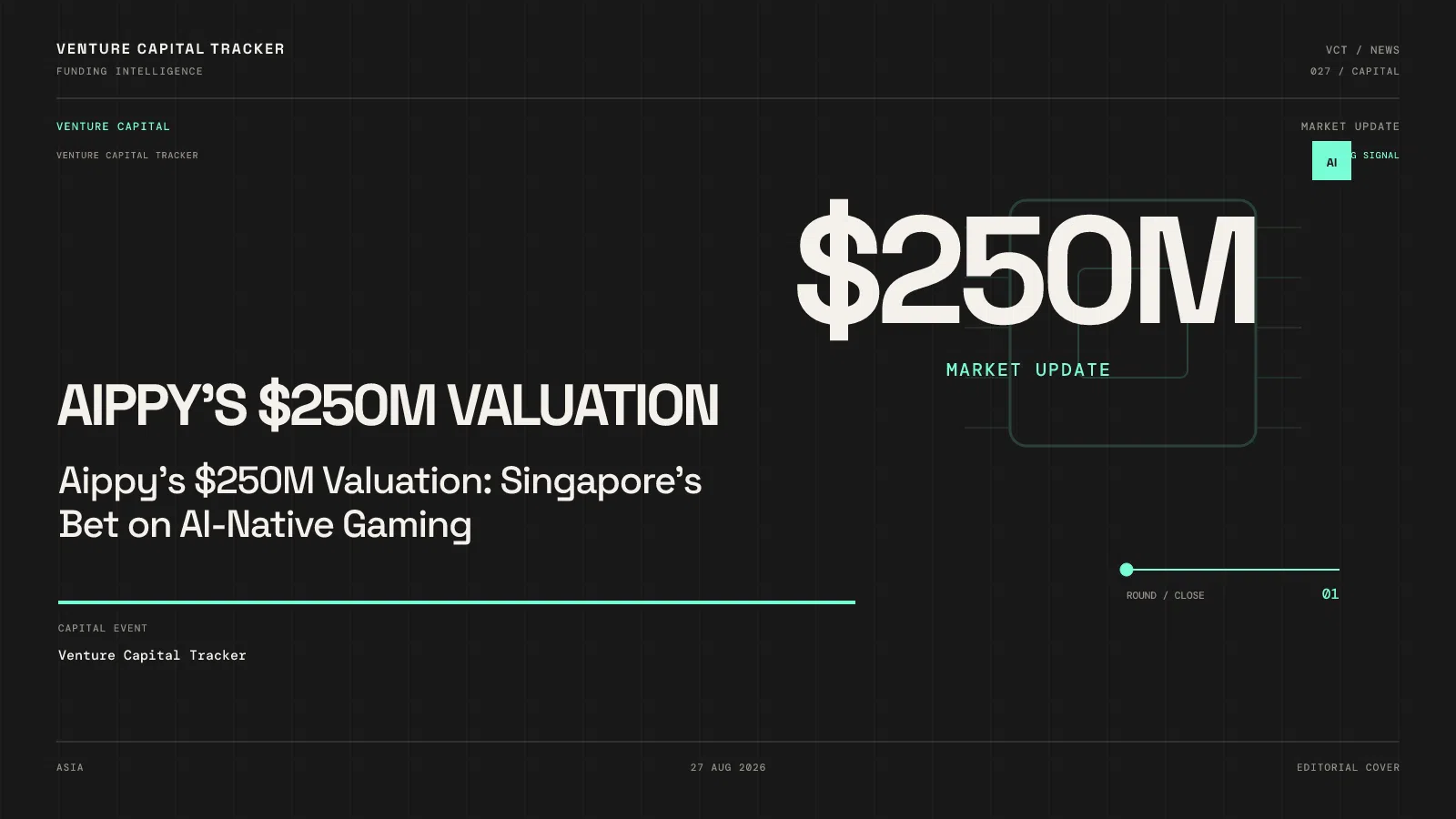
Aippy's $250M post-money valuation on its first round (June 2026) signals that AI-native gaming is a global theme — and Singapore is in the game alongside U.S. players like Astrocade.
The problem this startup is attacking
Game creation and community-building are slow and skill-gated. Aippy uses AI to power an interactive game community where users create and play AI-generated content.
Why this is a live problem now
- Generative AI can produce game content, worlds, and characters.
- Creator-driven, AI-native entertainment is an emerging category.
- Asian capital (Glowill Capital, Hong Kong) is backing AI consumer plays.
Competitive map
- Astrocade (U.S. AI games).
- UGC gaming platforms.
- Traditional studios adding AI tooling.
Market signal (the number to remember)
- $250M valuation on a first round — led by Glowill Capital, a multi-strategy platform spanning AI, quantum, biopharma, and semiconductors — strong early conviction in AI-native entertainment from Asia.
Practical takeaway (operator + investor)
Aippy shows AI-native entertainment is cross-regional, with Asian capital moving early. Founders should focus on creator retention and viral mechanics; investors should track engagement and monetization in a hit-driven market.
Sources
- PRNewswire (Aippy $250M valuation): https://www.prnewswire.com/apac/news-releases/aippy-raises-tens-of-millions-of-dollars-at-a-250-million-valuation-to-build-the-future-of-ai-native-interactive-entertainment-302787864.html
Editorial note: AI tools assisted with research, structure, or drafting. Venture Capital Tracker retains human editorial responsibility for factual accuracy, relevance, and source quality before publication.