· Venture Capital · 4 sources · Verified
Town Raises $108M Series B for Collaborative AI Assistants
Town’s $108M Series B backs AI assistants that work across teams. The investment test is permission control, durable team adoption and cost per completed workflow.

By Venture Capital Tracker
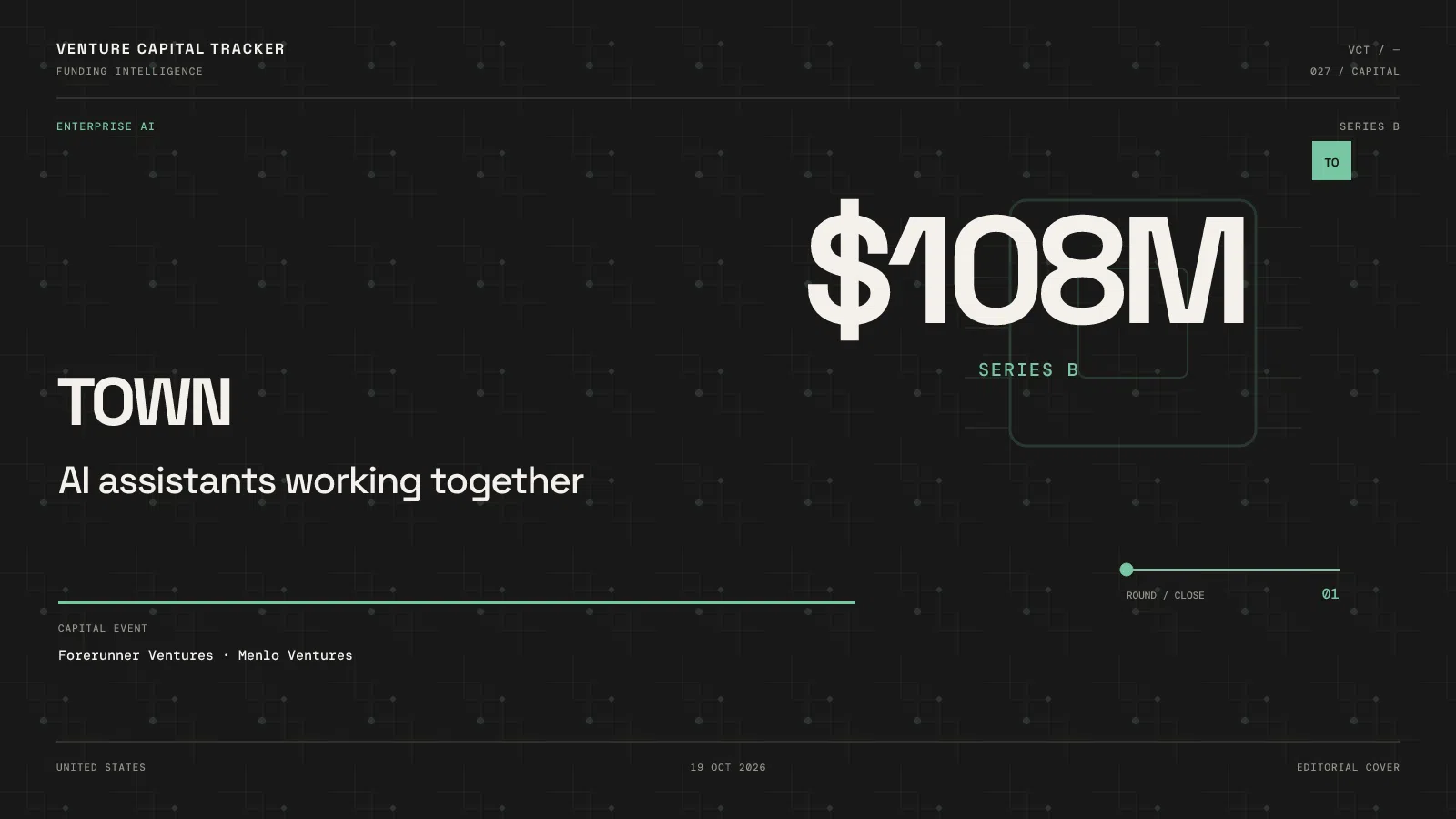
Town announced a $108M Series B on October 19, 2026, co-led by Forerunner Ventures and Menlo Ventures. The company is extending its individual AI work assistant into assistants that coordinate across teams.
The issuer’s announcement and its distributed release state a $1B valuation. They do not specify whether that figure is pre-money or post-money, disclose individual investor allocations or give an exact legal closing date. This is company-announced startup financing, not a debt facility, grant, acquisition or employee tender.
What the Series B funds
| Item | Company-disclosed detail |
|---|---|
| Financing | $108M Series B |
| Co-leads | Forerunner Ventures; Menlo Ventures |
| Company-stated valuation | $1B; pre/post-money basis unspecified |
| Product direction | Individual AI assistants working together across teams |
| Announcement date | October 19, 2026 |
Andreessen Horowitz and First Round Capital returned. Other named participants are Better Tomorrow Ventures, Precedent.vc, Scribble Ventures, Serena Ventures and Sparked Ventures.
The company also named Brendan Foody, Josh Silverman, Romain Huet, Scott Belsky, Steve Bartel, Taro Fukuyama and Varun Anand. The new Series B should not be confused with Town’s earlier funding history or a cumulative capital total.
From a personal assistant to a coordination layer
Town calls each user’s assistant a Townie. Its product description connects the assistant to work context such as email, documents and calendars. The new proposition is that those assistants can exchange requests and hand work to one another, while retaining the relationship with their individual user.
In its founder announcement, Town describes shared workflows and customer ownership of accumulated context. These are product and policy representations, not independently measured evidence of productivity or successful data portability.
Our analytical view is that the opportunity is less about producing another draft and more about removing delays between people. The commercial question is whether a completed team workflow needs less human coordination after the assistants are introduced.
Permission boundaries become part of the product
An individual assistant can be useful with access to one person’s work. Collaboration requires additional decisions: what another assistant may ask, which information may be shared and when a person must approve an action.
The relevant test is not merely whether assistants can communicate. Buyers need to understand identity, authorization, revocation, audit trails and responsibility for external messages. A convincing demonstration of a handoff does not establish that these controls work across every connected system.
Town says its assistants share only what their users would share and seek permission when needed. Those intentions need to be evaluated against actual controls and observable behavior; this article does not certify the system’s security.
The operating metrics behind team adoption
More connected assistants can create more model calls, integration work and review steps. Whether that improves economics depends on the value of completed work relative to inference, support and onboarding costs.
Useful diligence measures would include cost per accepted workflow, correction rates, time spent supervising actions and retention across whole teams. These are analytical criteria, not performance metrics disclosed in the financing announcement.
Team expansion is also different from purchasing seats. A buyer can enable many accounts without embedding the product into an important recurring process. Durable adoption would be stronger evidence than an initial rollout.
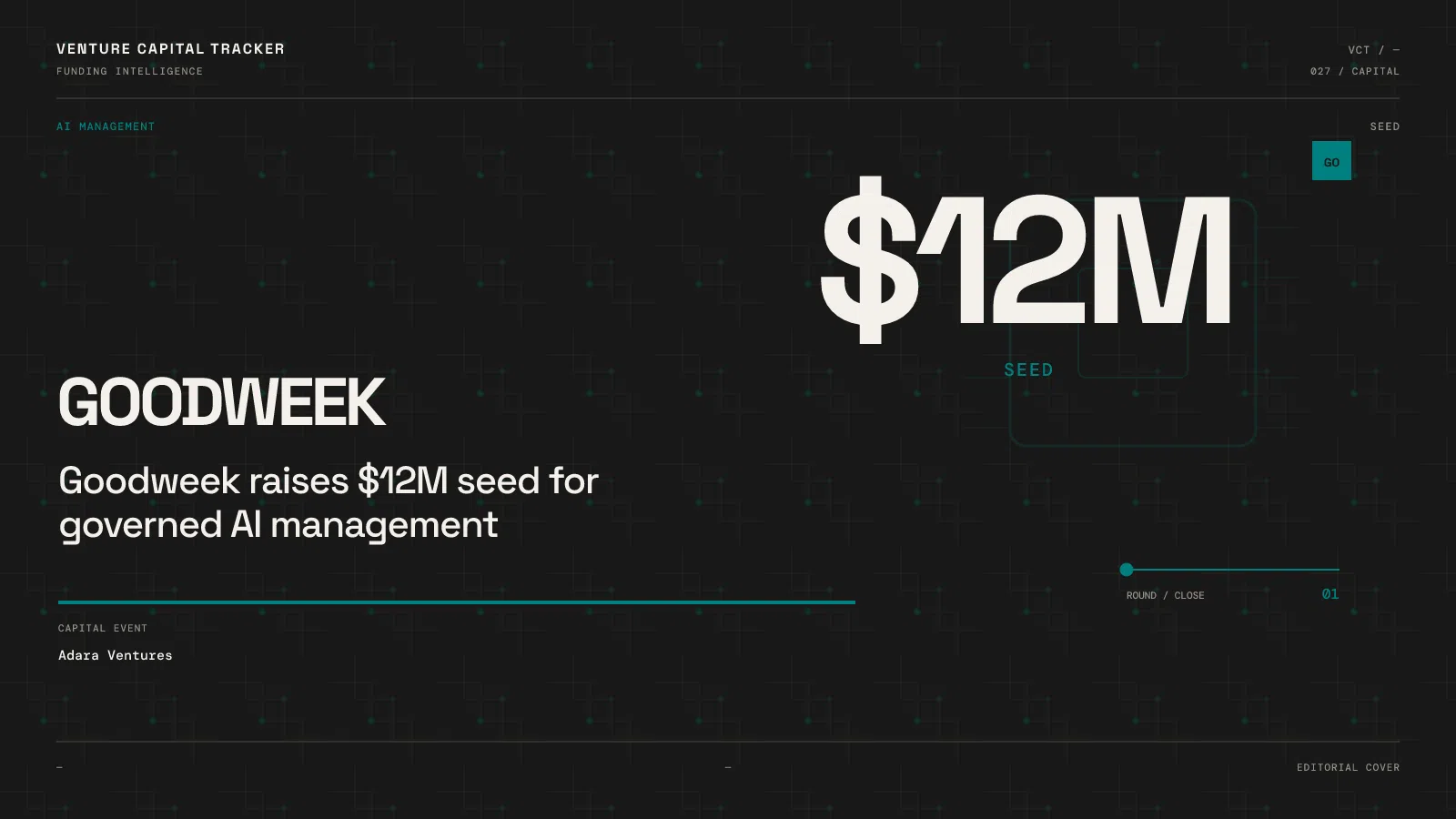
For related small-business workflow economics, see Goodweek’s AI-management seed round. Town’s distinctive test is coordination across personalized assistants rather than the financing headline alone.
The Series B provides resources to pursue that model. Its investment case will strengthen if useful collaboration, reliable permissions and sustainable delivery costs improve together.
Source note: Financing and investor names are company-disclosed. Product capabilities and policy statements are attributed to Town. Permission-control, adoption and unit-economics discussion is VCT analysis; revenue, productivity gains and investor allocations are not inferred from the round.
Follow Venture Capital Tracker in Google
Add VCT as a preferred source to make our venture-capital coverage easier to find in Google Search.
Editorial note: AI tools assisted with research, structure, or drafting. Venture Capital Tracker retains human editorial responsibility for factual accuracy, relevance, and source quality before publication.