· Venture Capital · 6 sources · Verified
Solestial’s $17M Series A and the Space Solar Manufacturing Test
Solestial’s May 2025 $17M Series A financed space solar manufacturing. York acquired it in June 2026; the financing and acquisition payments are kept separate.

By Venture Capital Tracker Editorial Team
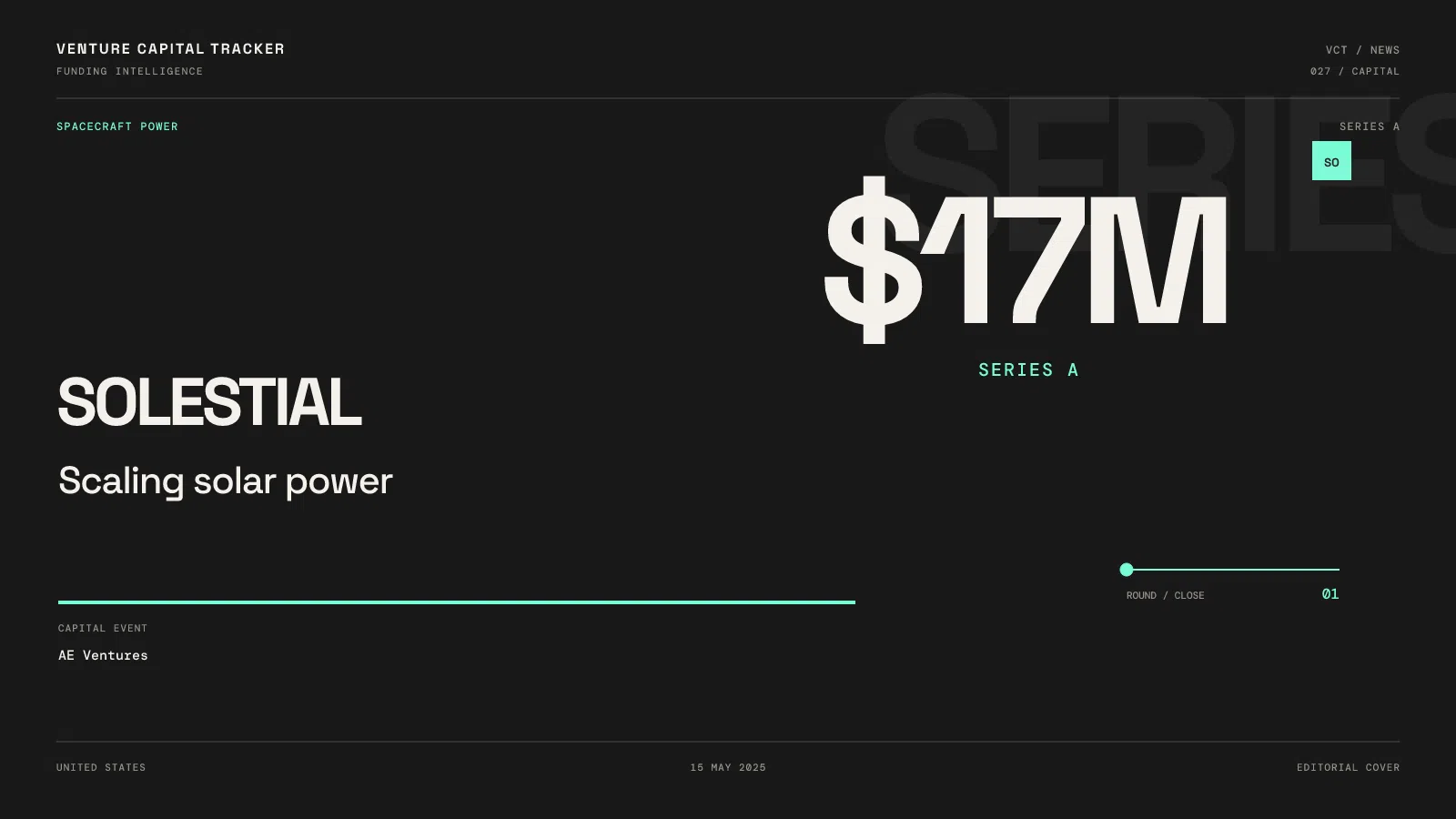
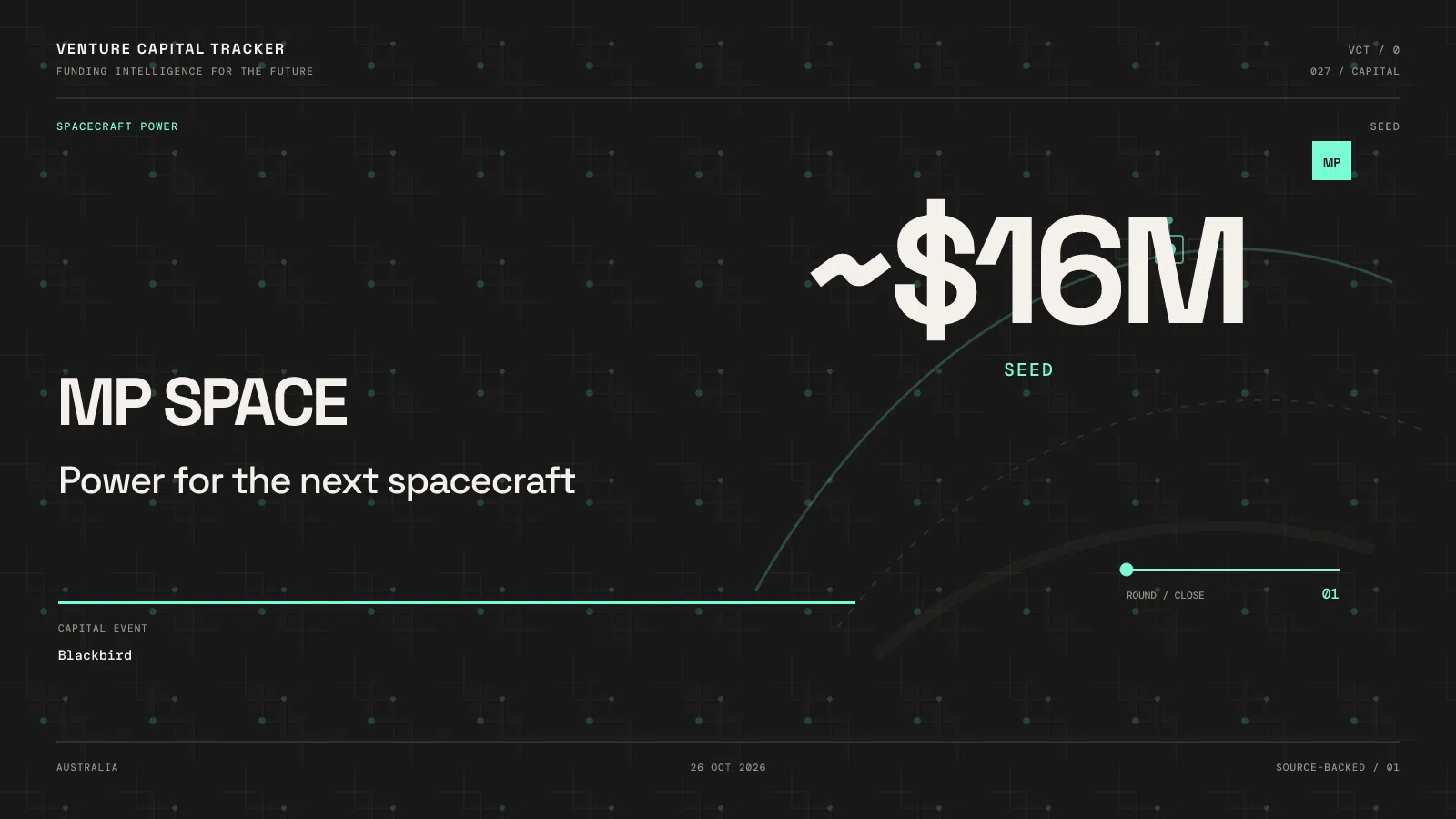
Solestial closed a $17M Series A on May 15, 2025, led by AE Ventures, to expand manufacturing of solar hardware for spacecraft. This is a historical financing, revisited as MP Space’s October 2026 seed round brings fresh attention to independent spacecraft-power suppliers.
Solestial is now owned by York Space Systems. York confirmed the acquisition closed on June 4, 2026, reporting approximately $67M in cash-and-stock purchase price paid to sellers at closing. That is an acquisition payment, not new venture funding.
The company announcement set a production-capacity goal of one megawatt per year. That measures potential manufacturing output, not revenue, customer demand or a milestone independently verified as achieved.
An earlier company news archive records a $10M seed announced October 11, 2022, led by Airbus Ventures. Together, those two disclosed venture rounds total $27M; acquisition proceeds are excluded.
Buying solar hardware instead of developing it
Solestial’s product range spans silicon solar cells, flexible modules and modules integrated with substrates. It also works with partners on complete arrays. Its customer is a spacecraft builder procuring electrical-generation hardware; public materials reviewed do not disclose a standard price or contract margin.
An illustrative buyer could select cells for its own module design or purchase a more integrated module. Buying more integration may reduce internal engineering work, while creating greater dependence on the supplier’s delivery schedule and qualification evidence. The appropriate choice depends on the mission rather than the funding headline.
Silicon also gives investors a manufacturing argument. Solestial says it uses commercially available wafers and designs cells to recover radiation damage at operating temperatures. Those are company technology claims. Procurement still requires evidence for the intended operating conditions.
What the investors were backing
The Series A included Crosscut, Zeon Ventures, Mitsubishi Electric’s ME Innovation Fund and returning investors including Airbus Ventures. The release attributes the lead investor’s rationale to reducing a space-solar supply bottleneck.
Mitsubishi Electric’s May 22 investment statement separately confirms its participation and explains its interest in strengthening its space business. It does not announce an additional quantified round; counting it separately would double-count the disclosed financing.
MP Space addresses batteries and power management, while Solestial addresses solar generation. They share a customer supply chain rather than the same product. For both, factory capacity becomes commercially valuable only when qualified hardware ships reliably at a price customers will pay.
Follow Venture Capital Tracker on Google
Add VCT as a preferred source to see more of our venture-capital reporting in Google Search.
Editorial note: AI tools assisted with research, structure, or drafting. Venture Capital Tracker retains human editorial responsibility for factual accuracy, relevance, and source quality before publication.