· Venture Capital · 6 sources · Updated · Verified
Serval Raises $150M at $3B to Challenge ServiceNow
Sequoia led Serval's $150M Series C at a $3B valuation, backing an AI-native system of record that aims to replace ServiceNow.

By Venture Capital Tracker
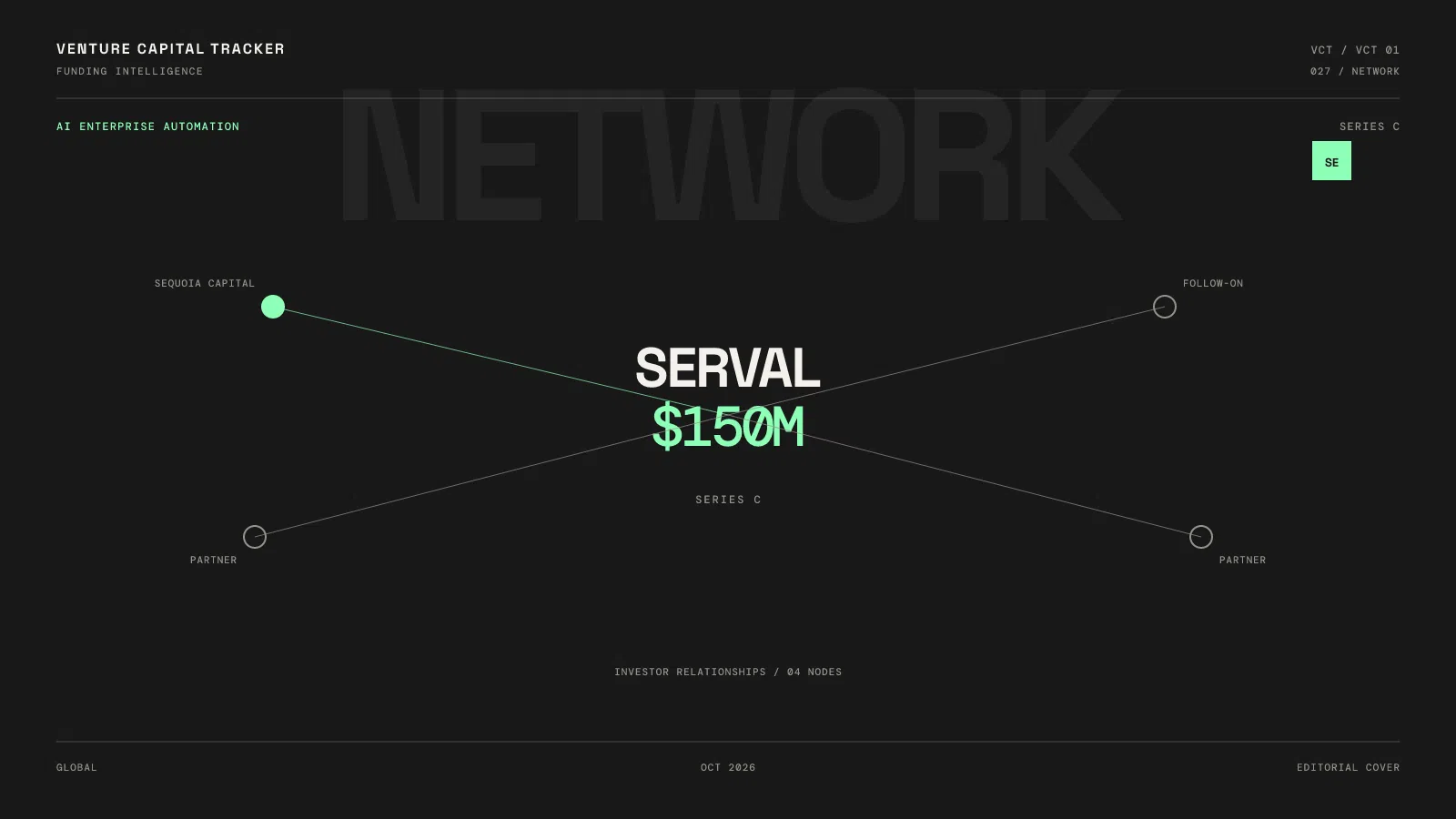
Serval has raised a **$150 million Series C at a $3 billion valuation**, led by Sequoia Capital. The October 29 financing triples the enterprise-automation company's valuation in less than a year and takes total disclosed funding to $277 million. The distinctive bet is that Serval can replace ServiceNow rather than sell another AI assistant beside it—turning natural-language instructions into governed workflows for IT, security, HR, finance and legal teams.
The round also included returning investors Elad Gil, Evantic, First Round Capital, General Catalyst and Redpoint Ventures, plus new investors Conviction and Headline. Serval did not disclose individual allocations, the primary-versus-secondary split or security terms. The company announcement describes a $3 billion valuation; Fortune reported Sequoia partner Anas Biad specified that it is post-money.
What Serval sells
Serval combines an enterprise service-management system with an automation agent called Catalyst. Buyers are usually CIO, IT, security and operations teams. Employees request help through channels such as Slack; administrators define integrations, permissions and approval rules; Catalyst generates code-based workflows that can be tested, audited and published for employee use.
A practical example is an application-access request. In a conventional workflow, an employee files a ticket, an IT specialist checks the person's role, obtains manager approval and provisions the account. Serval can perform those checks and execute the approved steps automatically, while routing sensitive actions to a human. CEO Jake Stauch told Reuters that the agent administrators use to build tools is separated from the employee-facing agent, with IT and security retaining control over permissions and approvals.
Serval sells by quote rather than publishing prices. Its website promises one platform fee and a pilot led by deployment engineers; buyers therefore need to compare total implementation and migration costs, automation rates and ongoing services—not just software seats.
The company says Lucid Motors replaced ServiceNow across IT service management, its configuration database, asset management and other workflows in 45 days. Reuters independently identified Lucid as the automotive customer. Serval also names Fox, WPP, Live Nation and Ramp as customers and says two Fortune 20 companies joined in the past six months. Its claim that annual recurring revenue has doubled every quarter since the Series B gives a growth rate without an absolute revenue figure, contract value, gross margin or retention data.
Why Sequoia invested again
Sequoia's published thesis is that most AI-era IT tools remain point solutions layered on top of an older system of record. Serval instead rebuilds the ticketing, asset, access and workflow system around AI-generated code. The investor also points to a demand catalyst: widespread use of coding agents has made natural-language workflow creation more familiar while giving IT departments more applications, permissions and agents to govern.
This is Serval's third disclosed round in roughly a year. Redpoint led a $47 million Series A in October 2025, and Sequoia led a $75 million Series B at a $1 billion valuation that December. The Series C valuation is three times higher, although the financing amount is not revenue and does not prove the economics of displacing a mature incumbent.
The closest financing comparison
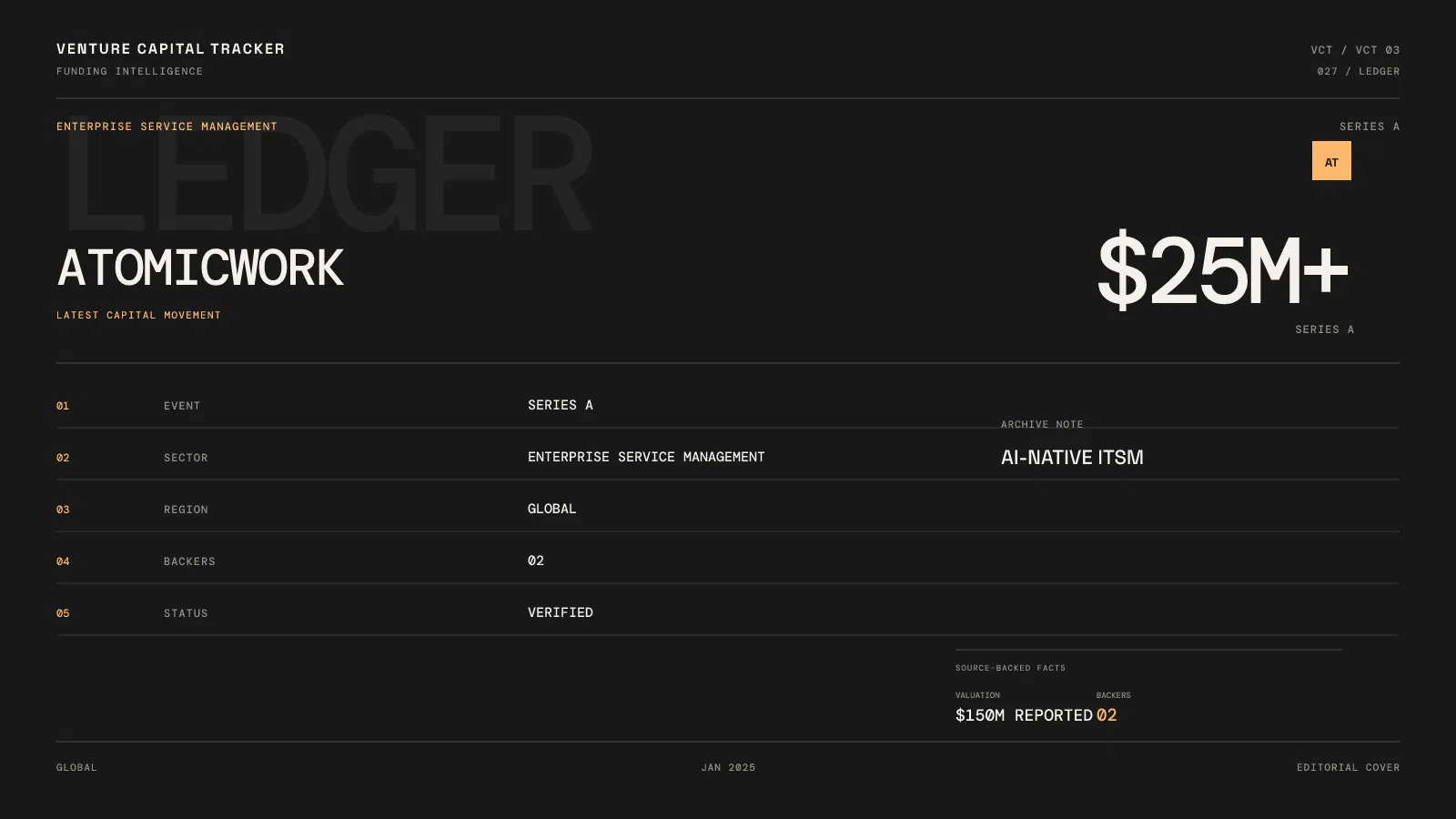
The closest recent venture comparison is Atomicwork's $25 million Series A, co-led by Khosla Ventures and Z47 in January 2025. Atomicwork also sells AI-native enterprise service management but gives customers an incremental route: its agents can run over ServiceNow or Jira before a company decides whether to replace the underlying platform. That lowers migration risk, while Serval's pitch is the larger prize of becoming the new system of record.
The market's strategic value is also visible in ServiceNow's Moveworks acquisition. ServiceNow agreed to pay $2.85 billion in March 2025 and completed the transaction that December; its annual report records $2.4 billion of final purchase consideration. That was an acquisition, not venture financing, and Moveworks emphasized an employee-facing assistant rather than a full ServiceNow replacement.
The incumbent's response is the main disconfirming evidence. ServiceNow says it retains 98% of customers, runs mission-critical workflows at global scale and has introduced a standalone AI service desk priced at $2 per conversation. Serval must show that fast pilots become durable replacements without weakening controls, auditability or integration depth. The decisive metrics are absolute ARR, renewal and expansion rates, deployment time, percentage of requests completed without human intervention, gross margin after embedded engineering, and how many customers retire their old ITSM system rather than run Serval alongside it.
Last updated:
Editorial note: AI tools assisted with research, structure, or drafting. Venture Capital Tracker retains human editorial responsibility for factual accuracy, relevance, and source quality before publication.