· Venture Capital · 7 sources · Verified
Re:Build Raises $2.1B to Scale a U.S. Manufacturing Platform
Re:Build secured $2.1B for its U.S. manufacturing network. We explain the holding-company model, customer workflow, investor thesis and closest factory-platform rivals.

By VCT Editorial
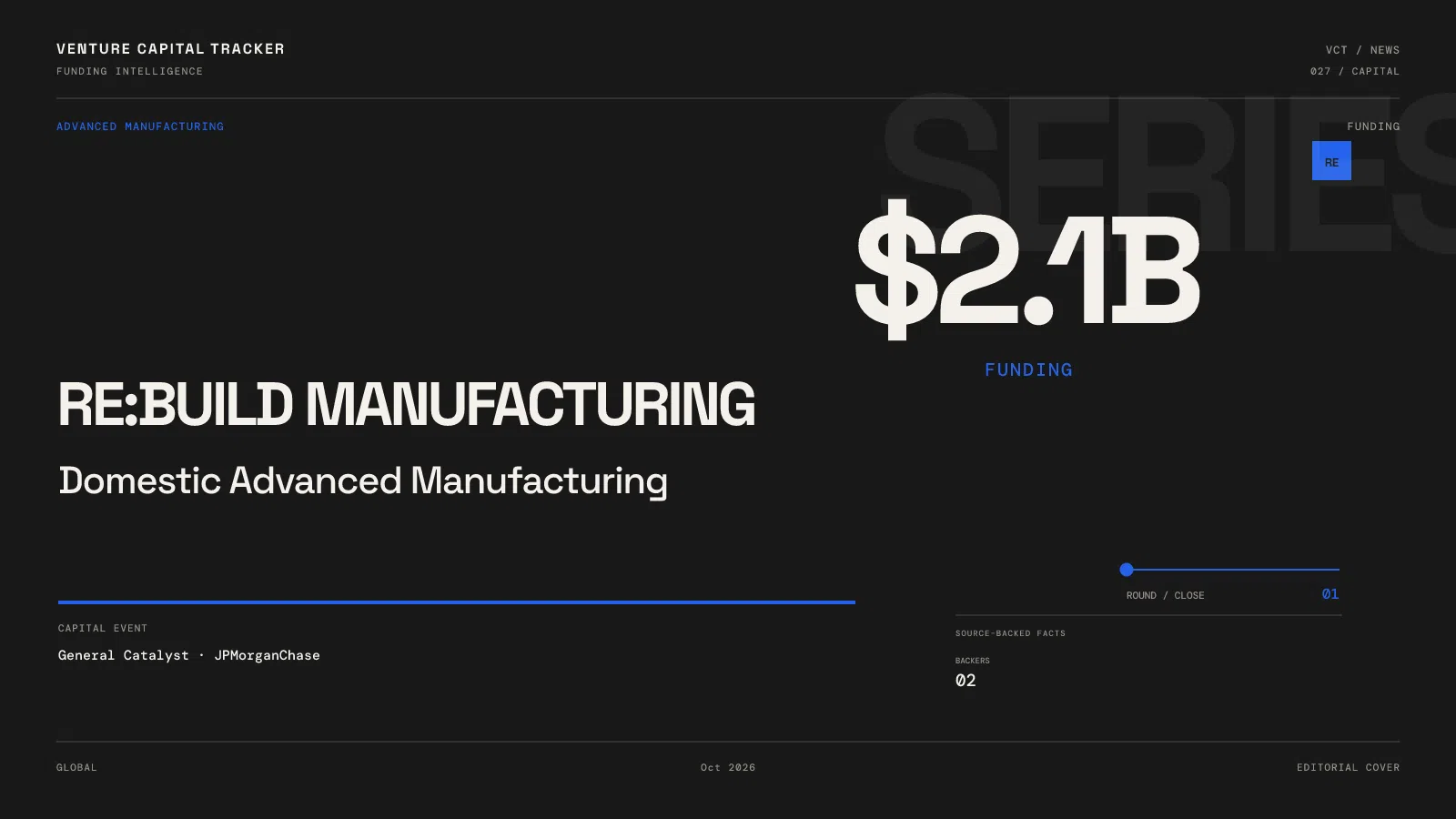
Re:Build Manufacturing has secured $2.1 billion in new funding to expand its U.S. advanced-manufacturing network and incubate additional industrial companies. General Catalyst and JPMorganChase's Strategic Investment Group led the October 27 financing. Re:Build did not disclose the round's stage, valuation, other investors or full instrument mix, so VCT is recording it as a company funding round rather than assigning a conventional venture series.
The size reflects what Re:Build is trying to finance: a long-term holding company that combines design, engineering, acquired industrial businesses, factories and startup incubation. This is capital for physical capacity and working capital, not a software company adding servers.
What customers buy from Re:Build
Re:Build works with startups and established industrial companies in aerospace and defense, electrification, medical technology, energy and automation. Customers pay for engineering and manufacturing work that can begin with product design and continue through tooling, supply-chain development and full-rate production. Public pricing, revenue and margins are undisclosed.
The company's central argument is that manufacturing cost and quality are largely fixed during design. Its Manufacturing Constrained Design process places production engineers alongside product designers before tooling and factory layouts are locked. In the traditional workflow, a product company completes much of the design and then asks a contract manufacturer to build it. Re:Build instead develops the product and production system together, reducing late redesigns and coordination across separate suppliers.
Its work with electric-vehicle startup Slate illustrates the model. Re:Build says it helped define the product, engineer the battery and electrical architecture, validate automation and connect Slate with battery-cell suppliers. The company reports that a custom hardware-in-the-loop battery test platform cost under $50,000, compared with more than $200,000 for commercial alternatives. That is a Re:Build case study, not an independently audited customer saving.
Re:Build also incubates companies and can spin them out. Slate, aircraft startup Neon Aero and membrane-materials company Ensorcell are examples. The model therefore mixes service revenue, ownership of operating businesses and venture-style exposure to new companies; Re:Build has not published how economics are divided among those activities.
Why General Catalyst and JPMorganChase invested now
General Catalyst first invested $120 million in Re:Build in 2024. Its investment memo described the company as a network of industrial businesses that combines engineering, manufacturing and strategic acquisitions. The firm's stated thesis is resilience: offshoring reduced supplier diversity and moved skills and production knowledge away from the U.S., while robotics, sensors and AI make domestic factories more competitive.
JPMorganChase's Strategic Investment Group is investing through the bank's Security and Resiliency Initiative. JPMorganChase describes that program as a ten-year, $1.5 trillion plan to finance critical industries, with an initial $10 billion allocated to direct equity investments. The bank reported $5 billion of equity deployed through the group as of October 19, 2026. Those figures describe the broader initiative, not the amount JPMorganChase committed to Re:Build.
Re:Build says its ecosystem now employs more than 2,100 people and contains 2.4 million square feet of manufacturing capacity. It also reports launching hundreds of products and production systems. Facility utilization, revenue, backlog and profitability remain private, so scale of footprint should not be confused with economic output.
The closest advanced-manufacturing financings
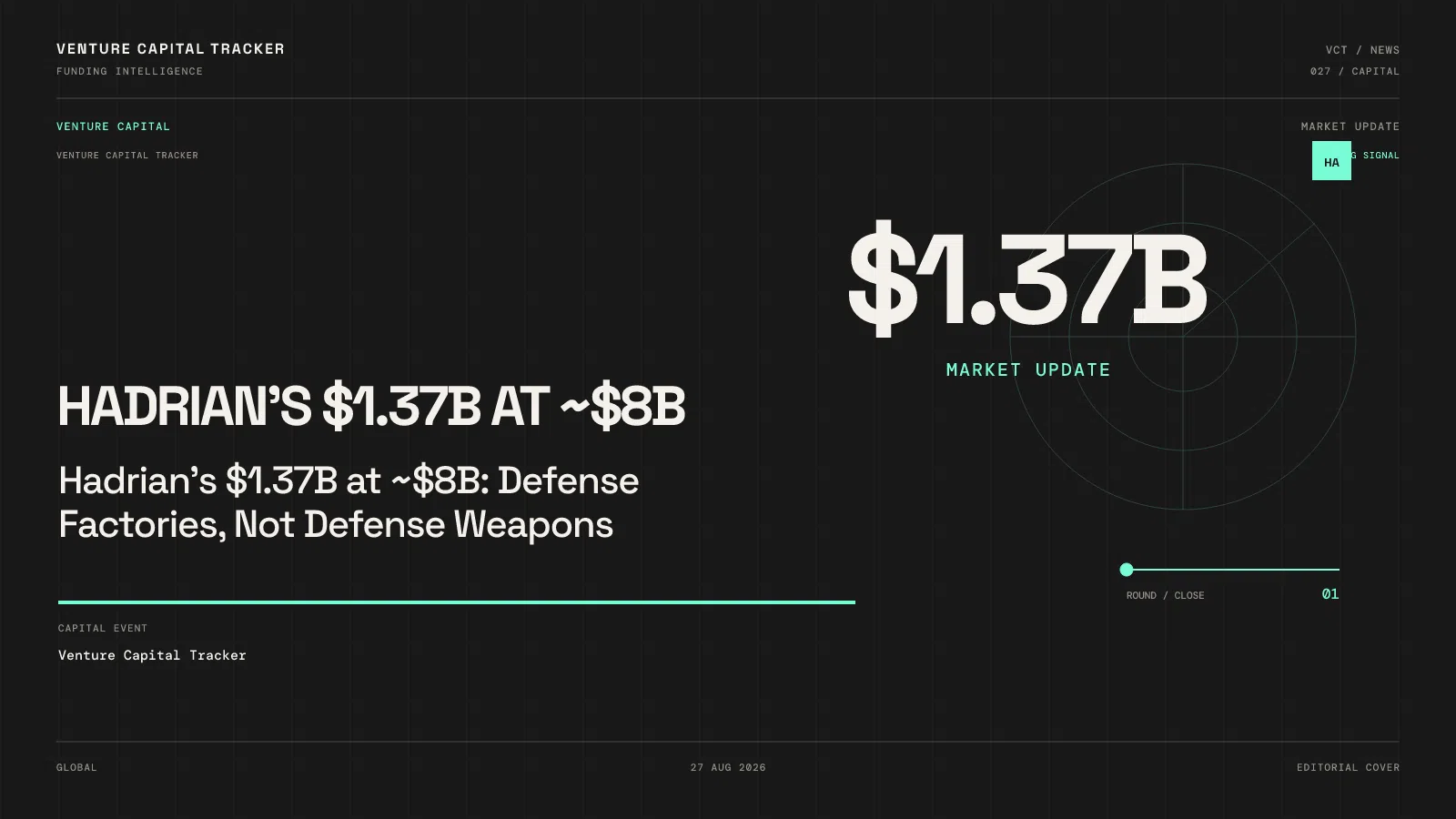
Hadrian raised $1.37 billion of Series D equity in August 2026 at a $7.87 billion valuation. Hadrian is narrower: it builds highly automated factories for defense, aerospace and industrial systems. Re:Build spans more sectors and combines contract work, acquisitions and startup incubation.
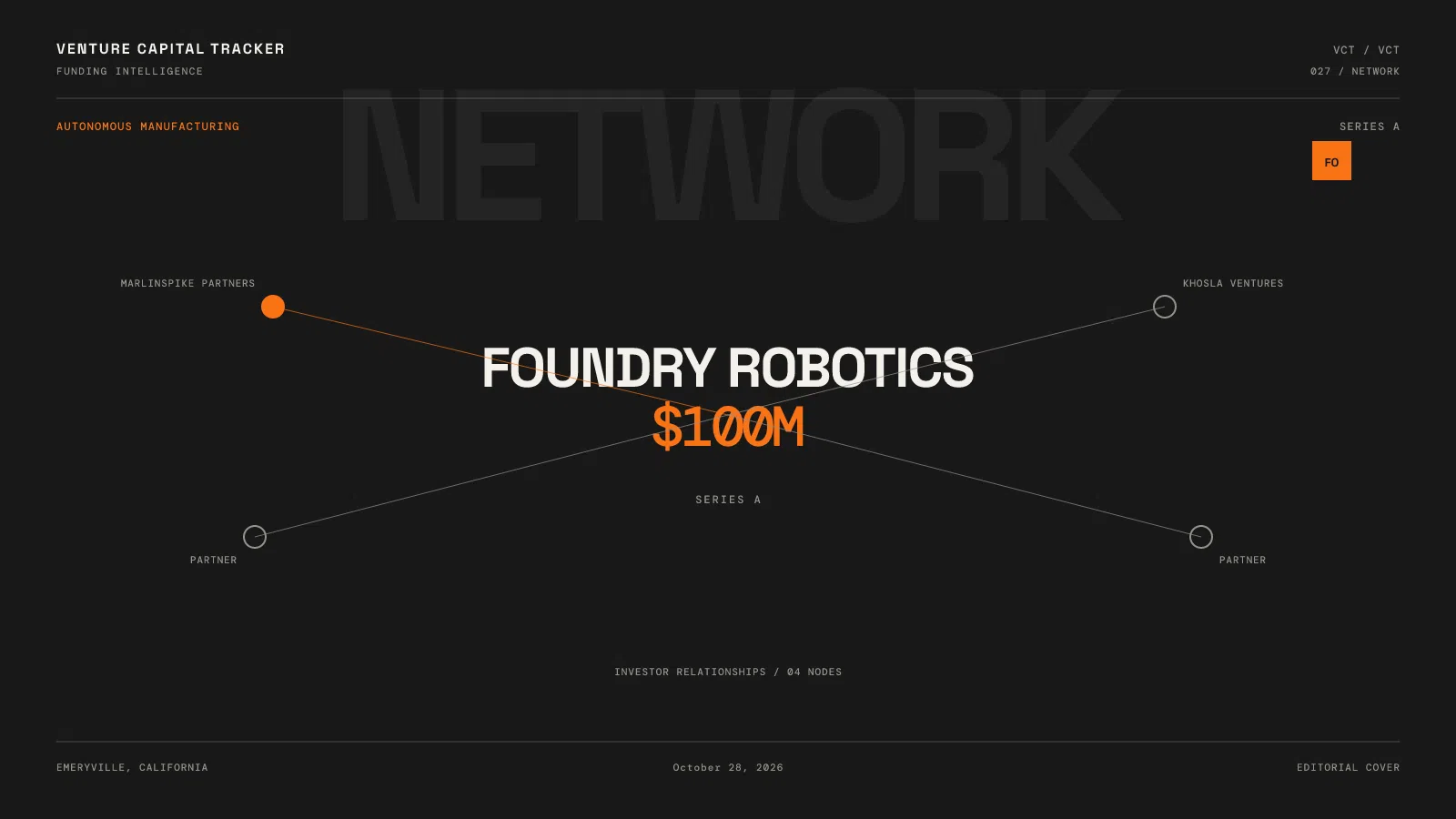
Foundry Robotics raised $100 million on October 28 to sell flexible factory output to hardware companies. Foundry is an early-stage, automation-heavy service model; Re:Build already operates a national industrial network.
Machina Labs raised a $124 million Series C in February 2026 for robotic metal-forming capacity. It is closer at the process level but focuses on software-defined production of metal structures rather than managing a broad manufacturing holding company.
The financing gives Re:Build unusual capacity to buy equipment, expand factories and support spinouts. The hard test is allocation: how much capital goes to productive assets, how quickly those assets gain customers, and whether a complex network can maintain quality and margins. The next useful measurements are revenue, contracted backlog, factory utilization, on-time delivery, gross margin, capital expenditure and the returns or ownership stakes generated by incubated companies.
Follow Venture Capital Tracker on Google
Add VCT as a preferred source to see more of our venture-capital reporting in Google Search.
Editorial note: AI tools assisted with research, structure, or drafting. Venture Capital Tracker retains human editorial responsibility for factual accuracy, relevance, and source quality before publication.