· Venture Capital Tracker · venture-capital
Nauta Reaches €60M First Close for Fund VI, Targeting €150M–€200M
Nauta's sixth fund has closed €60M, not its full €150M–€200M target. The European B2B software and deep-tech strategy spans pre-seed through Series A.
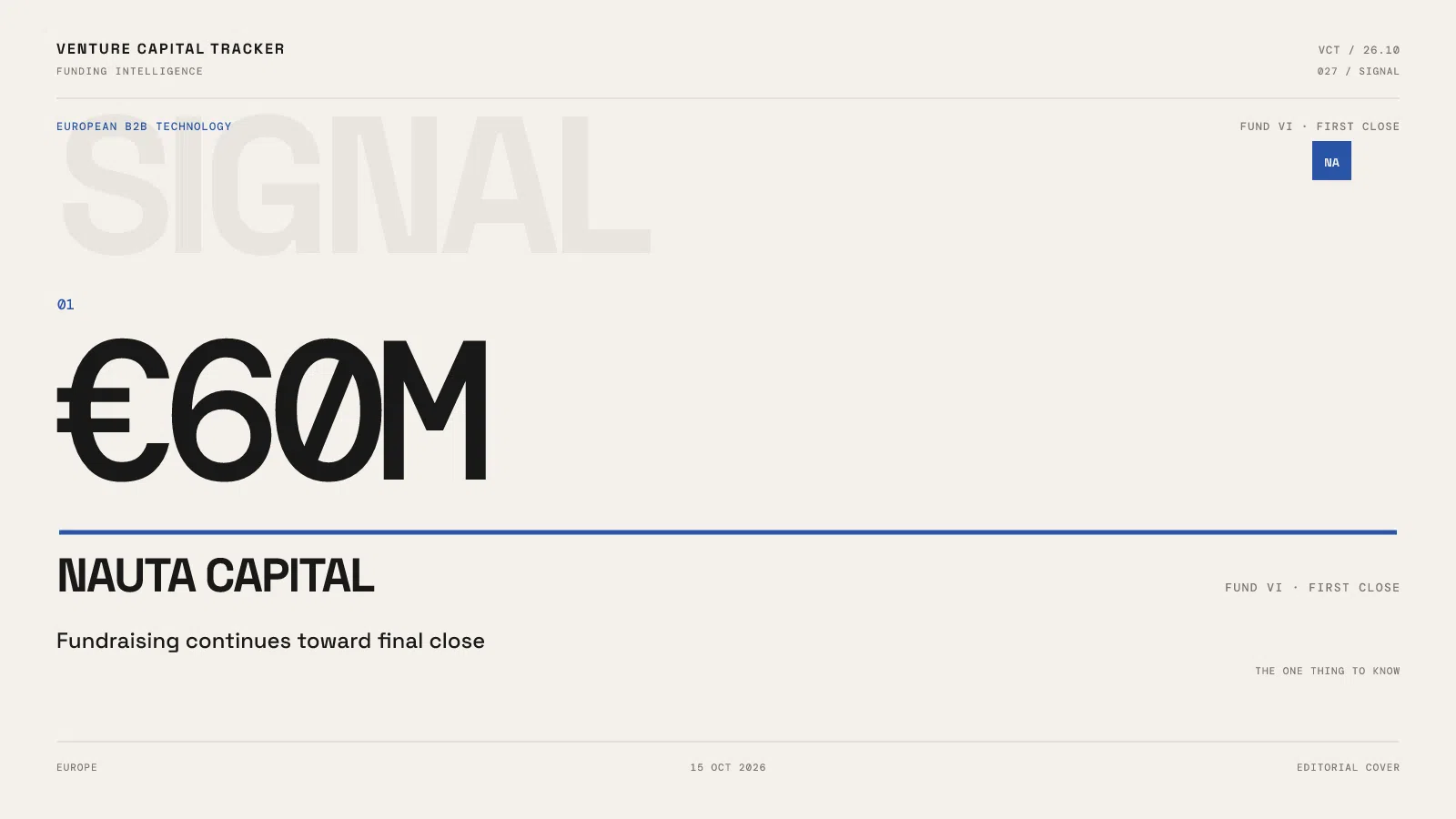
Nauta Capital announced a €60 million first close for its sixth fund on October 15, 2026. Fund VI targets European B2B software and deep-technology companies from pre-seed through Series A.
The important qualifier is first close. Nauta is aiming for €150 million–€200 million in the second half of 2027; it has not announced that entire amount as raised.
A first close backed by returning institutions
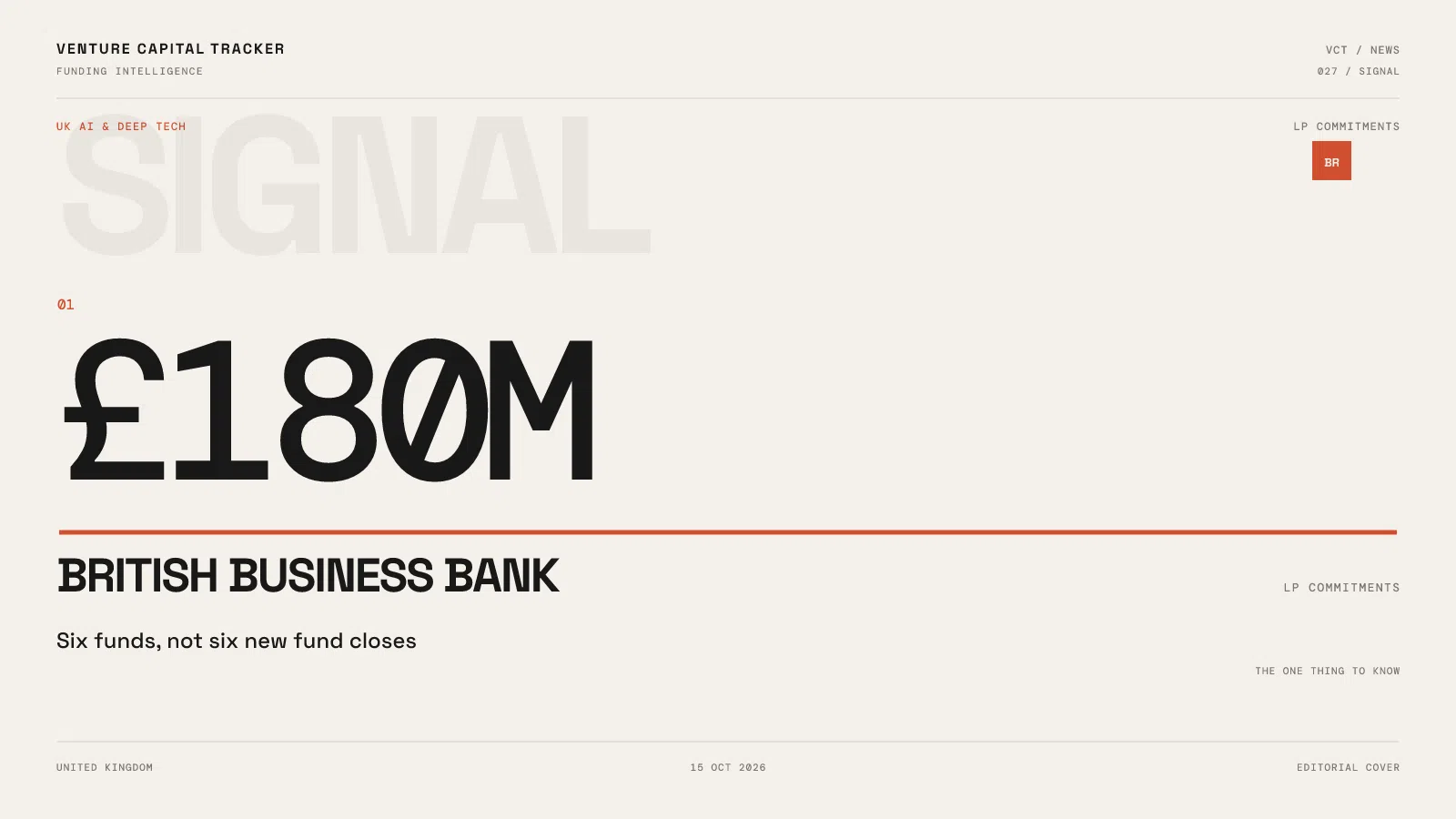
The firm's announcement names the British Business Bank as anchor, alongside SETT, Merifin Capital and Institut Català de Finances. Other participants include institutions and family offices across several regions.
Nauta says three-quarters of the first-close investors have backed earlier funds. That is a statement about the number of LPs, not proof that returning investors supplied three-quarters of the capital. The release does not publish each participant's commitment size.
Why the final fund size still matters
At €60 million, the first close represents 30%–40% of the stated target range. That is simple arithmetic, not a prediction of fundraising success.
A fund's investment pace and reserves need to make sense under more than one outcome. An investor that assumes the maximum target will be reached can commit too much early, leaving less flexibility for follow-ons if fundraising takes longer than expected.
Conversely, a smaller first close can allow a manager to start investing while keeping capacity open for additional LPs. The headline alone does not show how Nauta has budgeted management costs, initial investments or reserves. Those allocations were not disclosed.
Software and deep tech require different kinds of patience
Nauta describes a strategy spanning capital-efficient B2B software and pre-seed deep tech through its Nauta Labs initiative within the same fund. The opportunity is to find technical differentiation early; the challenge is that different businesses prove themselves on different schedules.
A software company may demonstrate repeatable demand through retention and sales efficiency. A deep-tech company may first need to retire a technical or manufacturing risk before revenue becomes a useful comparison.
Our analysis is that reserve discipline is especially important when those models share a fund. A small initial check does not cap the capital eventually needed to protect ownership, and a promising technical result is not the same as a commercially scalable product.
What returning LPs signal—and what remains unknown
Repeat participation suggests continuity in the manager's institutional relationships. It does not establish realized investment performance, the attractiveness of the new fund's terms or the ultimate fundraising outcome.
The most useful future disclosures would include final commitments, portfolio construction and the allocation between the software and deep-tech strategies. Those would make the fund easier to evaluate than a broad claim about enthusiasm for European AI.
The €150 million–€200 million ambition should also remain separate from firm-wide assets under management. Existing funds, a new vehicle's first close and a future target are different capital measures.
Bottom line
Nauta has a confirmed €60 million first close and an unfinished fundraising process. For founders, the relevant opportunity is an early-stage European technology investor; for LPs, the question is how Fund VI turns its strategy and eventual size into a disciplined portfolio.
Editorial note: AI tools assisted with research, structure, or drafting. Venture Capital Tracker retains human editorial responsibility for factual accuracy, relevance, and source quality before publication.