· Venture Capital Tracker · venture-capital
North.cloud Closes $60M Series B for Cloud and AI Spend Automation
PeakSpan Capital leads North.cloud's $60M Series B. The FinOps platform targets cloud, AI and data spending; nearly $2B managed spend is not company revenue.
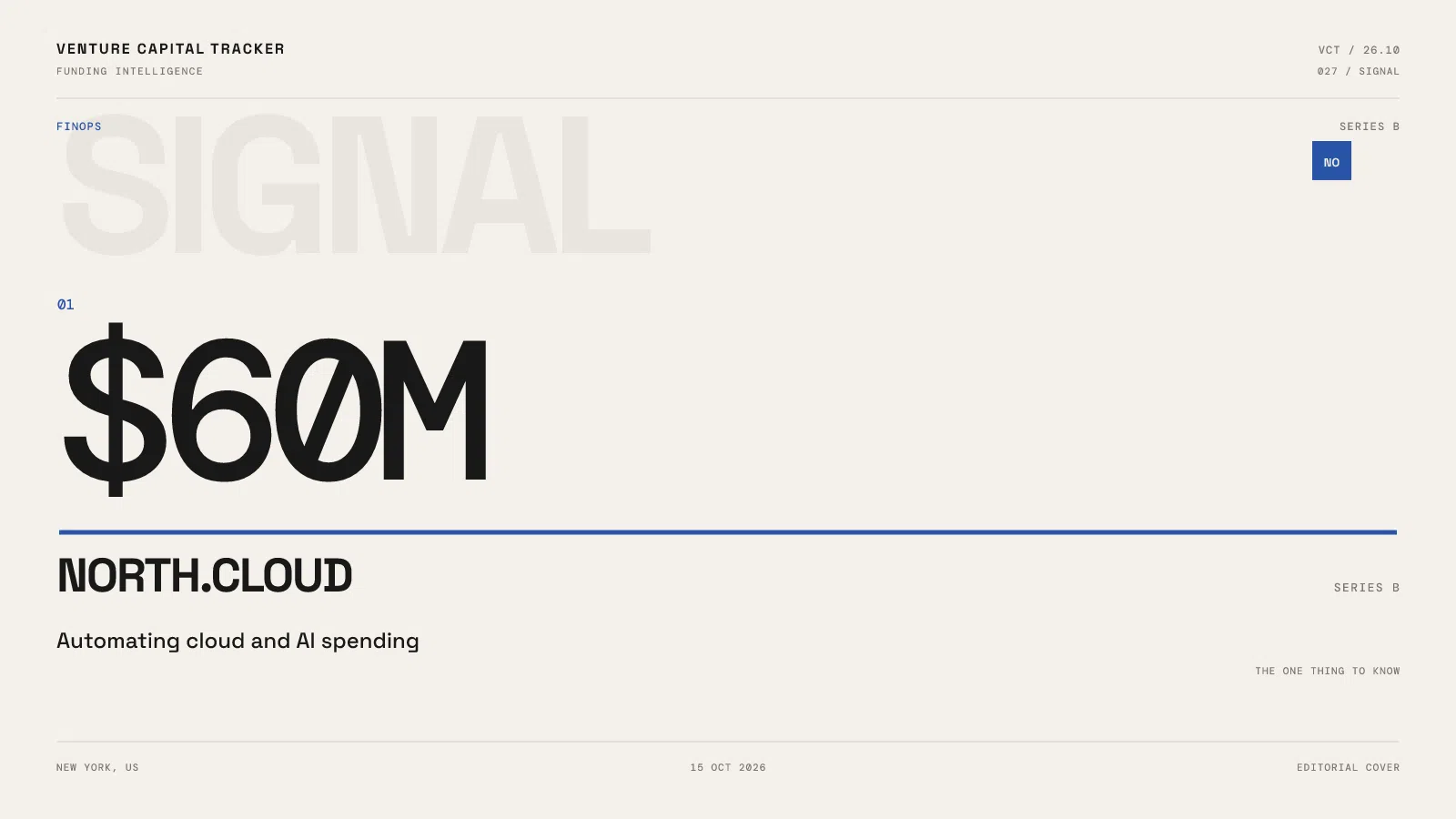
North.cloud has closed a $60 million Series B led by PeakSpan Capital, the New York company announced on October 15, 2026. The financing backs a platform intended to manage cloud infrastructure, model usage and data-service costs together.
It is a confirmed company financing. No current valuation was disclosed in the announcement.
Who invested, and what will the capital fund?
Litquidity Ventures, Companyon Ventures, Alpaca, Uncommon Denominator, Gaingels and Mana Ventures participated. The company release says proceeds will support product integrations, automation, AI-spend management and team expansion.
North reports approaching $2 billion of managed cloud spend and more than $400 million in customer savings. These are company claims. Managed spending is not North's revenue, and customer savings are not its cash flow. The disclosure does not establish that those two cumulative figures use the same period or denominator.
Why bring cloud, AI and data bills together?
The investment thesis is that the economic unit increasingly crosses vendor boundaries. A customer-facing AI feature can consume model tokens, application infrastructure and stored data. Looking at each invoice separately may obscure whether that feature is financially worthwhile.
North's newsroom describes the funding as an expansion of spend intelligence and automation. Its product coverage now spans the three major public-cloud providers, alongside model and data-platform integrations.
Our analysis is that the valuable product is not merely a consolidated chart. It is a reliable connection between usage, business ownership and an action that improves economics. Finance teams need understandable allocations; engineering teams need interventions that preserve service quality.
Where does automation create value—and risk?
Cloud commitments illustrate the trade-off. A company can receive a better price in exchange for committing to usage, but changing demand can leave that commitment poorly matched to actual needs.
An automated optimization product must therefore do more than find the cheapest advertised rate. It needs to account for uncertainty, existing obligations and operational constraints. Good results should persist when workloads shift, not only when demand follows the original forecast.
The same distinction applies to AI inference. A cheaper request is not necessarily a better business outcome if it produces an unusable answer or requires repeated retries. Meaningful evaluation should consider cost per successful task and user experience, not token prices alone.
These are underwriting questions rather than findings that North has failed any specific test.
What should investors ask about the reported traction?
First, what revenue model sits behind the managed-spend figure? A large customer budget can create opportunity, but investors still need to understand how much value the vendor captures and how predictably it is paid.
Second, how are savings measured? The baseline should distinguish negotiated discounts, workload changes and avoided spending. Without that definition, it is hard to compare results across providers or customers.
Third, what does retention mean? A percentage without a period, cohort and revenue-versus-logo definition is not enough to calculate recurring-revenue quality.
Finally, customers must be comfortable delegating financial decisions. Approval thresholds, audit trails and the ability to reverse changes may become important differentiators as the product takes on more responsibility.
How does this fit VCT's coverage?
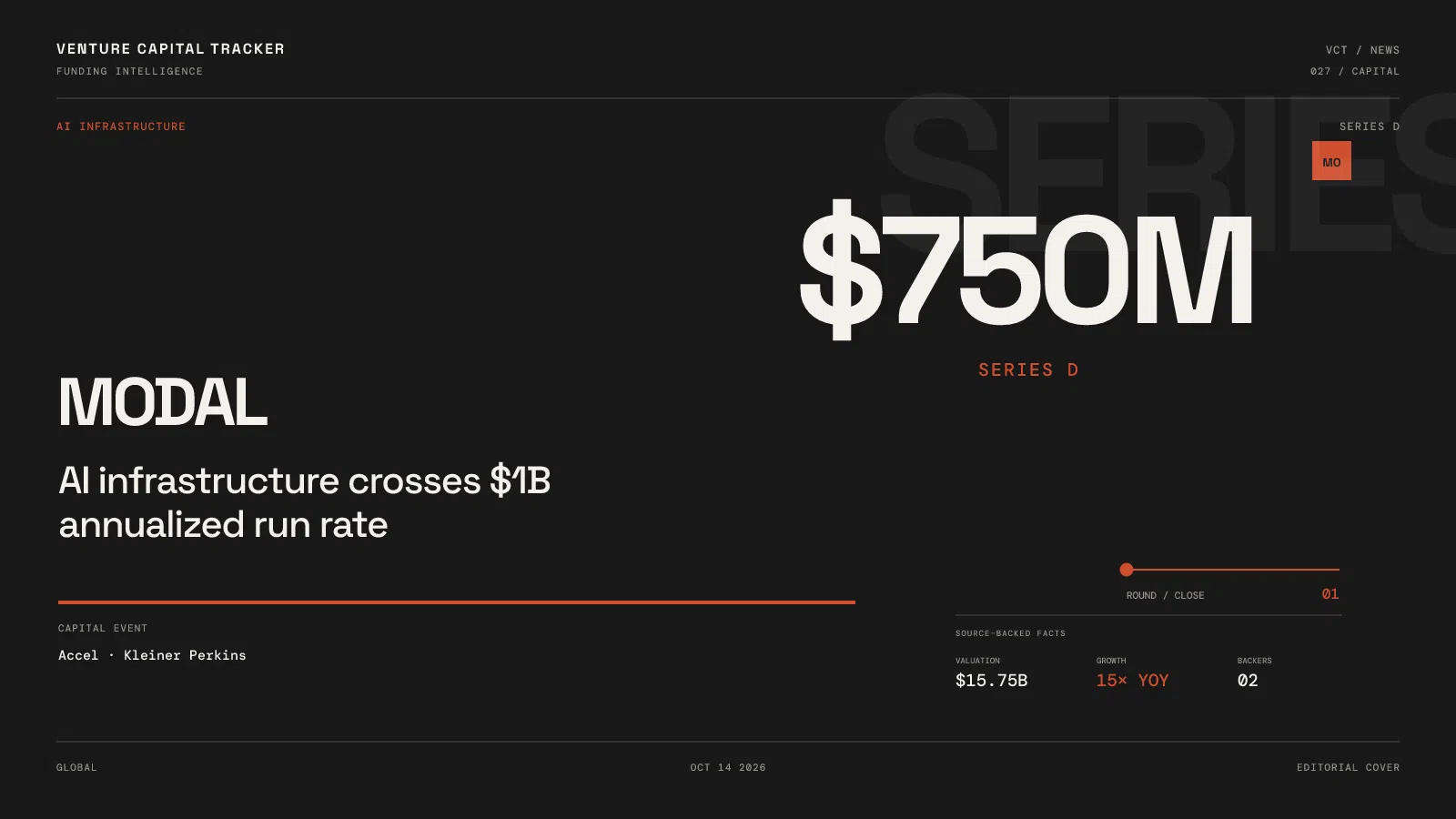
Ramp's financing also highlights growing investor interest in controlling AI-related expenses, although its broader finance platform is not interchangeable with a cloud-optimization product. Modal's Series D covers the infrastructure-supply side of the same spending cycle.
Bottom line
North's Series B backs a shift from reporting infrastructure costs to acting on them. The strongest evidence of durable value will be transparent savings, reliable automation and attractive vendor economics—not the scale of customer budgets alone.
- startup-funding
- series-b
- ai-infrastructure
- +1 more
Editorial note: AI tools assisted with research, structure, or drafting. Venture Capital Tracker retains human editorial responsibility for factual accuracy, relevance, and source quality before publication.