· Investment Strategies · 4 sources
Stoke Space’s $1B Series E: Point72 and Spark Fund Full Reuse Before First Orbit
Stoke completed an initial $1B Series E co-led by Point72 Ventures and Spark Capital — $2.3B total raised — to fly Nova Pathfinder in early 2027 and build 15-ton Nova Block 2 for 2029.

By Venture Capital Tracker Editorial
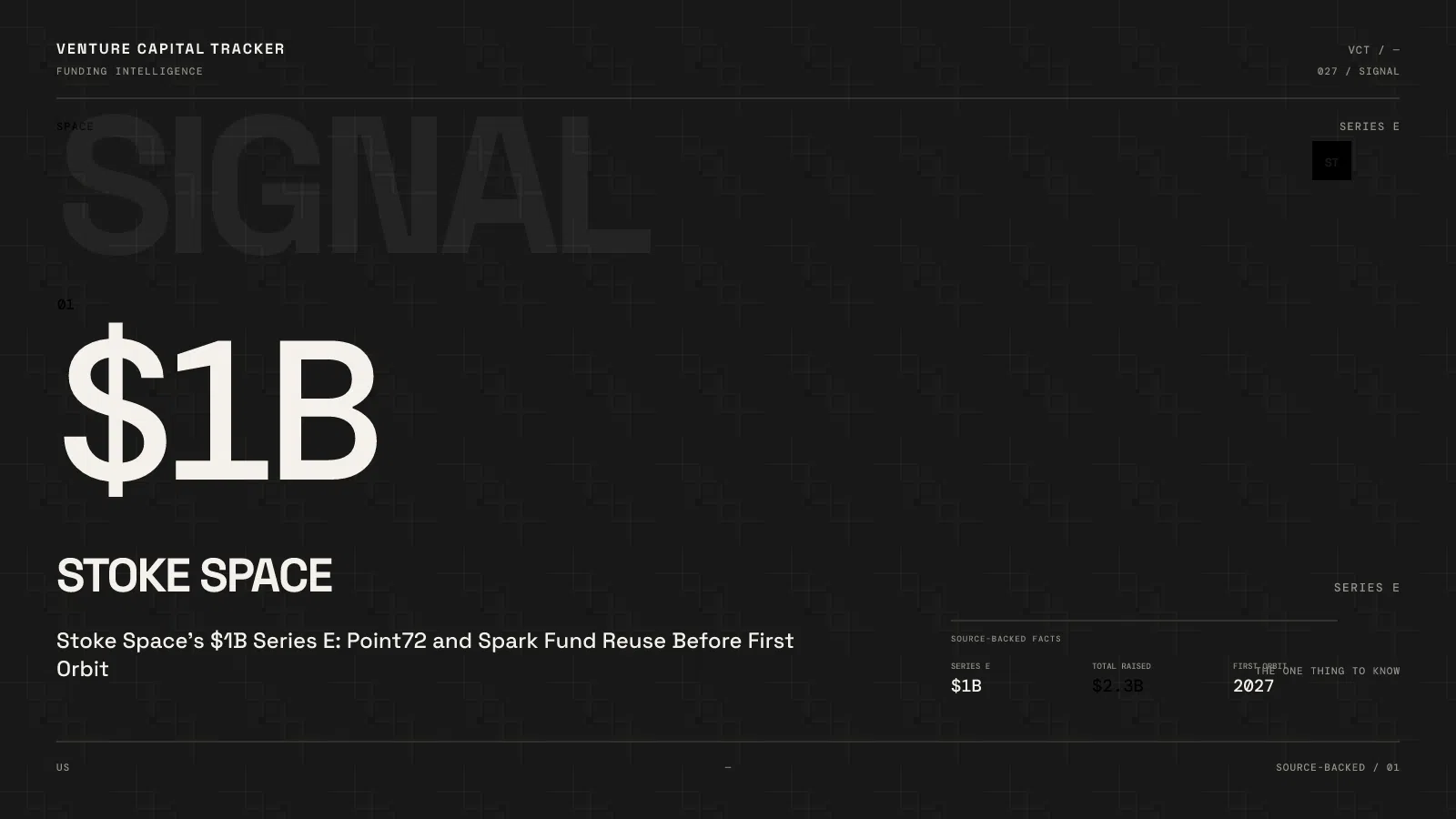
Stoke Space completed an initial closing of a ~$1 billion Series E on September 8, 2026, co-led by Point72 Ventures and Spark Capital, with Y Combinator, US Innovative Technology, Glade Brook, Woven Capital, General Innovation, Washington Harbour Partners, and others participating. Cumulative capital is now $2.3 billion (company press).
Most of that cash arrives before first orbit. Pathfinder is targeted for early 2027; the raise also funds Nova Block 2 (15 metric tons to LEO, 2029 target) so Stoke is not stuck as a three-ton niche once Falcon-class demand shifts.
Key facts
- Company
- Stoke Space (Kent, WA; Cape Canaveral LC-14)
- Round
- ~$1B Series E (initial close; CEO: “within rounding error” of $1B)
- Co-leads
- Point72 Ventures, Spark Capital (both since Series A per Payload)
- Cumulative
- $2.3B total raised
- Valuation
- ~$10B — Reuters-reported, not in company press
- Pathfinder
- ~3 t to LEO; full first+second stage reuse thesis; early 2027
- Block 2
- 15 t to LEO, 5 m fairing; 2029 target
- Prior
- Series D / extension to $860M (Oct 2025–Feb 2026)
Point72 Ventures, USIT, Glade Brook, Woven, General Innovation, Washington Harbour
Who uses the product — and why they would buy
Users: constellation operators, government/defense missions, and commercial customers that need third-party launch capacity — especially if SpaceX prioritizes Starlink / Starship internal demand (thesis Lapsa and peers articulate publicly).
Job: buy flights on a fully reusable medium-lift stack (methalox first stage + actively cooled hydrolox second stage) instead of accepting expendable upper stages as the industry default.
Proof still ahead: Stoke says Pathfinder vehicles are in production and ground systems are checked out short of combined rocket+pad tests. Sold contracts are company-claimed; dollar backlog was not published in the Series E materials reviewed.
Why now
- Launch demand signal is “more capacity, larger missions” — company language for constellation replenishment.
- Pathfinder slipped from late 2026 talk into early 2027; capital pre-funds cadence infrastructure, not just one demo.
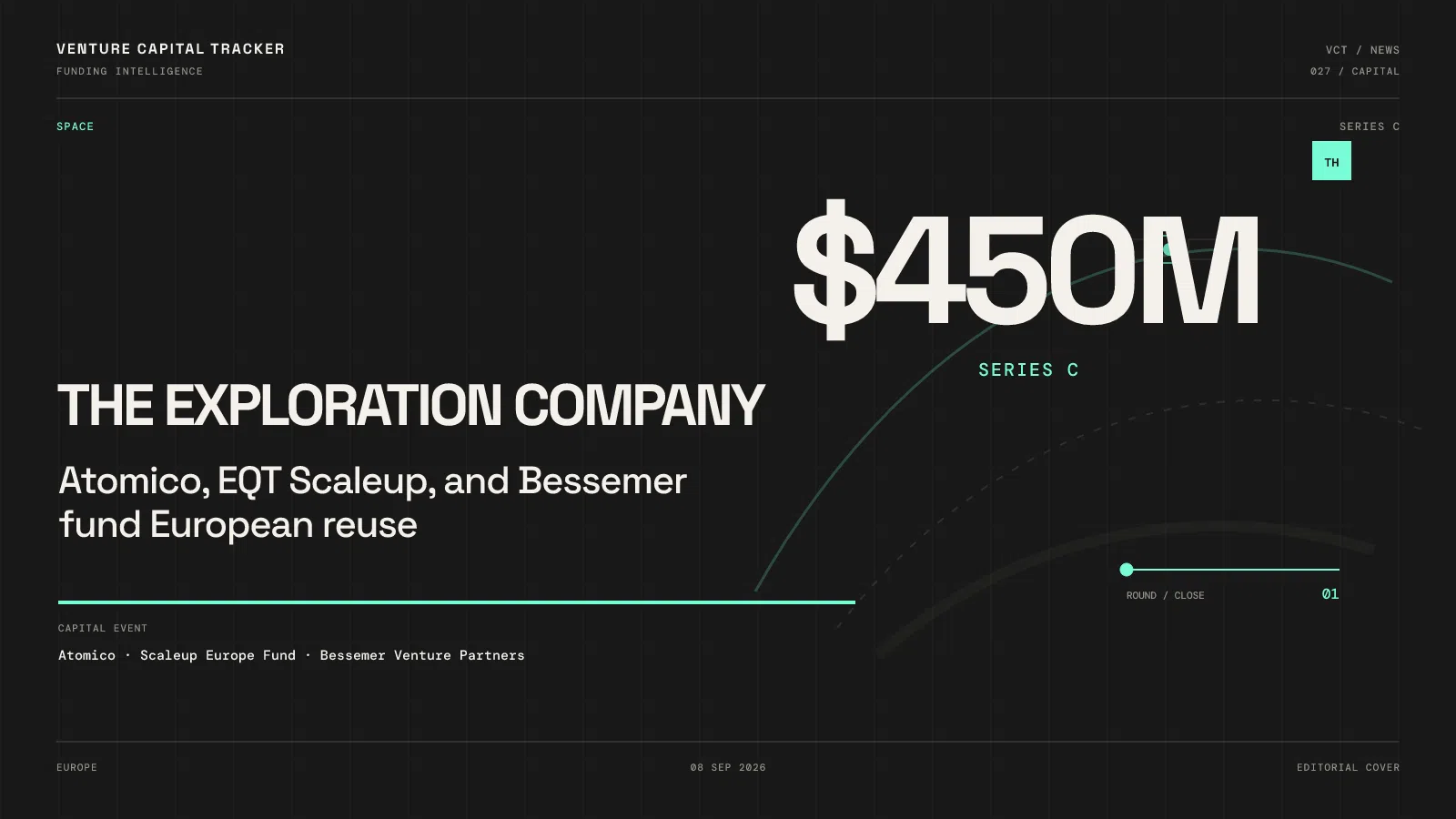
- Same week, Europe’s The Exploration Company raised $450M Series C — Atlantic capital is pricing launch sovereignty and reuse in parallel (TEC deep dive).
Why Point72 + Spark — portfolio fit
| Dimension | Fit |
|---|---|
| Point72 Ventures | Multi-stage Stoke backer; hedge-fund-adjacent capital comfortable with multi-year hard-tech |
| Spark Capital | Same long-duration thesis: full reuse as the only cost-floor end state |
| YC / USIT | Continuity from earlier rounds; defense/innovation-flavored capital for LC-14 and factory scale |
| Strategic rationale | Need factory + pad + Block 2 R&D before Pathfinder proves the architecture in flight — classic deep-tech sequencing |
What remains undisclosed
- Company-stated post-money (use Reuters ~$10B carefully)
- Contract backlog $ value and customer names
- Capex split Pathfinder vs Block 2 vs recovery fleet
- Whether Series E is fully closed or still open after “initial” close
Takeaway
$1B pre-orbit is a bet that second-stage reuse is worth industrializing now, while SpaceX’s cadence creates both a competitor and a customer-spillover opportunity. The flight that matters is Pathfinder — everything else is scaffolding until that works.
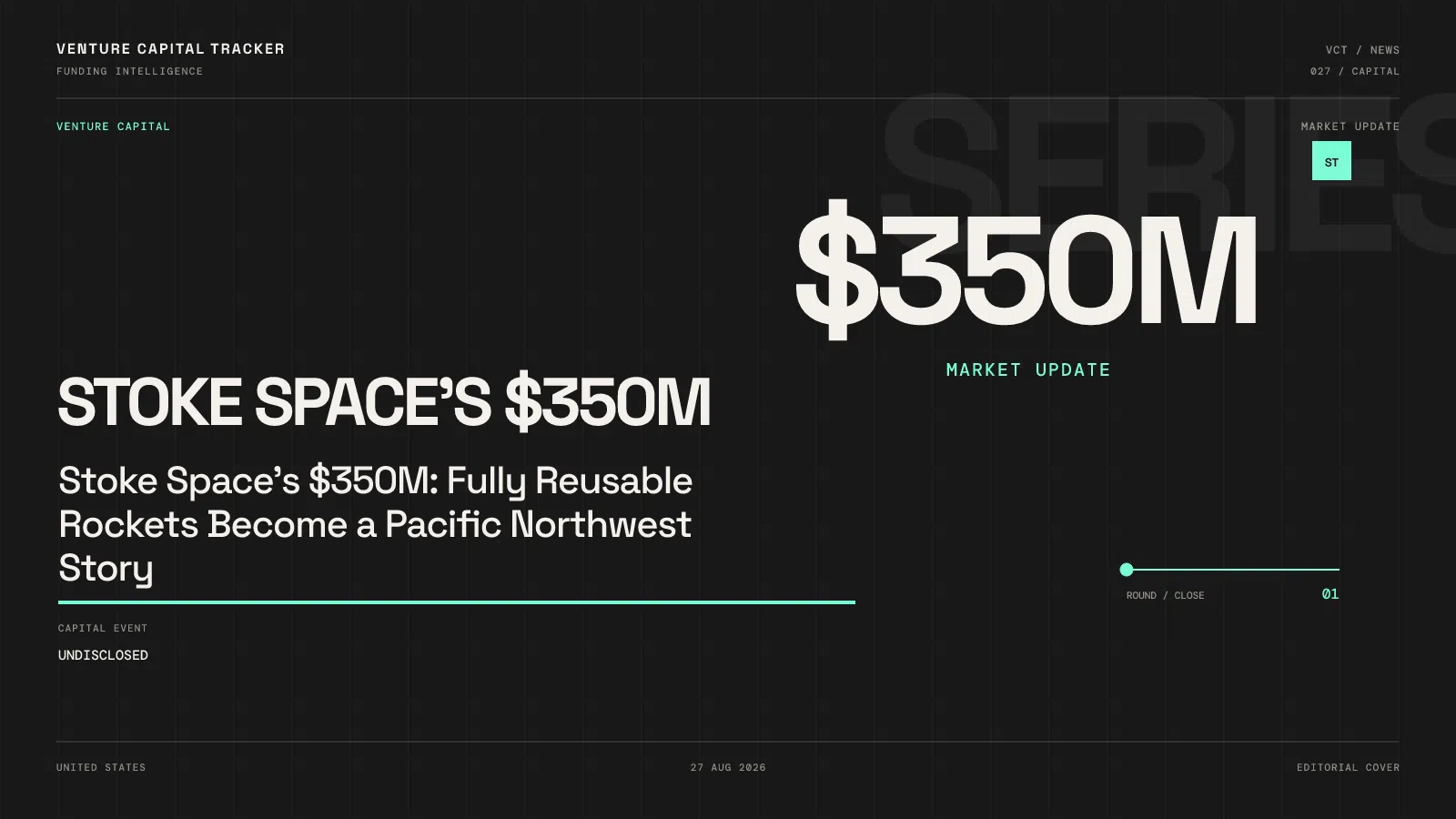
Prior Stoke coverage: $350M / Series D path. Day index: September 8–9.
Follow Venture Capital Tracker on Google
Add VCT as a preferred source to see more of our venture-capital reporting in Google Search.
Editorial note: AI tools assisted with research, structure, or drafting. Venture Capital Tracker retains human editorial responsibility for factual accuracy, relevance, and source quality before publication.