Stoke Space's $350M: Fully Reusable Rockets Become a Pacific Northwest Story
Stoke's latest round extends Seattle's hard-tech profile and puts second-stage reuse back on the commercial launch roadmap.
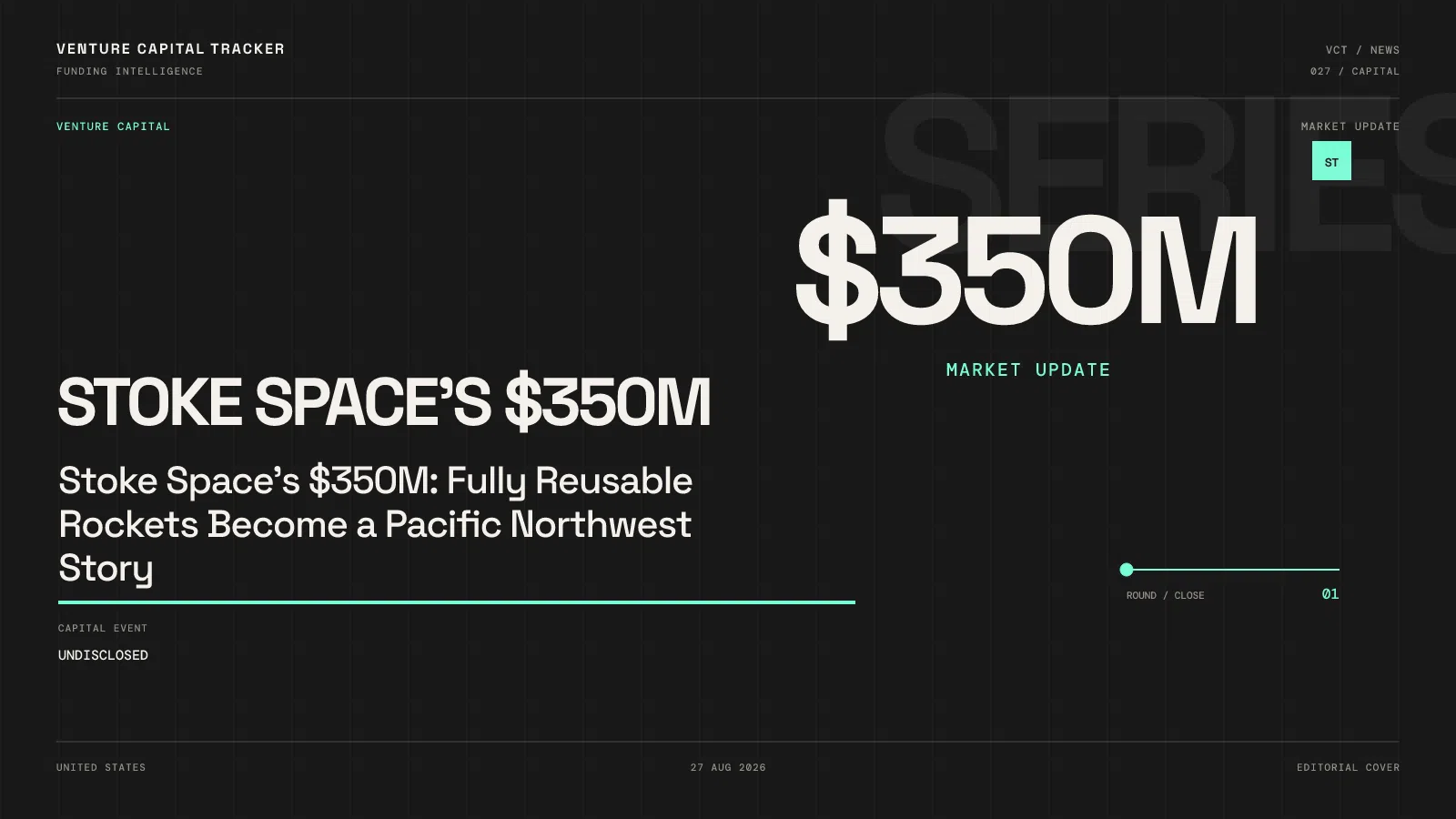
Seattle-area Stoke Space raised $350M during Q1 2026, per GeekWire's regional analysis. Stoke is pursuing full reusability of both first and second stages — a capability SpaceX's Starship is also working toward.
The problem this startup is attacking
Launch cost per kilogram has declined, but the second stage remains largely expendable in most systems. A fully reusable medium-lift rocket could meaningfully change the economics of constellations, orbital manufacturing, and deep-space payloads.
Why this is a live problem now
- LEO constellation demand is outpacing available launch cadence.
- Government and commercial customers want launch diversity beyond SpaceX.
- NASA, Space Force, and allied programs are increasingly buying from new entrants.
Competitive map
- SpaceX Starship / Falcon 9.
- Rocket Lab Neutron.
- Relativity Space Terran R.
- Blue Origin New Glenn.
- ULA Vulcan.
Market signal (the number to remember)
- $350M for an earlier-stage entrant reflects deep strategic appetite for launch redundancy and reusable upper-stage technology.
Practical takeaway (operator + investor)
- Operators: Manifest diversification — across multiple launch providers — becomes a real supply chain strategy.
- Investors: Space capital is returning but with tighter underwriting; only companies with credible engine test cadence and paid contracts will clear the bar.
Sources
- GeekWire Seattle Q1 2026: https://www.geekwire.com/2026/bigger-checks-fewer-bets-seattle-startup-deal-count-drops-to-lowest-level-since-2020/
Editorial note: AI tools assisted with research, structure, or drafting. Venture Capital Tracker retains human editorial responsibility for factual accuracy, relevance, and source quality before publication.