DIG Ventures Closes $120M Fund III for Europe’s AI Infrastructure Layer
DIG Ventures closed a $120 million third fund to back roughly 30 pre-seed and seed enterprise AI, cloud and software-infrastructure startups across Europe and Israel.
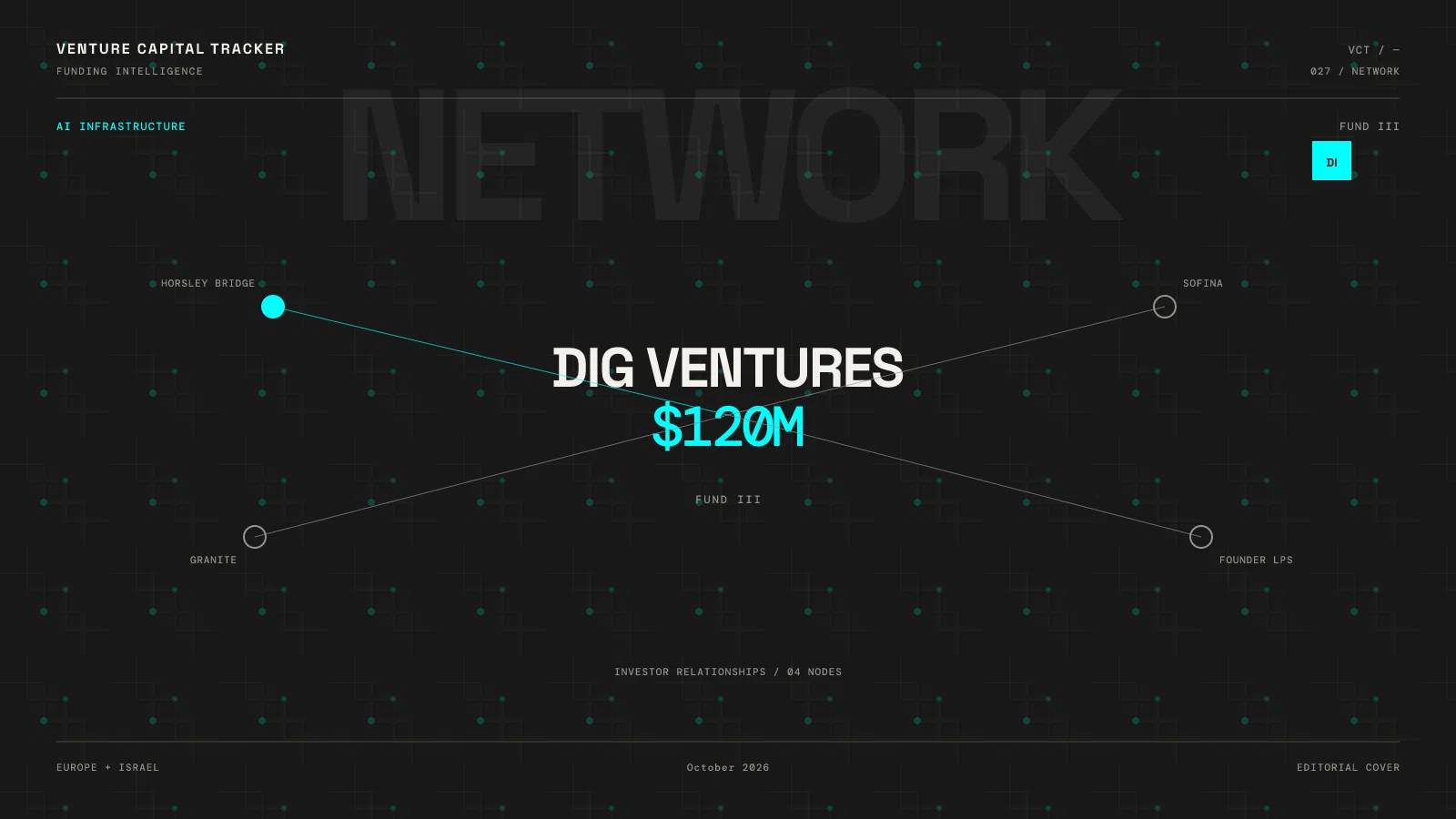
DIG Ventures has closed $120 million for Fund III, giving the London-based firm a larger pool of capital to back approximately 30 pre-seed and seed companies building enterprise AI, cloud and software infrastructure across Europe and Israel.
The final close matters less for its headline size than for where DIG is placing the money: below the application layer, where startups sell the tooling, orchestration, data systems and developer infrastructure that other AI businesses need to operate. The strategy puts Fund III into one of venture capital's most crowded themes, but with a narrower B2B infrastructure mandate and an operator-led network built around MuleSoft founder Ross Mason.
DIG Ventures Fund III at a glance
| Item | Detail |
|---|---|
| Close | Final close |
| Fund size | $120 million, reported as approximately €106 million |
| Stage | Pre-seed and seed |
| Geography | Europe and Israel |
| Planned portfolio | About 30 companies |
| Core focus | Enterprise AI, cloud and software infrastructure |
| Institutional LPs disclosed | Horsley Bridge, Sofina, Granite and an unnamed US university endowment |
| Founder LPs disclosed | Founders behind Slack, Datadog, Nord Security, Cast AI, Supercell and Dash0 |
The fund is managed by a team that includes Mason, Melissa Klinger and Rytis Vitkauskas. DIG's pitch is that company-building experience can improve its usefulness to technical founders, particularly when a European startup needs to sell into the United States or build an enterprise go-to-market function.
Why the infrastructure layer is the bet
The market has no shortage of AI applications. DIG is instead concentrating on what it calls the control points beneath them: systems for deploying models, managing data, operating cloud workloads and supporting the next generation of enterprise software.
That positioning has two attractions. First, infrastructure suppliers can serve many application categories rather than depend on a single end market. Second, technical switching costs may create more durable customer relationships once a product becomes embedded in a company's data or development stack.
The risks are equally clear. Infrastructure markets consolidate quickly, hyperscalers can bundle competing features, and fast model improvements can erase a startup's differentiation. A broad “AI infrastructure” label therefore is not enough. Fund III's performance will depend on whether DIG can identify products that sit in a genuinely defensible workflow and reach meaningful usage before a platform vendor copies or absorbs the category.
What the portfolio construction implies
A $120 million fund spread across approximately 30 companies produces a simple gross average of $4 million per company before management fees, follow-on reserves and any variation in ownership targets. That is not DIG's disclosed check size. It is a useful constraint: the firm must either make relatively concentrated initial bets, retain meaningful capital for follow-ons, or balance a larger number of small seed entries with selective reserve deployment.
The structure also suggests that the highest-conviction winners may receive substantially more capital than the initial portfolio average. For founders, the practical questions are therefore not only whether DIG leads seed rounds, but how it allocates reserves and what milestones unlock follow-on support.
An operator-and-founder LP network
Fund III combines traditional institutional capital with commitments from founders associated with Slack, Datadog, Nord Security, Cast AI, Supercell and Dash0. That network can be strategically useful: infrastructure startups often need help with technical recruiting, enterprise sales and US market entry long before they have mature internal functions.
Founder LPs do not guarantee customer introductions or better returns, but their presence sharpens DIG's positioning. It also creates an implicit test. The firm must translate a high-quality network into repeatable portfolio support, not simply use recognizable names as fundraising validation.
What to watch
Three indicators will determine whether Fund III's thesis is working:
- Ownership and follow-on discipline. Thirty-company portfolios can dilute attention unless reserves and decision rules are explicit.
- US commercialization. European infrastructure companies frequently face a distribution gap even when their technical product is strong.
- Durable control points. The most important question is whether portfolio companies own a critical workflow or remain replaceable features inside a larger cloud platform.
DIG has closed the capital. The harder phase is proving that operator experience and a founder-heavy LP base can turn European infrastructure talent into globally scaled enterprise companies.
Sources
Editorial note: AI tools assisted with research, structure, or drafting. Venture Capital Tracker retains human editorial responsibility for factual accuracy, relevance, and source quality before publication.