Armadin Raises $255.5M Series B at a $2.5B-Plus Valuation
Kevin Mandia’s Armadin raised a $255.5 million Series B co-led by Andreessen Horowitz and Accel, taking total funding to $445 million seven months after launch.
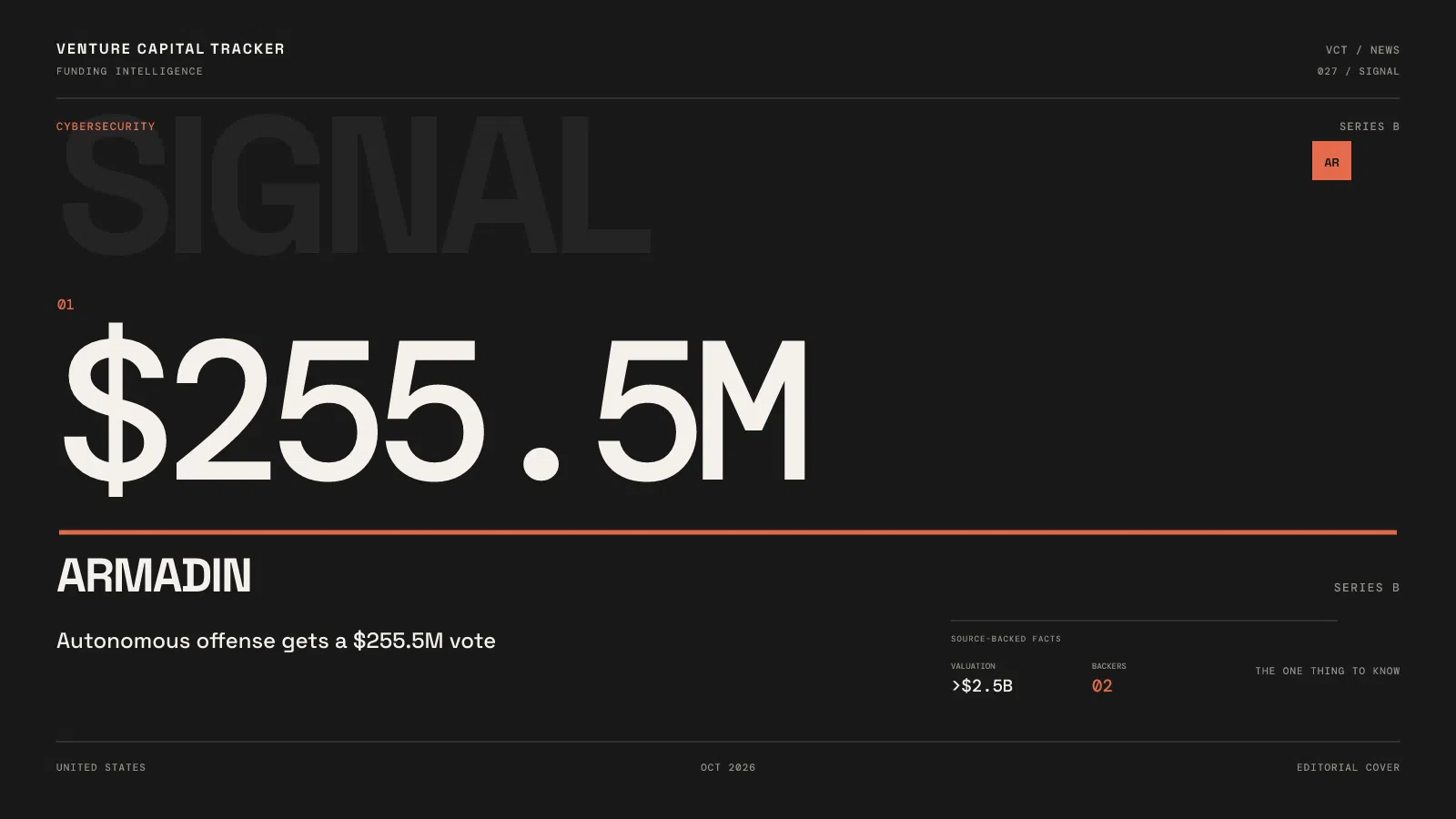
Armadin has raised $255.5 million in Series B funding at a valuation of more than $2.5 billion, giving Kevin Mandia’s new cybersecurity company $445 million of disclosed capital only seven months after its public launch.
Andreessen Horowitz and Accel co-led the round. Bain Capital Ventures and Redpoint joined as new investors, while 8VC, Ballistic Ventures, GV, In-Q-Tel, Kleiner Perkins and Menlo Ventures returned.
Financing snapshot
| Item | Detail |
|---|---|
| Round | Series B |
| Amount | $255.5 million |
| Valuation | More than $2.5 billion |
| Co-leads | Andreessen Horowitz and Accel |
| New investors | Bain Capital Ventures and Redpoint |
| Returning investors | 8VC, Ballistic Ventures, GV, In-Q-Tel, Kleiner Perkins and Menlo Ventures |
| Total disclosed funding | $445 million |
What Armadin is building
Armadin is developing an autonomous security platform that tries to prove which vulnerabilities are genuinely exploitable rather than merely listing possible weaknesses. Its agents simulate adversarial behavior, combine individual findings into what the company calls validated “kill chains,” and give defenders evidence about how an attacker could move through a real environment.
That distinction matters. Large organizations already receive more vulnerability alerts than their security teams can investigate. A platform that can safely demonstrate exploitability could help teams prioritize remediation. It also creates a higher technical and governance bar: an autonomous system designed to behave like an attacker must be tightly controlled, auditable and accurate.
Armadin says Fortune 500 companies and government agencies are already using the platform in production. The company has not disclosed customer names, revenue, retention or contract values, so those adoption claims should not be treated as independently verified operating data.
Why the financing matters
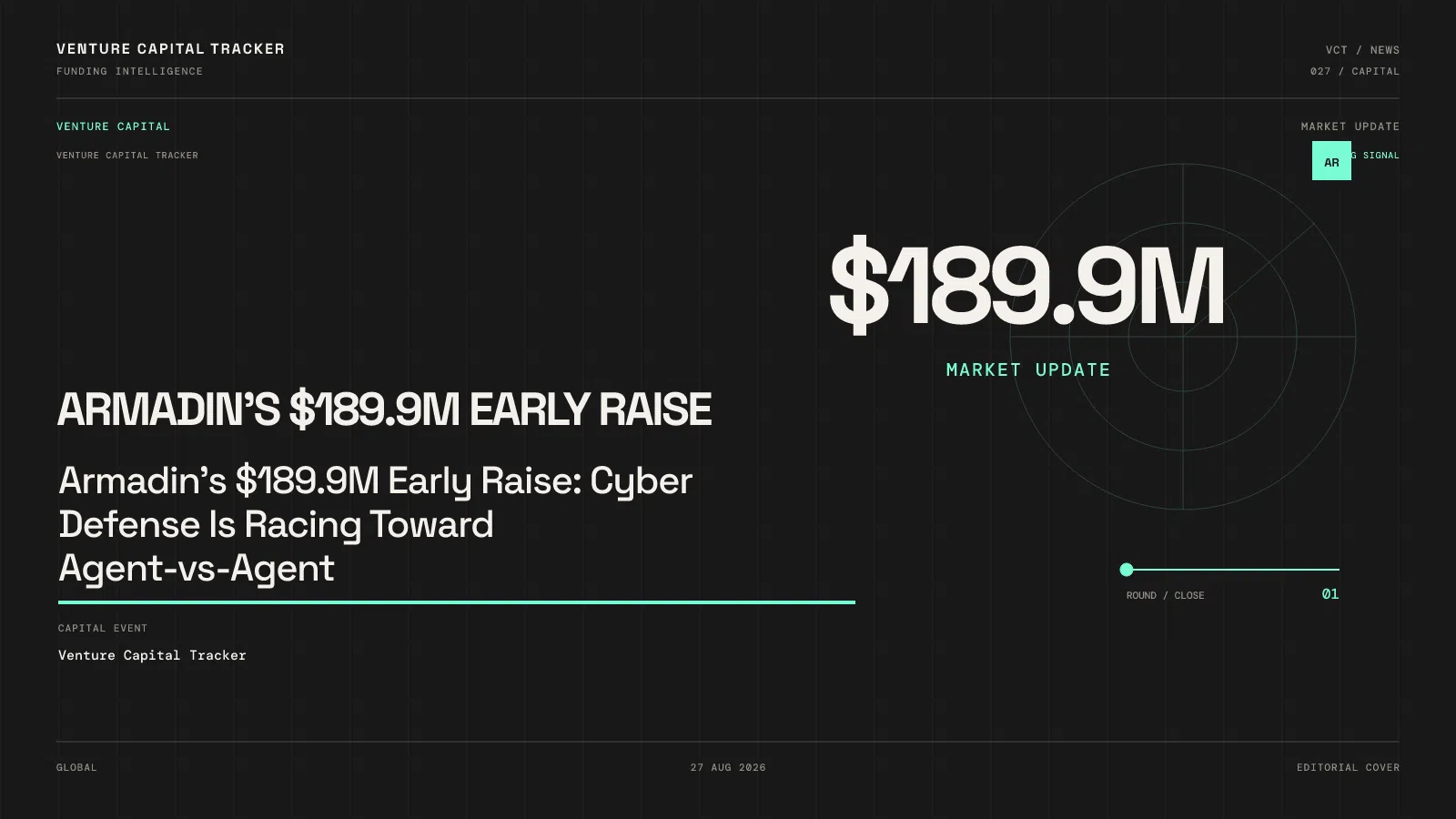
The round arrives soon after Armadin disclosed $189.9 million across its seed and Series A financings in March 2026. Raising another $255.5 million at a multibillion-dollar valuation so quickly shows how strongly investors are pricing experienced security founders and agentic cyber products.
But the valuation also increases the execution burden. The amount raised is roughly 10% of the stated valuation, yet that ratio is not a reliable dilution estimate because the company did not disclose whether the valuation is pre-money or post-money, the share mix, secondary sales or other terms.
The investor group gives Armadin deep reach across enterprise security, government procurement and growth-stage company building. Accel and Andreessen Horowitz bring software scale; In-Q-Tel connects the company to national-security use cases; and Kevin Mandia’s operating history gives the startup unusually immediate credibility with chief information security officers.
The analytical read
The central question is whether Armadin can turn autonomous offensive testing into a repeatable defensive product without creating unacceptable operational risk.
Three things will determine the answer:
- Proof quality. A convincing attack path must be reproducible and produce fewer false positives than traditional exposure-management tools.
- Safety controls. Customers need permissions, containment and audit trails strong enough for agents that can execute attacker-like actions.
- Economic value. The platform must reduce remediation time or breach exposure enough to justify premium pricing beyond conventional scanning and penetration testing.
If Armadin can demonstrate those outcomes across a broad customer base, the company could become an important control layer between vulnerability discovery and remediation. Until it publishes more operating data, however, the $2.5 billion-plus valuation is primarily a bet on team quality, category urgency and product promise rather than disclosed financial performance.
What to watch
The next useful disclosures would be named reference customers, renewal data, the share of findings that become validated attack paths, and evidence that deployments reduce remediation time without increasing incident risk. Those metrics will matter more than the raw number of autonomous agents the platform can deploy.
Editorial note: AI tools assisted with research, structure, or drafting. Venture Capital Tracker retains human editorial responsibility for factual accuracy, relevance, and source quality before publication.