· Venture Capital · 3 sources · Verified
Vessla Raises $3.3M Pre-Seed for Property-Operations AI
Vessla’s $3.3M pre-seed backs AI agents for property operations. The investment test is reliable handoffs, human approvals and repeatable integration economics.

By Venture Capital Tracker
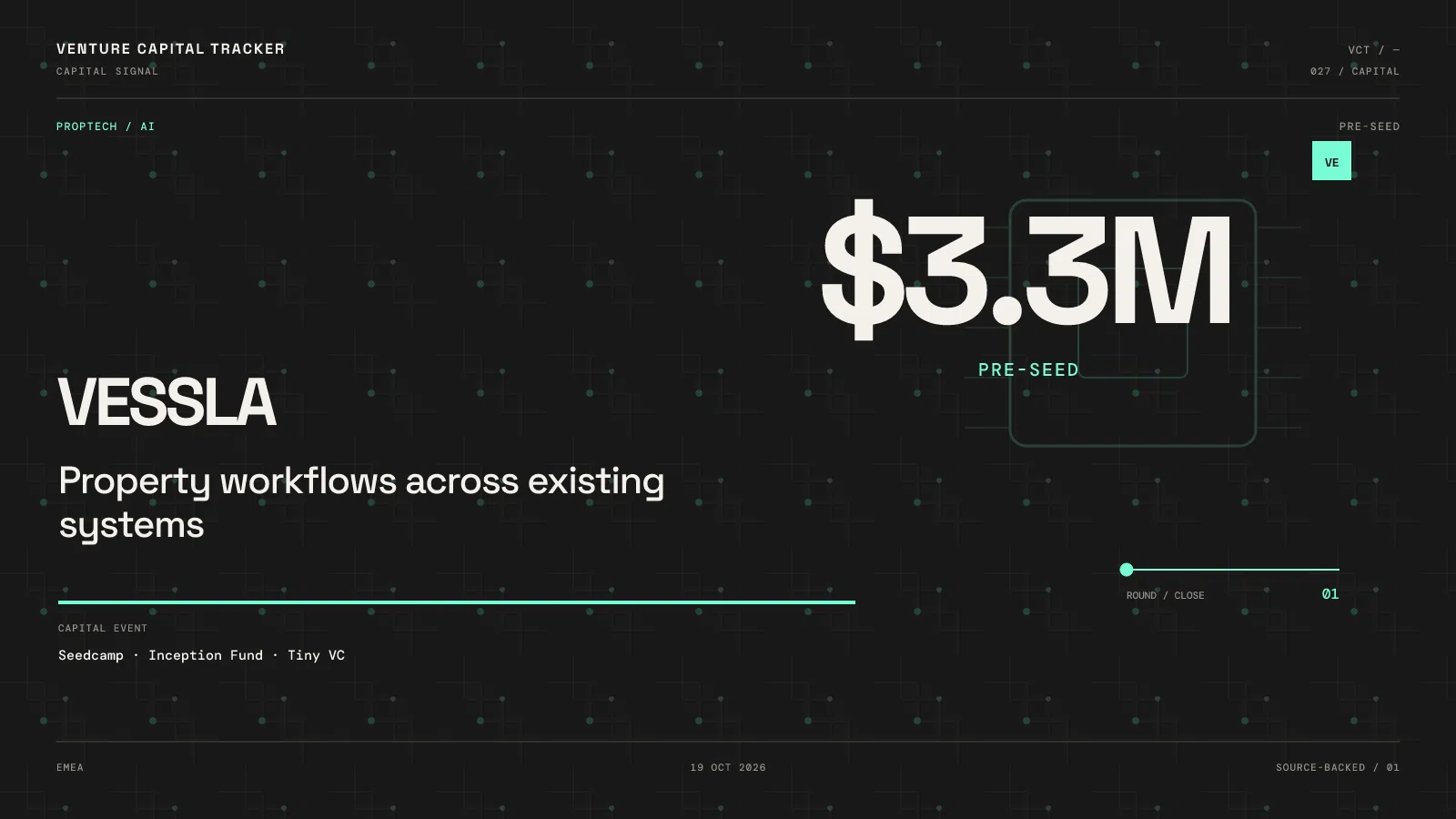
Vessla emerged from stealth with a $3.3M pre-seed round led by Seedcamp, the investor announced on October 19, 2026. EU-Startups reports EUR2.94M as the same financing. This article uses Seedcamp's published dollar amount rather than calculating a new exchange-rate estimate.
The Stockholm startup is building AI agents that coordinate property work across existing systems. Its investment case depends on completing operational handoffs reliably—not merely generating a convincing answer about a building.
The financing and the disclosed backers
| Item | Disclosed detail |
|---|---|
| Financing | $3.3M pre-seed |
| Lead investor | Seedcamp |
| Other firms | Inception Fund; Tiny VC |
| Named individuals | Lukas Saari; Fredrik Hjelm |
| Announcement date | October 19, 2026 |
| Valuation and allocations | Undisclosed |
Inception Fund and Tiny VC participated alongside the named founders, unnamed operators from Lovable and OpenAI, and other angel investors. The Seedcamp announcement describes those operators as people; it does not establish corporate investments by Lovable or OpenAI.
This is announced startup financing, not a mortgage facility, property acquisition or grant. An exact legal closing date and individual investment amounts were not separately disclosed.
A maintenance request is a chain of responsibilities
Vessla's official product site describes a shared operating layer connecting property systems, documents and stakeholders, with agents preparing or performing work and people reviewing decisions.
Consider a maintenance request as an illustrative workflow. Someone needs to identify the correct property, check the applicable agreement, engage a supplier, update the work order and reconcile the resulting invoice. The value lies in the whole chain reaching a correct outcome.
An agent that handles the initial message but creates duplicate orders, loses approval context or misassigns a cost can move work rather than remove it. That is why the meaningful unit of evaluation is an accepted completed workflow, not the number of generated messages.
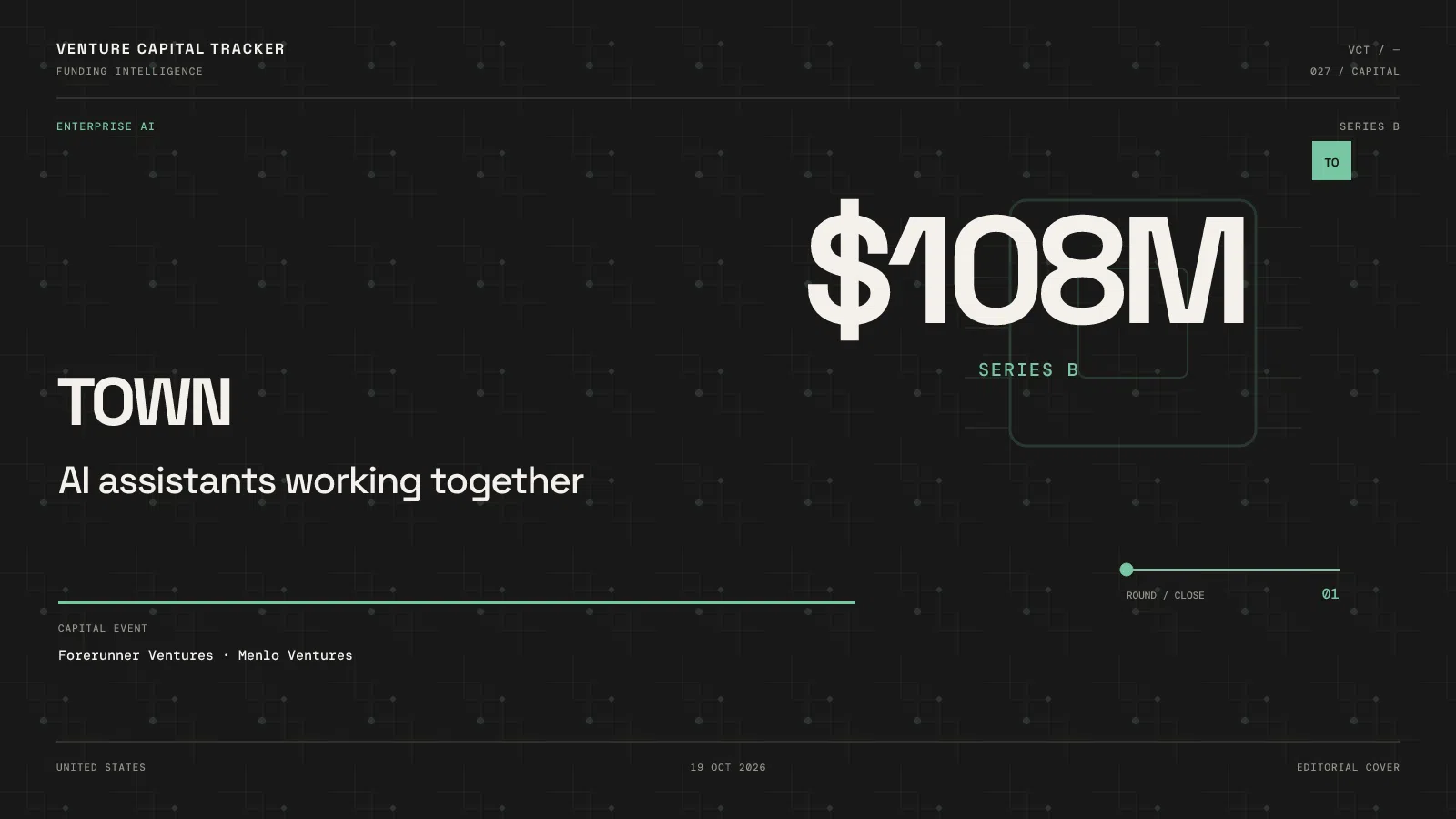
This is distinct from the broader team-assistant coordination examined in Town's Series B: property operations attach the workflow to specific assets, contracts, suppliers and spending responsibilities.
Integration work can decide the business model
Keeping existing systems in place can reduce replacement friction. It also means the startup must contend with inconsistent records, changing interfaces and customer-specific operating rules.
Investors should distinguish reusable integrations from bespoke implementation projects. A pilot may be valuable while still requiring enough manual configuration and support to make broad deployment expensive.
Useful operating measures would include implementation time, cost per resolved case, exception rates and staff review time. These are diligence criteria in our analysis, not performance figures disclosed by Vessla.
Human control must survive the handoff
A property team may authorize an agent to retrieve a lease without authorizing it to order repairs or communicate a binding commitment. A supplier also should not receive unrelated tenant information simply because both records are available.
The practical questions are who can approve an action, how that approval travels between systems and how an error is corrected. Logs and reversible actions matter when the work can affect spending or service delivery.
Vessla says people retain direction and judgment. That is a product-design claim to evaluate, not an independent certification that every integration enforces the intended boundary.
The proof is portfolio-level value
Our view is that a successful deployment should show fewer unresolved handoffs and lower total handling cost while maintaining service quality. Faster replies alone do not demonstrate either result.
The pre-seed round gives Vessla resources to develop that proposition. Its next investment-relevant evidence should connect workflow reliability with repeatable deployment economics; a funding announcement or oversubscription claim cannot establish those outcomes.
Source note: The financing and syndicate are investor-disclosed. Product descriptions are attributed to Vessla. The workflow examples, implementation economics and diligence framework are VCT analysis.
Follow Venture Capital Tracker in Google
Add VCT as a preferred source to make our venture-capital coverage easier to find in Google Search.
Editorial note: AI tools assisted with research, structure, or drafting. Venture Capital Tracker retains human editorial responsibility for factual accuracy, relevance, and source quality before publication.