· Venture Capital · 4 sources · Updated · Verified
Pantheon Closes $6B Secondaries Fund, 71% Above Target
Pantheon closed its eighth global private-equity secondaries program at $6B, 71% above target. We examine deployment, pricing and liquidity risk.

By Venture Capital Tracker
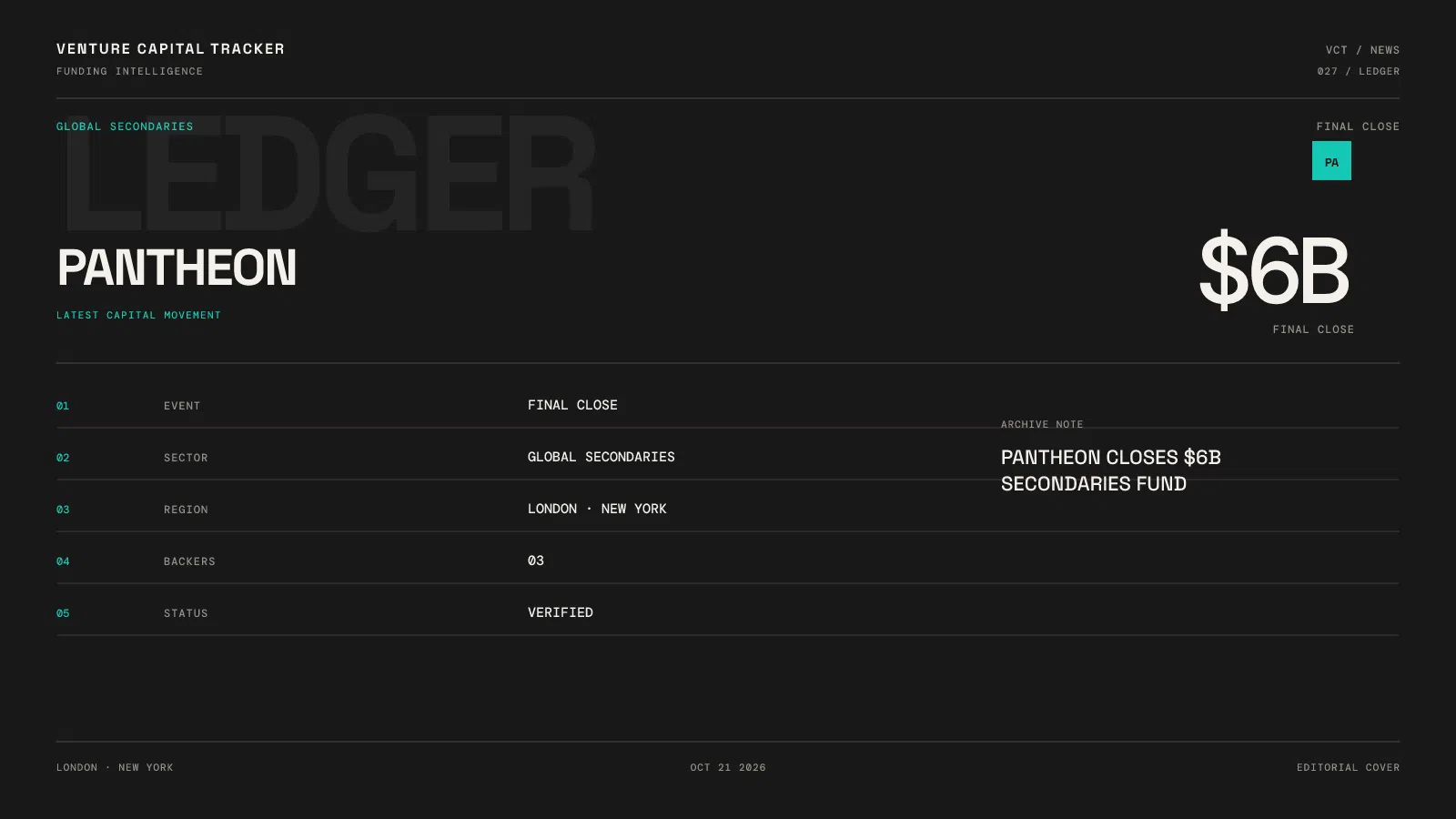
Pantheon has reached the final close of Pantheon Global Secondaries Fund VIII and related vehicles with $6 billion in commitments, exceeding the program’s $3.5 billion target by 71%.
This is a confirmed private-equity secondaries fund close. It is not a startup financing, a direct company investment, debt issued by Pantheon, or $6 billion of cash already deployed. The amount represents investor commitments to the fund program, which will be called and invested over time.
The close is also Pantheon’s largest private-equity secondaries raise to date. Its prior flagship program closed with $3.25 billion in 2023, so the new $6 billion total is approximately 85% larger. That step-up is meaningful, but it changes the underwriting question: Pantheon must now find nearly twice as much attractive inventory without lowering return requirements.
What Pantheon Global Secondaries Fund VIII will buy
The program targets private-equity secondaries globally, with an emphasis on the mid-market. Pantheon says it will combine two transaction types:
- LP-led secondaries, where an existing limited partner sells interests in one or more private-equity funds;
- GP-led secondaries, where a fund manager reorganizes one or more portfolio assets into a continuation vehicle or another structure and offers existing investors liquidity.
Both structures can shorten the blind-pool period compared with a primary commitment to a newly raised buyout fund. The buyer can often examine the underlying assets, manager, vintage and cash-flow history before committing capital.
That visibility does not eliminate risk. Reported net asset values may lag current operating performance, discounts can narrow as competition increases, and a buyer can inherit concentrated exposure to sectors, managers or assets that are difficult to exit.
Why 71% above target matters
A fund target is a fundraising objective, not a valuation. Pantheon’s $6 billion close is $2.5 billion above the $3.5 billion target. The oversubscription signals strong institutional demand, including new commitments from investors in Asia and the Middle East, according to the manager.
Pantheon did not identify the new limited partners, disclose individual commitment sizes, or publish fee and carry terms. That limits the conclusions readers can draw from the geographic disclosure. A larger and broader LP base may improve fundraising resilience, but it does not establish deployment quality or expected returns.
The most useful comparison is with capital actually invested. Pantheon says it deployed approximately $3.35 billion across 17 private-equity secondary transactions in 2025. That equals an average of roughly $197 million per disclosed transaction, although deal sizes could vary widely and the figure does not reveal how much came from the predecessor flagship versus other accounts.
A $6 billion program therefore needs a sustained pipeline. The manager’s scale and relationships may create access, but scale also raises the cost of waiting. Uncalled capital delays fee-generating deployment for the manager and can reduce investor returns if capital is put to work slowly or at less attractive prices.
The liquidity thesis
Secondaries funds benefit when existing private-market investors need liquidity before the underlying funds reach the end of their lives. Several conditions can create that need:
- pension funds and endowments rebalance allocations after changes in public-market values;
- institutions reduce manager count or sell older vintages;
- private-equity funds hold companies longer when IPO and M&A exits slow;
- managers use continuation vehicles to retain assets while offering liquidity to existing investors.
Pantheon’s close is therefore a bet on a structural liquidity market, rather than a simple forecast that private-equity valuations will rise. The manager can generate returns through the purchase discount, subsequent distributions, asset growth and active structuring.
Each source of return has a different risk. A discount can disappear if the reported NAV is reduced. Early distributions can improve headline internal rates of return without guaranteeing a strong multiple on invested capital. GP-led deals can provide detailed access to a company but increase single-asset or sponsor concentration.
What the announcement does not disclose
The final-close release provides fundraising scale and strategy, but it does not disclose several inputs needed to underwrite the vehicle:
- management fees, carried interest and preferred return;
- fund-level borrowing limits or subscription-line policy;
- the split between LP-led and GP-led investments;
- portfolio concentration limits;
- discounts paid relative to reported NAV;
- target net return or predecessor-fund performance;
- individual LP commitments and capital already called.
Those omissions are normal in a public fund-close announcement, but they matter more as the vehicle grows. A $6 billion commitment total says little about the price paid for assets or the timing of cash flows.
Pantheon’s approximately $84 billion of assets under management also describes the wider firm, not this fund. VCT records the $6 billion final close separately from firmwide AUM and from any future co-investment or separately managed account capital unless the manager explicitly includes those vehicles in the program total.
Scale can help—and hurt
Pantheon’s long history and broad network can improve sourcing. The manager says its private-equity platform has relationships across primary commitments, co-investments and secondaries. A primary relationship with a fund manager can create information and access advantages when an LP wants to sell or a GP designs a continuation transaction.
Scale can also improve portfolio construction. A larger pool can diversify by manager, vintage, geography and transaction type. It can participate in complex portfolios that smaller buyers cannot finance.
The counterweight is price discipline. Secondary-market fundraising has attracted increasingly large pools of capital. When more buyers pursue the same high-quality fund interests, sellers can demand smaller discounts. A large vehicle may also need larger transactions, pushing it toward competitive auctions and away from smaller bilateral deals.
The central question is whether Pantheon’s sourcing advantage grows as quickly as its capital base.
Metrics LPs should watch
Fundraising success is the first observable milestone. The next evidence should come from deployment and distributions.
Useful measures include:
- Called capital versus commitments. This shows how quickly the program is investing.
- Purchase price relative to NAV. The headline discount should be paired with the age and quality of the valuation.
- DPI and TVPI. Distributions to paid-in capital and total value to paid-in capital show realized cash and remaining value.
- Time to liquidity. Shorter duration is a common part of the secondaries thesis.
- Concentration. Investors need exposure by manager, company, sector, geography and vintage.
- Use of leverage. Borrowing can accelerate transactions and improve early IRR while increasing risk.
- GP-led versus LP-led mix. The two strategies have different diligence, governance and concentration profiles.
The $3.35 billion deployed in 2025 shows that Pantheon can transact at scale. It does not establish the purchase discounts, portfolio marks or realized performance of Fund VIII.
How this close compares with recent fundraising
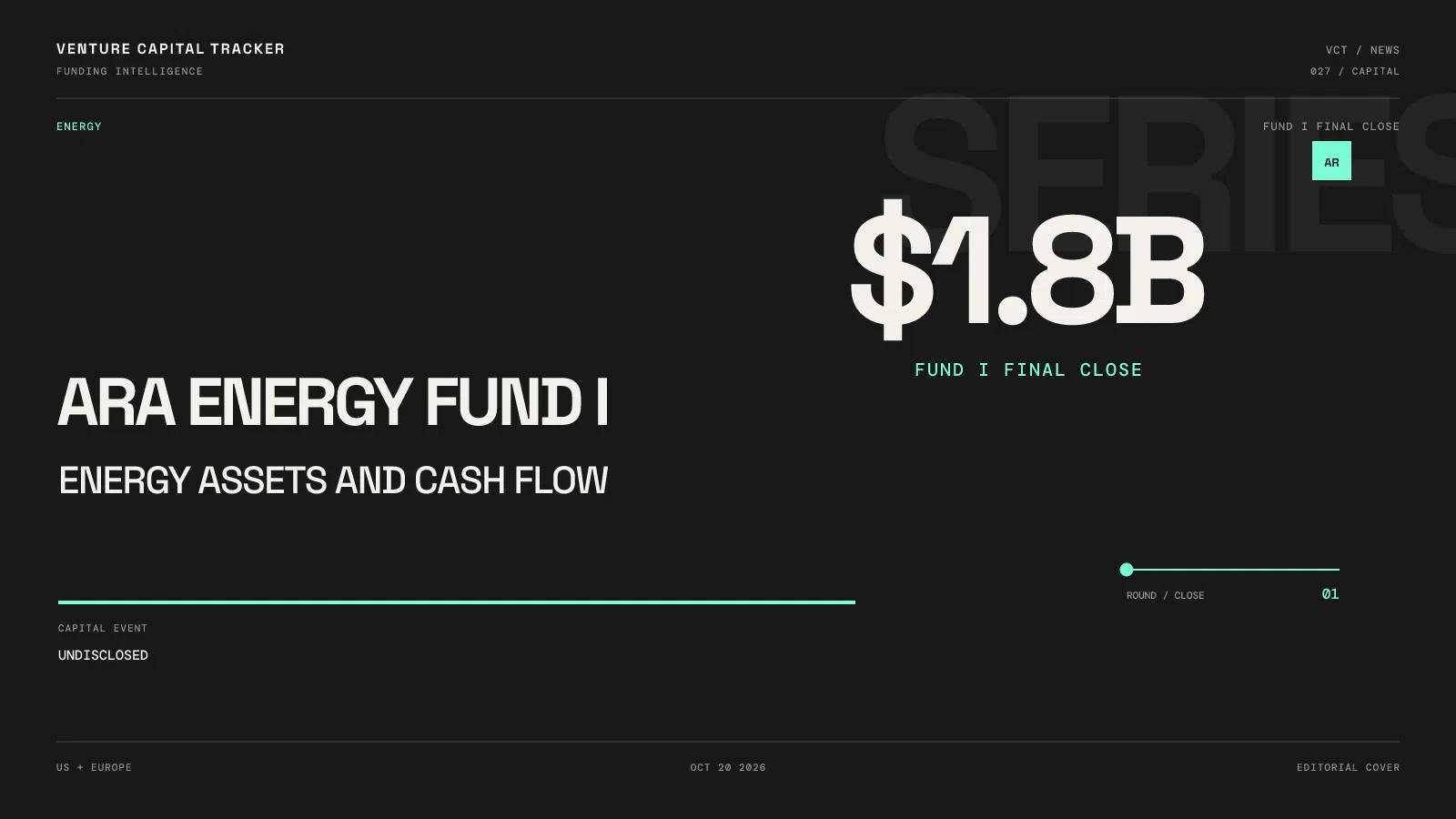
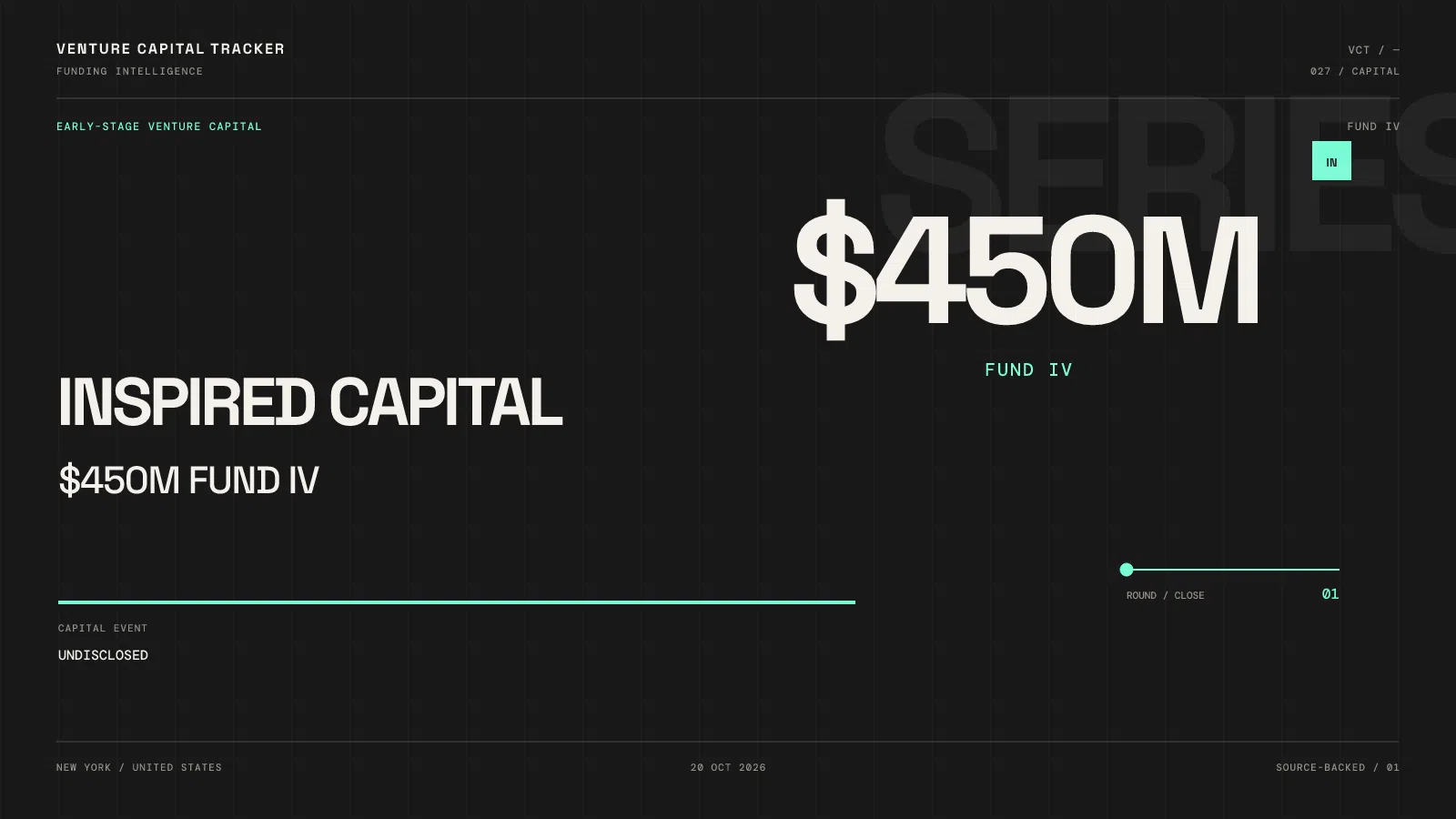
Pantheon’s $6 billion close is materially larger than recent VCT-tracked vehicles such as Ara Energy Fund I’s $1.8 billion final close and Inspired Capital’s $450 million Fund IV. The amounts are all commitments, but the strategies are different.
Inspired Capital targets early-stage startups. Ara Energy Fund I targets operating energy and infrastructure businesses. Pantheon’s vehicle buys existing private-equity interests and continuation opportunities. Comparing headline sizes without strategy and duration can imply a similarity that does not exist.
Bottom line
Pantheon’s $6 billion final close is a strong fundraising result and clear evidence of institutional demand for private-equity liquidity strategies. The program is 71% above target and about 85% larger than its 2023 predecessor.
The close does not prove investment performance. The fund now has to deploy a much larger capital base while preserving discounts, diversification and underwriting discipline in an increasingly competitive secondaries market. For investors, the decisive evidence will be purchase prices, cash distributions, concentration and net returns—not the oversubscription alone.
Follow Venture Capital Tracker in Google
Add VCT as a preferred source to make our venture-capital coverage easier to find in Google Search.
Last updated:
Editorial note: AI tools assisted with research, structure, or drafting. Venture Capital Tracker retains human editorial responsibility for factual accuracy, relevance, and source quality before publication.