· Venture Capital Tracker · venture-capital
Opsin Announces $21M to Govern Enterprise AI Agents
SYN Ventures and Race Capital lead Opsin's $21M funding announcement. The security startup connects agent permissions and behavior; stage and valuation remain undisclosed.
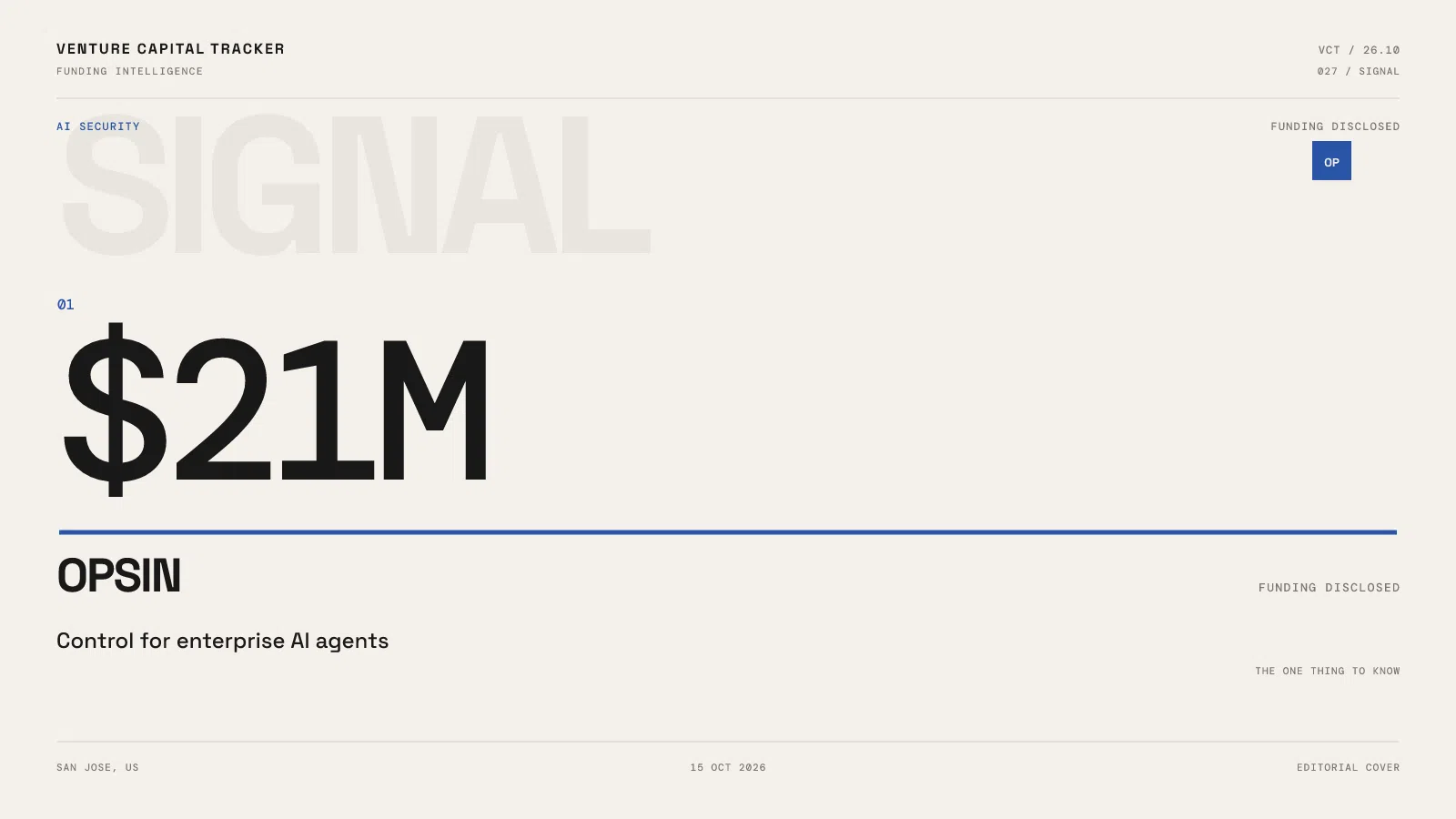
Opsin announced $21 million in financing on October 15, 2026, led by SYN Ventures and Race Capital, to expand its enterprise AI-agent security platform.
The announcement does not identify a formal round stage or valuation. VCT therefore records it as company-disclosed financing with an undisclosed stage—not an assumed Series A.
What does the funding announcement establish?
The company release identifies the amount, leads and expansion plans. Opsin says it serves nearly 20 enterprise customers, including Culligan, Barry-Wehmiller, Wellstar Health System and UiPath. That customer count is company-provided.
Opsin separately announced a $7 million seed in 2025. The latest release does not reconcile the figures into a cumulative funding schedule. We do not infer a $28 million lifetime total or relabel the current financing from secondary database entries.
What problem is Opsin trying to solve?
An agent can be authorized to use a system and still take an inappropriate action within it. The relevant security question extends beyond whether credentials are valid: does the action fit the task, the user and the data involved?
In its founder announcement, Opsin describes a Risk Graph that joins agent identity, intended purpose, permissions and observed activity. The platform covers enterprise AI environments including Microsoft Copilot, Claude, ChatGPT Enterprise and Gemini. Opsin says responses can include restricting an action, quarantining an agent or notifying its owner.
These are product descriptions, not evidence that every incident can be prevented.
Why is this a venture opportunity?
Our analysis is that enterprise AI creates a coordination problem for security teams. Different applications can describe agents and permissions differently. A shared model of those relationships could make it easier to investigate risky behavior across the organization.
The commercial opportunity is larger if customers need ongoing controls, rather than a one-off inventory. An inventory can show that an agent exists. Continuous monitoring must explain whether its behavior has changed and which intervention is proportionate.
That potential comes with a demanding product requirement: the platform needs enough context to distinguish legitimate unusual work from a dangerous action. Too little context produces noise. An excessively aggressive response can interrupt useful automation.
Which evidence would demonstrate a durable advantage?
A customer logo is a starting point, not a complete investment case. Useful operating evidence would include deployment depth, renewal behavior, time spent resolving alerts and the percentage of recommendations customers actually accept.
Security effectiveness also needs a careful denominator. Opsin reports concerning permission patterns from its customer analysis, but those observations should not be generalized into an industry-wide incident rate. Without a fully specified sample and methodology, a striking percentage is a signal to investigate rather than a universal risk estimate.
Integration coverage is another test. A platform must keep pace as AI vendors change interfaces and capabilities. Buyers should ask what can be observed, what can be blocked and which response still requires human action in each supported environment.
How does this fit the funding market?
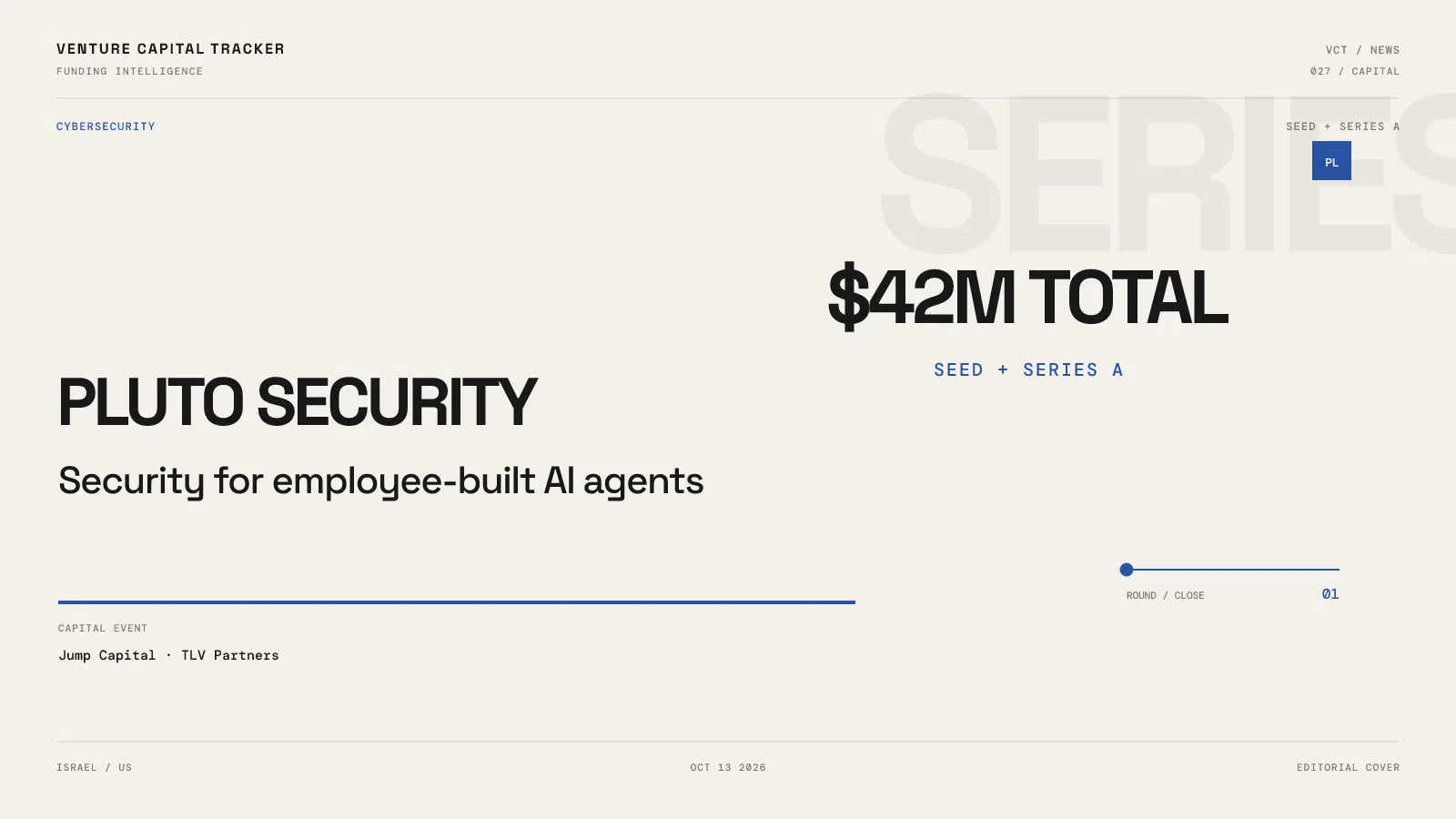
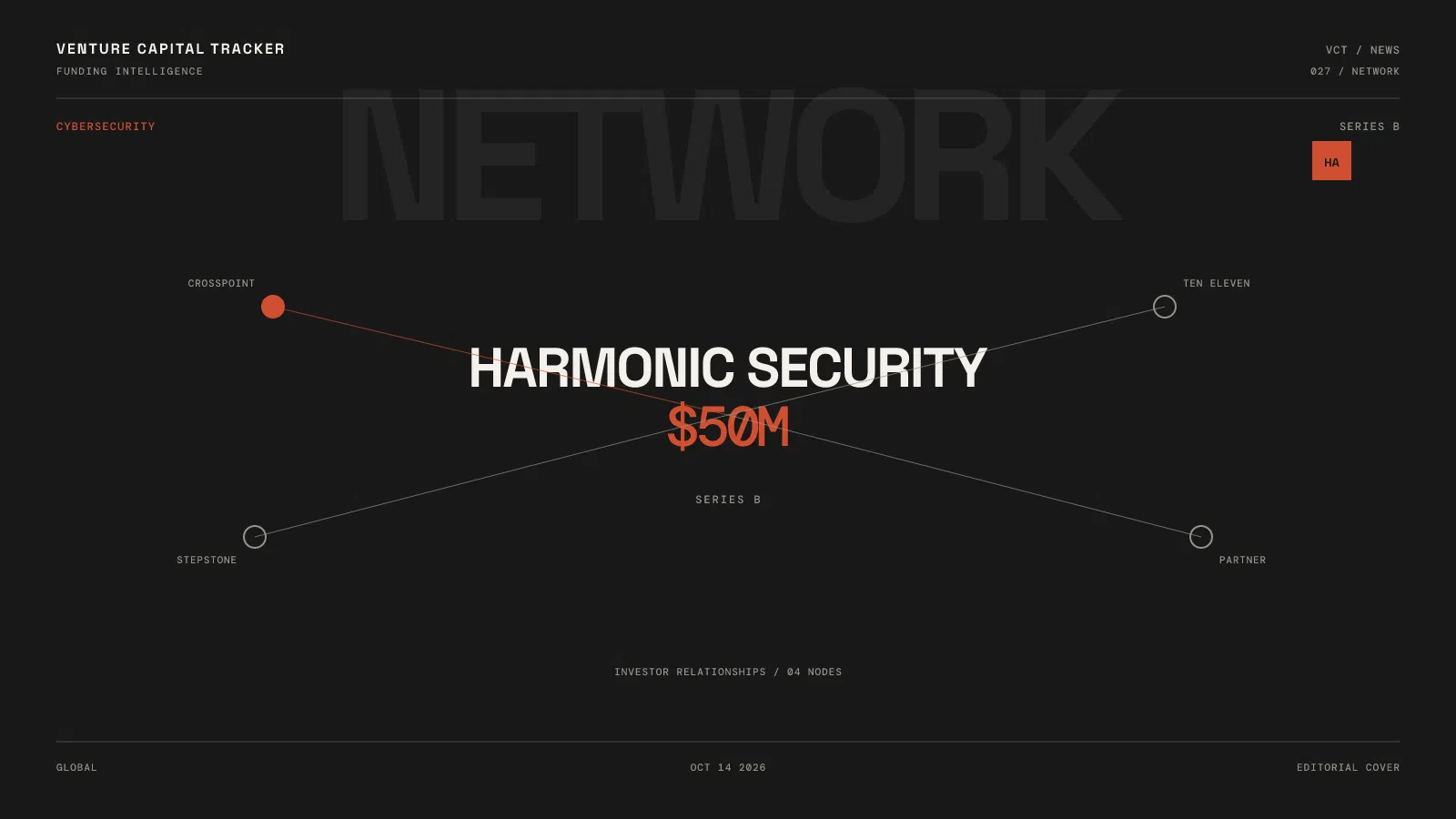
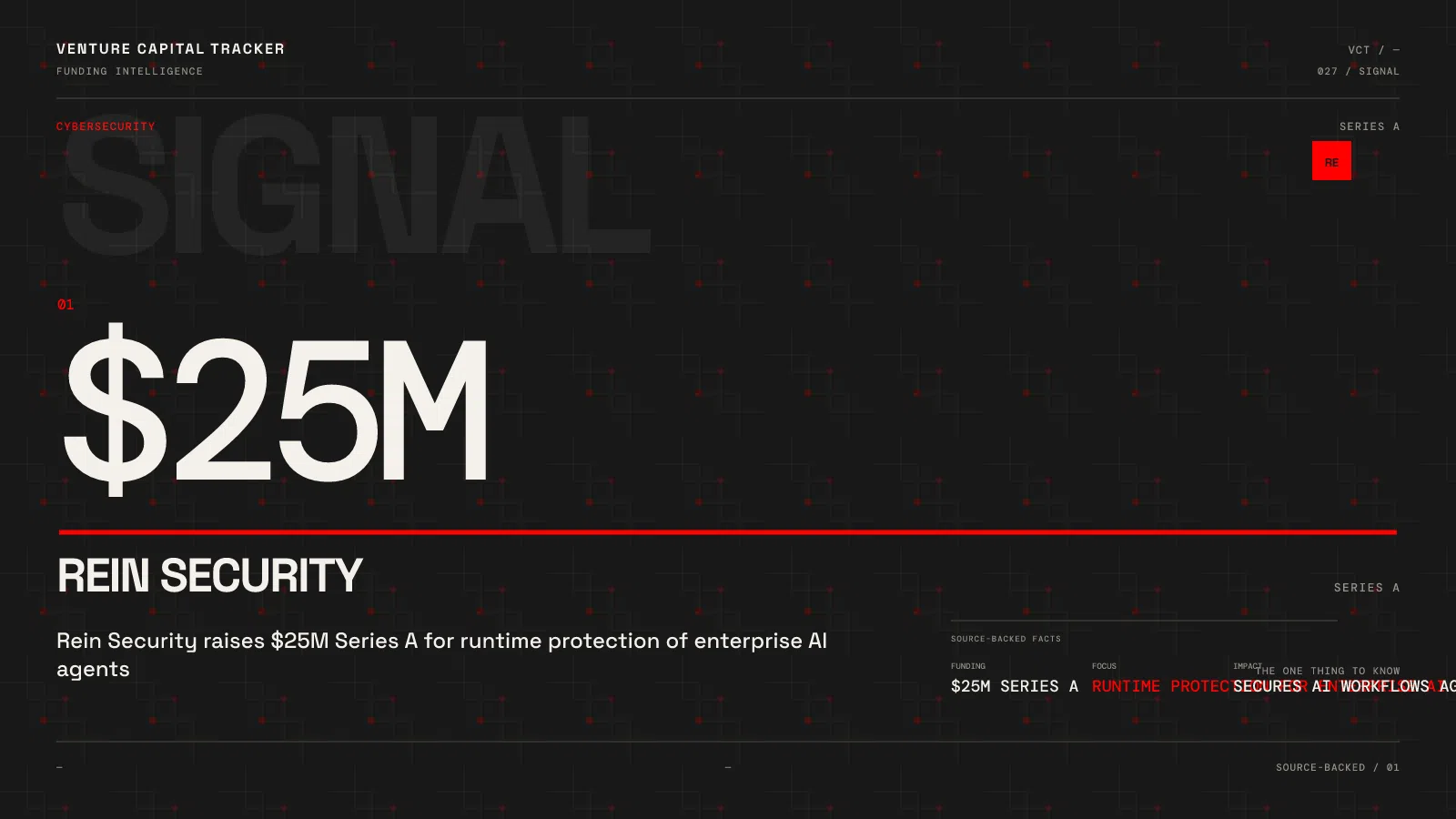
VCT has recently covered Pluto Security, Harmonic Security and Rein Security. Their financings show investor attention to adjacent control problems; they do not establish that every product addresses the same buyer need.
The competitive question is whether independent security vendors can provide cross-platform context that customers cannot obtain adequately from the underlying platforms.
Bottom line
Opsin's financing backs the move from checking what agents can access to judging what they actually do. The next proof points should be effective controls, low operational friction and repeatable enterprise adoption.
Editorial note: AI tools assisted with research, structure, or drafting. Venture Capital Tracker retains human editorial responsibility for factual accuracy, relevance, and source quality before publication.