· Venture Capital Tracker · venture-capital
KP Labs Raises About $4.97M for In-Orbit AI
Momentum Capital Partners invests about $4.97M in KP Labs’ orbital computing. Growth equity supports serial hardware production and international sales.
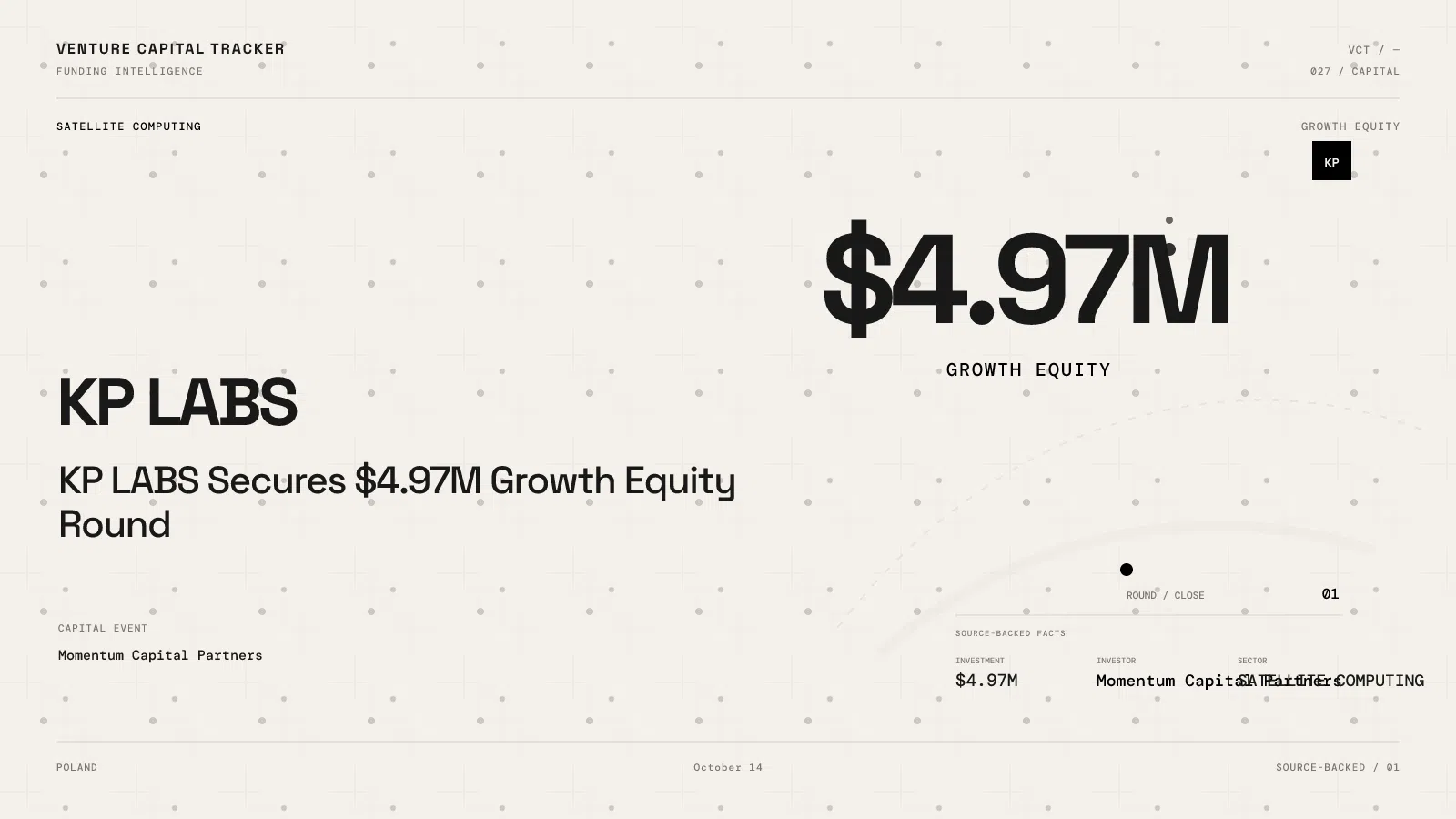
KP Labs has received approximately $4.97M in growth equity from Momentum Capital Partners to expand its commercial space-computing business. The company announced the investment on October 14, 2026.
The proceeds support a transition with clear operating implications: moving from delivering engineering projects toward selling more repeatable hardware and software products.
Financing and dollar conversion
The original investment is PLN19.4M. VCT’s approximate dollar figure uses the European Central Bank’s October 14 reference rates: 1.1195 US dollars and 4.3658 Polish zloty per euro. The calculation is 19.4 million × 1.1195 ÷ 4.3658, or approximately $4.9746M, presented as $4.97M for presentation.
This is a reference-rate conversion, not a disclosed dollar-denominated transaction or an assertion about the rate used by the parties.
KP Labs describes Momentum as the first investment fund in its shareholder base. Valuation, the ownership stake and the legal closing date were not disclosed. The transaction is growth equity; earlier public funding discussed by the company is separate from this investment.
Processing before transmission
Tech.eu describes KP Labs’ offering as specialised processors, firmware and AI algorithms that analyse and select satellite data in orbit. Customers include space agencies and satellite manufacturers.
The commercial proposition is to extract useful information before transmitting everything to Earth. Our assessment is that the relevant customer benefit must be demonstrated at mission level: useful processing, predictable resource consumption and reliable integration into the satellite.
That makes this a hardware-and-software execution story. The value of an algorithm depends on whether it works within the operating constraints of the system carrying it.
Serial production changes the business test
The announced uses of proceeds include R&D, commercial products, serial hardware production and international sales.
Our assessment is that this shift could improve repeatability, but it introduces different demands from bespoke projects. A standard product needs documentation, testing, support and a supply chain that remain consistent across customers. Each additional deployment should become easier to deliver without erasing the engineering discipline required for space hardware.
Useful evidence would include repeat orders, product revenue as a share of sales, production lead times and the cost of customer-specific adaptations. Those measures would help show whether the company is building a scalable product business rather than simply completing more projects.
What to watch after the investment
Mission experience can support customer confidence, but investors still need to understand how that experience translates into commercial terms. Qualification cycles, manufacturing yield and support requirements all matter to the economics.
VCT’s Fortastra coverage examines a different part of the orbital market. KP Labs’ financing targets the computing components and software used within missions, rather than a complete satellite service.
The investment provides capital for the next phase. The strongest follow-up story would connect serial production and international sales with repeatable orders and measurable product economics.
Sources: KP Labs, ECB reference rates, Tech.eu.
Follow Venture Capital Tracker in Google
Add VCT as a preferred source to make our venture-capital coverage easier to find in Google Search.
Editorial note: AI tools assisted with research, structure, or drafting. Venture Capital Tracker retains human editorial responsibility for factual accuracy, relevance, and source quality before publication.