· Venture Capital · 7 sources · Updated · Verified
Cyera vs Wiz, Varonis, BigID and Purview: AI Data Security Compared
Which security vendor solves which risk? Compare Cyera, Wiz/Google, Varonis, BigID and Microsoft Purview across DSPM, CNAPP, AI agents and DLP.

By Venture Capital Tracker Editorial
Cyera, Wiz, Varonis, BigID and Microsoft Purview overlap on enterprise data protection, but they are not five identical products. Cyera is data-security posture management (DSPM) and DLP first. Wiz is cloud-native application protection (CNAPP) first and has belonged to Google Cloud since March 2026. Varonis and BigID approach the problem through data access and discovery, while Microsoft Purview bundles data security and AI controls into its broader enterprise environment.
For buyers, the right question is not "Which vendor has the most categories?" but "Which sensitive data can this identity or AI agent reach, and can we stop the risky action?" For investors, category convergence explains why Cyera is expanding through acquisitions but does not prove its reported possible $20B financing valuation.
Quick comparison: Cyera vs Wiz, Varonis, BigID and Purview
| Vendor | Historical starting point | Areas of strength to evaluate | Important limitation or trade-off |
|---|---|---|---|
| Cyera | Data discovery, classification, DSPM | Sensitive-data inventory, AI security, DLP; NHI after Oasis | Six acquisitions raise integration and implementation questions |
| Wiz (Google Cloud) | Cloud exposure, misconfigurations, CNAPP | Agentless multi-cloud graph, workloads, vulnerabilities and attack paths | Strong cloud-risk focus is not a complete replacement for every enterprise DLP program |
| Varonis | Data access analytics and insider/data risk | Access permissions, sensitive-data exposure, investigation and remediation | Test exact workload coverage and pricing with your own data estate |
| BigID | Data discovery, privacy and classification | Governance, discovery and DSPM across diverse sources | Clarify where enforcement needs adjacent platforms |
| Microsoft Purview | Microsoft data classification, DLP and compliance | Microsoft 365 integration, AI data-risk controls and compliance policies | Coverage and protection vary by AI app, deployment, licensing and configuration |
These are editorial product-positioning summaries, not independent laboratory benchmarks or a verdict that one product is universally better. Microsoft itself documents differences across AI agents and policy support, including gaps for certain third-party AI applications.
What does Cyera do differently?
Cyera started by scanning environments to discover what is sensitive, where it resides and how exposed it is. Its acquisitions added DLP, AI-agent oversight and non-human identity, culminating in its completed $1B Oasis Security acquisition.
That is an appealing architecture: classify a data store; identify the service account or AI agent reaching it; understand the tool call; and restrict risky access. Cyera described this direction in September, but also said the Oasis integration was ongoing. Prospective customers should ask for a hands-on demonstration of cross-product policies rather than assume the roadmap is a shipped capability.
Cyera can be a natural candidate when securing sensitive data across SaaS and AI tools is the primary pain, rather than patching infrastructure misconfigurations.
Wiz vs Cyera: security graph versus data and access context
Wiz is best known for seeing how cloud assets, network exposure, vulnerabilities, identity permissions and data can combine into attack paths. Cyera's original specialization was data sensitivity: classification and data-risk context regardless of where data lives.
One example: a publicly reachable Kubernetes service account with wide access to object storage presents cloud security posture and attack-path issues, making Wiz-style analysis natural. The same account being used by an AI agent to fetch a private customer database creates data-classification, identity and agent-policy questions, where Cyera may offer additional depth.
The real-world deployment could need both, or it might already be covered sufficiently by existing controls. Products have expanded since their founding; do not treat historic category boundaries as hard limits.
Ownership matters when comparing valuations: Google completed the Wiz acquisition March 11, 2026. Alphabet's SEC filing records about $29.5B adjusted purchase price, compared with the $32B agreement headline. Cyera's $20B number is early private financing discussion, not a comparable closed transaction.
Cyera vs Varonis and BigID: what data security buyers should test
Varonis has a long history in data access permissions, sensitive-data risk and detecting inappropriate activity. A buyer with an established Varonis footprint should ask whether Cyera produces materially better classification, remediation or agent access visibility rather than add another inventory.
BigID centers on data discovery, classification, privacy and governance. A privacy-driven team might value that orientation, while a security-operations team should compare how quickly findings move from discovery to enforceable action.
Across all three, demand evidence on the same data sources, not just vendor-sponsored accuracy numbers. Compare precision/recall on approved labelled datasets, count of genuinely high-risk findings, remediation time, false-positive volume and integration effort. These measurements depend on the environment and are not published as comparable independent benchmarks here.
Microsoft Purview vs Cyera: why bundling is a real competitor
Microsoft documents DSPM and AI-agent data protection alongside information protection and DLP. In Microsoft 365-focused enterprises it may already own core data governance contracts. Some enterprises will consider Cyera to address non-Microsoft SaaS and deeper data/identity correlation.
But Microsoft's own capability matrix shows not all AI applications receive identical protections: some agent families offer classification, others DLP or compliance controls, and particular third-party offerings have narrower support. The integration's real coverage and licence cost matters more than the product logo.
It is misleading to claim Cyera automatically wins four separate budgets. Data security, identity, DLP, cloud security and AI governance typically share CISO attention and often share contract owners.
How to compare vendors: a realistic 30-day proof of concept
Instead of requesting a generic demo, agree on three risks and a measurement sheet:
- Sensitive database with broad permissions. Place synthetic or approved sample sensitive data in a test database. Ask each tool which classifications, owners and accessible identities it detects.
- AI agent with tool access. Use a non-production agent calling an approved SaaS API and cloud database. Test whether the tool can map the identity and policy, spot excess access, and block or alert on an unauthorized action.
- Cloud attack path. Create a safe test configuration containing a vulnerable workload, risky credential and sensitive object storage. Check whether the tool reconstructs the practical exposure chain.
- Document the evidence. Record detection coverage, false-positive rate, time to effective remediation, number of consoles, change-management risk, operating labor and integration cost.
- Evaluate total costs. Compare incremental product licences, existing bundle entitlements, deployment effort, professional services and renewal terms; do not assume list prices are comparable.
No vendor wins all five tests automatically. Cyera might win data/agent context, Wiz may win cloud attack-path analysis, and Purview may already be good enough for a Microsoft-centric estate—but these are hypotheses to test, not verified rankings.
Why investors care about Cyera's expansion
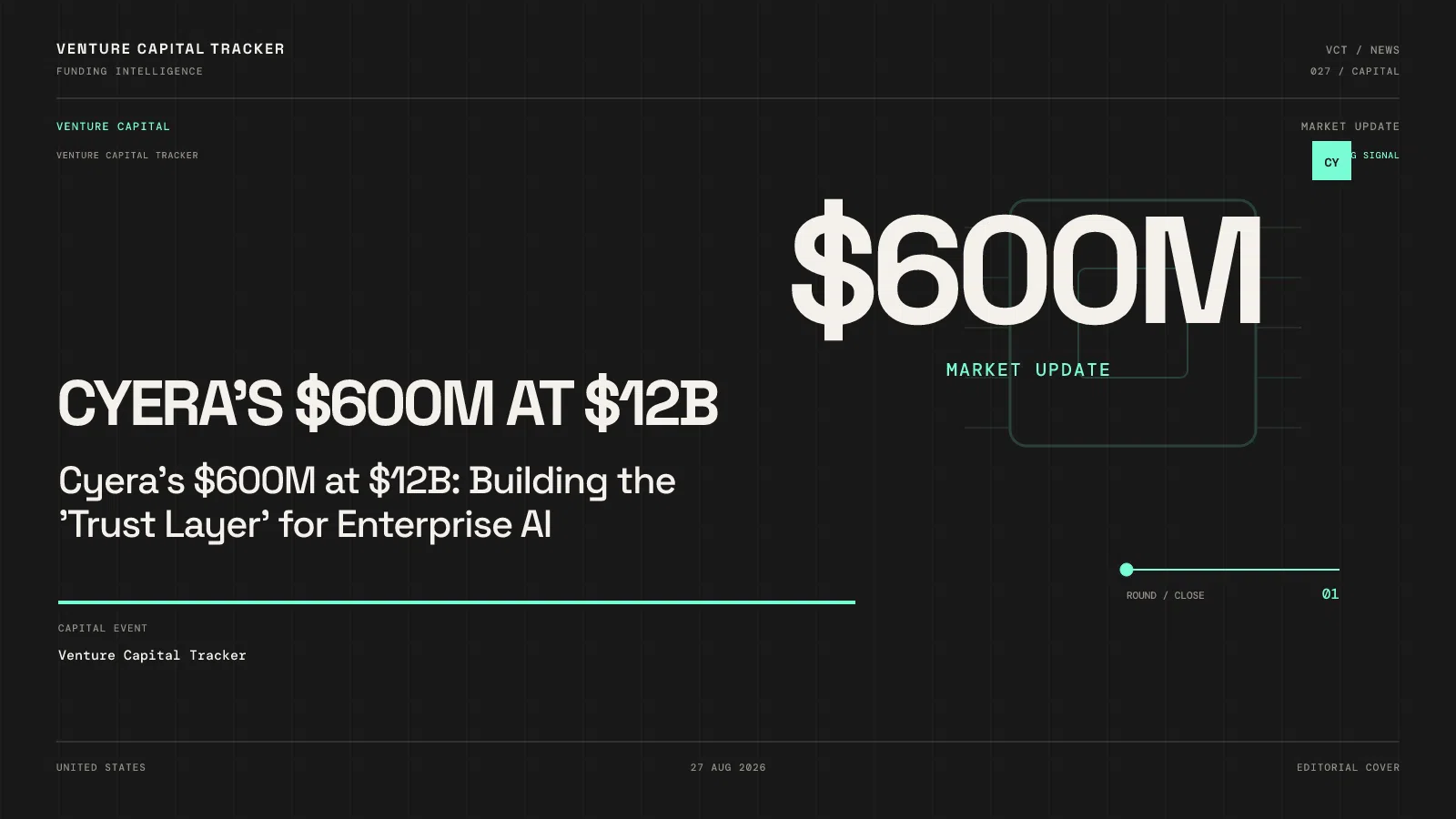
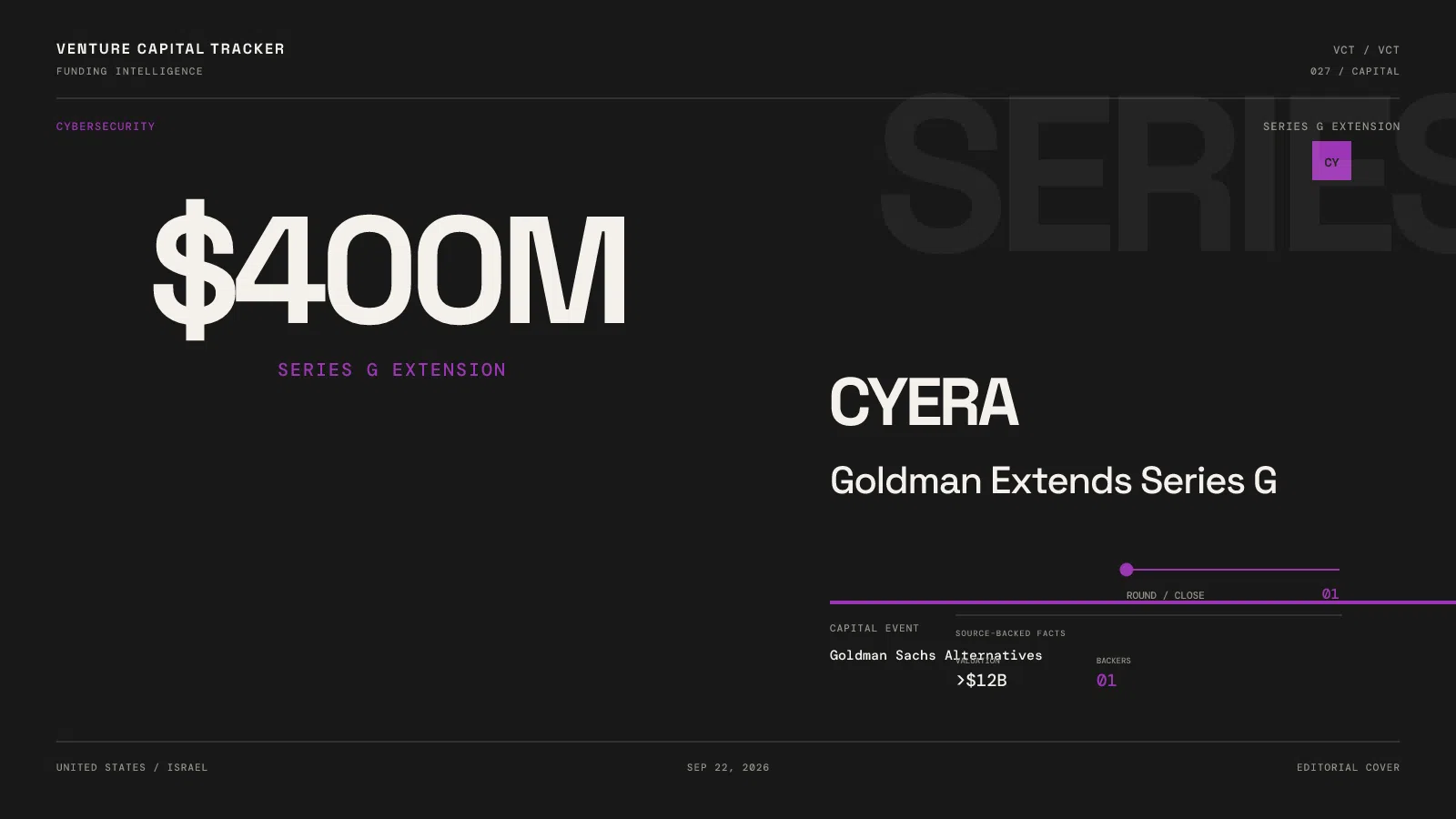
Cyera announced eight financing steps totalling around $2.7B between 2022 and September 2026, including a June 2026 $600M Series G at $12B and September $400M extension. On October 29 The Information reported discussions about a possible $20B valuation, which are not confirmed new funding.
The bull case is a platform that combines sensitive data and identity governance and lets enterprise buyers consolidate workflows. The bear case is costly integrations and overlap with lower-priced bundled products.
The key missing private-company data are current ARR, revenue mix from acquisitions, churn, margins, implementation time and how widely integrated modules have been deployed. See the Cyera startup profile and our full Cyera valuation analysis for funding versus reported-valuation distinctions.
Frequently asked questions
Which is better: Cyera or Wiz?
They solve related but different original problems. Cyera began with DSPM/data protection; Wiz with cloud posture and attack paths. Run a proof of concept on your highest-risk environment rather than declaring a universal winner.
Is Wiz still independent?
No. Google completed its acquisition March 11, 2026. See Wiz's updated profile.
Is Cyera the same as Varonis?
No. Both address data security, but their product footprints and heritage differ. Compare supported sources, enforcement, existing contracts and operational outcomes.
Can Microsoft Purview secure AI agents?
Yes for supported apps and scenarios, with capabilities varying by agent, licence, integration and deployment as documented by Microsoft. Check the actual product support matrix.
Is Cyera really worth $20 billion?
An October 29 report described preliminary financing discussions; it was not a completed round. The exact latest disclosed priced round was $12B in June 2026.
Last updated:
Editorial note: AI tools assisted with research, structure, or drafting. Venture Capital Tracker retains human editorial responsibility for factual accuracy, relevance, and source quality before publication.