· Venture Capital · 8 sources · Verified
Baba Raises $40M to Lower the Cost of Coordinating Care
FirstMark led Baba’s Series A. Its insurer billing and human care teams explain the economic test behind AI-supported patient advocacy.

By Venture Capital Tracker Editorial Team
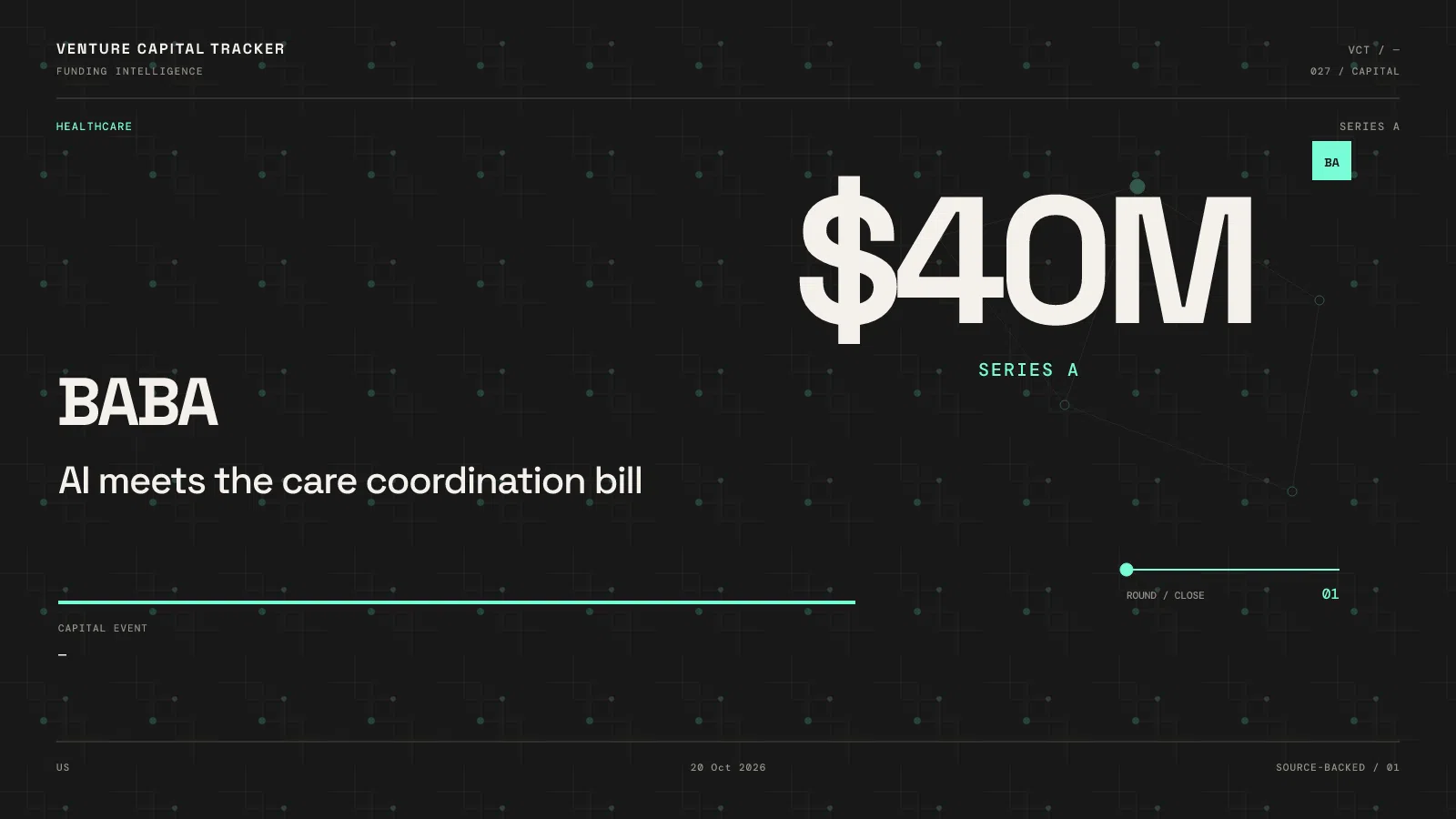
Baba announced a $40M Series A on October 20 to expand a business that pairs care coordinators with AI. The investment is a bet on making the work around healthcare—calls, paperwork and follow-through—less expensive, while keeping people responsible for getting it done.
FirstMark Capital led, joined by CVS Health Ventures and Valtruis, with General Catalyst, Genius Ventures and Ground Up Ventures returning. Valuation, revenue, individual checks and any primary-versus-secondary allocation were undisclosed. The company reports $47M in cumulative funding; that is separate from this round.
Baba’s February 25 announcement described a seed exceeding $6.5M led by General Catalyst. The Series A arrives less than eight months later. Neither fundraising speed nor a waiting list establishes profitable demand.
Who does the work, and who pays?
Baba serves patients and families navigating Medicare and Medicaid, and sells its capabilities to health plans. Its payer offering describes advocates who find providers, arrange transport and keep following up until a task is closed. The software supports that team; the service is more than an answer from a chatbot.
Consider a clearly illustrative referral: a daughter is chasing a specialist’s office, confirming insurance and arranging a ride for her father. Baba’s published workflow puts an advocate between those parties, using software to track outstanding steps and contact them. The appointment is only useful if the referral reaches the right office and the patient can attend. This example explains the product, not a measured customer outcome.
Baba’s billing policy, checked October 25, says it submits insurance claims after services and explains expected costs before enrollment. It says most eligible clients owe nothing, but plan-specific cost-sharing can apply. Coverage therefore does not mean universally free care. The page’s sample bill is an illustration, not a published contract price or average revenue per patient.
The missing economics are consequential: reimbursement collected per patient, staff time per completed task, claim denials and the cost of the AI itself. Automating a phone call saves little if an employee must repeat it or correct the result.
FirstMark is backing a lasting patient relationship
In its investment memo, FirstMark argues that enduring consumer-health businesses will build ongoing relationships with patients who have complex needs. Its operational thesis is specific: AI can handle forms, hold times and repeated follow-ups, freeing coordinators for work requiring people.
The investor reports more than 10,000 patients and families served and a waiting population ten times larger. Those are investor-reported adoption figures, not audited revenue, clinical results or a count of paying contracts. FirstMark also describes a move toward payment tied to results; that is an intended business-model development, not proof that all current revenue uses such contracts.
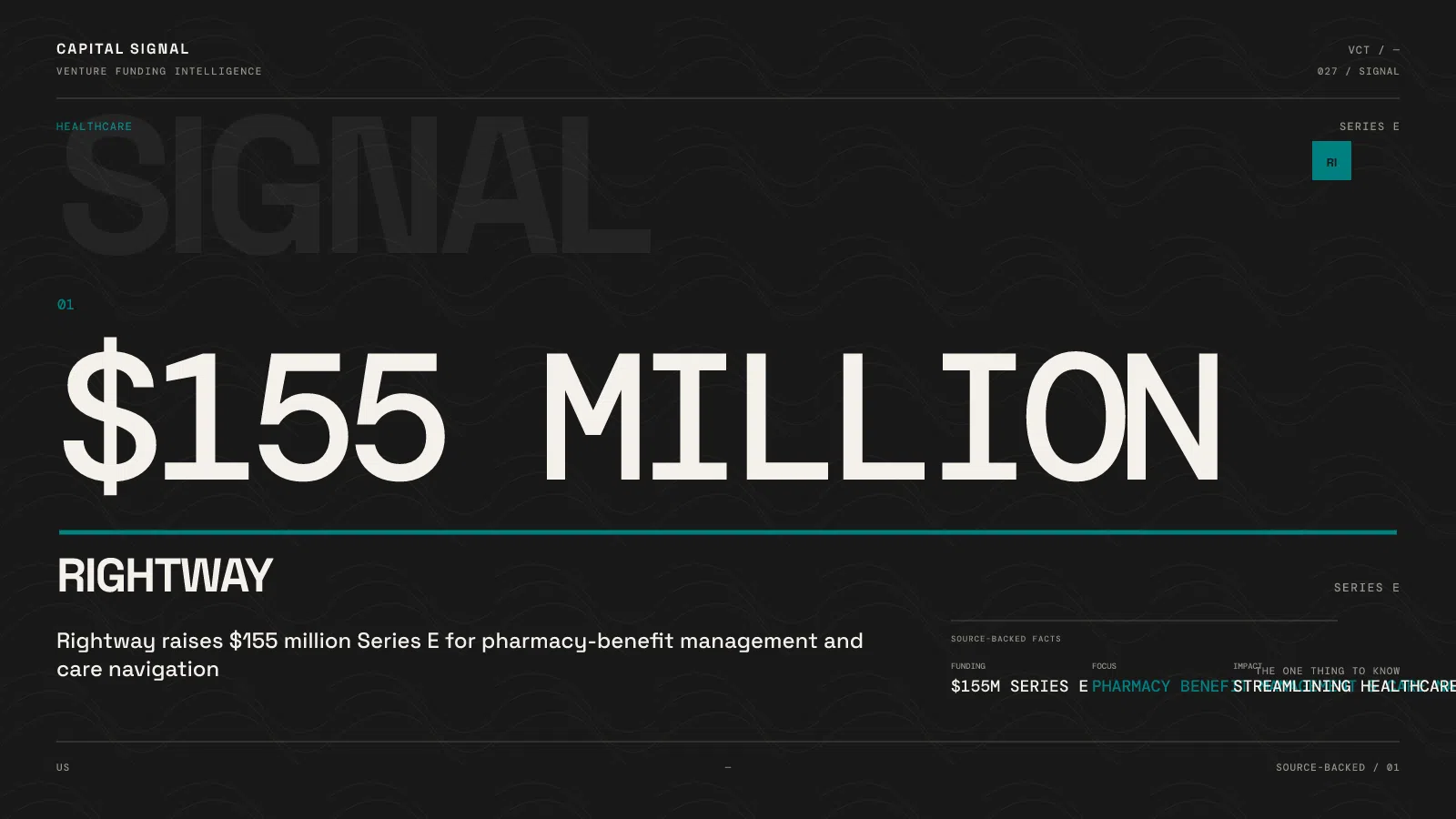
Capital is already backing closely related models. IVP led Solace’s $130M Series C on February 10 for an advocacy marketplace connecting patients and trained advocates. Rightway’s $155M Series E, announced September 24, finances pharmacy benefits and care navigation for employers. Rightway’s company announcement supports the financing comparison; its employer buyer and pharmacy business make it an adjacent benchmark, rather than a direct equivalent to Baba.
The category’s promise depends on completing expensive human work more reliably. Baba’s next proof should connect fewer administrative hours to collected revenue and independently measured patient outcomes. If payment increasingly depends on results, answering faster will matter less than showing that the patient actually received the intended care.
Follow Venture Capital Tracker on Google
Add VCT as a preferred source to see more of our venture-capital reporting in Google Search.
Editorial note: AI tools assisted with research, structure, or drafting. Venture Capital Tracker retains human editorial responsibility for factual accuracy, relevance, and source quality before publication.