· Venture Capital Tracker · venture-capital
Waymo Closes $5B First Debt Financing After $16B Series E
Waymo closed its first debt financing: a $5 billion syndicated term loan led by PIMCO, Blackstone and Sixth Street to fund U.S. and international robotaxi expansion.
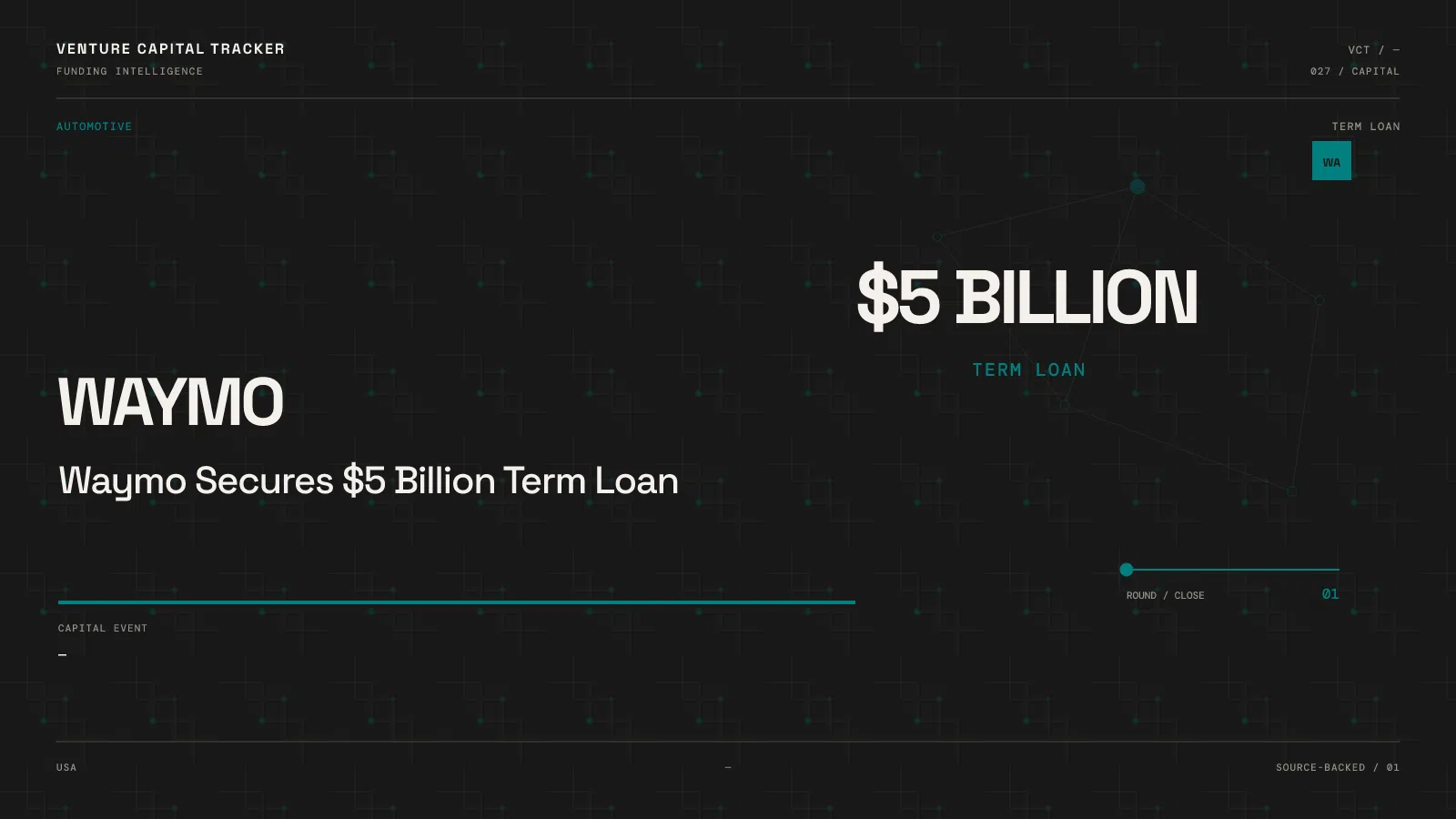
Waymo has closed a $5 billion syndicated term loan, its first debt financing, adding a new layer to the robotaxi developer's capital stack only eight months after a $16 billion equity round.
PIMCO, Blackstone and Sixth Street were the lead syndicated lenders. Capital Group, Loomis Sayles and T. Rowe Price were significant lenders, while Apollo, Blue Owl, Diameter Capital Partners, Franklin Templeton, Fidelity Management & Research Company, HPS Investment Partners and Oaktree also participated. Goldman Sachs was the sole lead bookrunner.
The transaction closed on October 8, 2026. Waymo did not disclose the loan's interest rate, maturity, collateral package, amortization schedule or covenants.
The financing at a glance
| Item | Detail |
|---|---|
| Financing type | Syndicated term loan |
| Amount | $5 billion |
| Status | Closed |
| Date | October 8, 2026 |
| Company | Waymo, an Alphabet subsidiary |
| Lead lenders | PIMCO, Blackstone and Sixth Street |
| Bookrunner | Goldman Sachs |
| Use of proceeds | U.S. and international autonomous ride-hailing expansion |
| Terms not disclosed | Pricing, maturity, collateral and covenants |
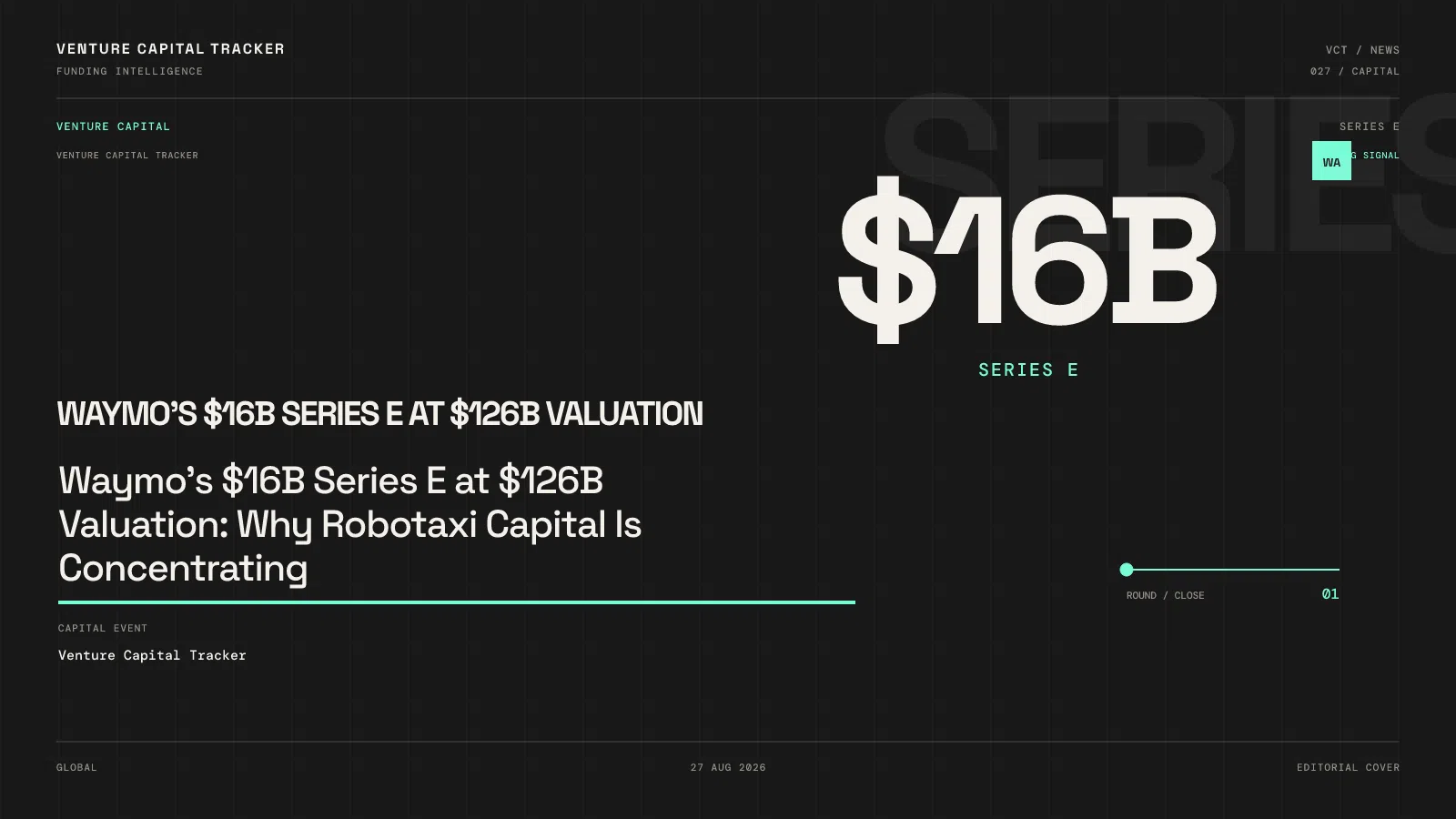
This is debt, not venture equity. It does not establish a new valuation, and the lenders should not be described as equity investors in Waymo. The company's most recent disclosed equity valuation remains the $126 billion post-money valuation attached to its February 2026 Series E.
Why Waymo is adding debt now
Waymo said the loan will support the expansion of its fully autonomous ride-hailing service in the United States and internationally. The company also said it launched service in its fifteenth U.S. city in September and has announced additional international markets.
The timing matters. Waymo's $16 billion Series E gave the business a large equity cushion for a capital-intensive rollout. Adding a term loan after that raise suggests the company can now attract institutional credit on a scale usually reserved for mature businesses, infrastructure projects or companies with substantial sponsor support.
For existing shareholders, debt offers one obvious advantage: it provides cash without issuing another block of equity. But it also changes the risk profile. Interest and principal must be paid regardless of whether new markets reach profitability on schedule.
Because Waymo disclosed none of the core economics, the $5 billion headline cannot yet answer the most important credit questions:
- whether the facility is secured by vehicles, technology assets, receivables or broader corporate guarantees;
- whether Alphabet provides any guarantee or other support;
- how quickly the loan amortizes;
- what financial or operating covenants apply; and
- whether the facility contains delayed-draw or accordion features.
Until those terms are public, the safest interpretation is that Waymo has gained substantial financial flexibility—not that lenders have removed the operating risk from robotaxi expansion.
A $21 billion capital year, with two different instruments
Waymo has now disclosed $21 billion of financing in 2026 across two transactions: $16 billion of equity and $5 billion of debt. Those amounts should not be combined into a single venture round.
The distinction matters for market comparisons. Equity capital absorbs losses and determines ownership and valuation. Term debt ranks ahead of equity in the capital structure and brings contractual repayment obligations. A company can raise both in the same year for very different reasons: equity to fund long-duration technology and market development, and debt to finance a more predictable phase of commercial deployment.
Waymo's lender group is also unusually broad. It spans traditional asset managers, private-credit specialists and alternative-investment firms. That syndication spreads exposure while giving Waymo access to multiple pools of institutional capital.
What competitors focused on—and what investors should watch
Early coverage from TechCrunch, Reuters and Bloomberg centered on the size of the loan and Waymo's expansion plans. Those are the immediate news points. The more important analytical question is whether robotaxi economics are becoming financeable beyond equity.
Three indicators will determine whether this loan represents a durable change in the sector's funding model:
- Market-level utilization: more paid rides per vehicle can improve the revenue generated from each unit of fleet capital.
- Operating intensity: cleaning, charging, maintenance, depot operations, mapping and customer support can keep the business more labor- and infrastructure-heavy than a software platform.
- Debt service visibility: lenders ultimately need confidence that Waymo can generate or access sufficient cash to service the facility through expansion cycles.
A successful debt-funded rollout could establish a template for other late-stage autonomous-vehicle companies. A rollout that remains dependent on repeated parent or equity support would make the loan look more like bridge capital within Alphabet's broader balance-sheet ecosystem.
The bottom line
Waymo's $5 billion term loan is one of the largest private-company debt financings of 2026 and a milestone for the autonomous-vehicle sector. It confirms that large institutional lenders are willing to finance Waymo's expansion after its record equity raise.
But the transaction should be classified precisely: a closed debt facility, not a venture round, and not a new valuation event. The next useful disclosure will be the loan's pricing and security package—or operating data showing how quickly the new capital converts into commercially productive robotaxi capacity.
Editorial note: AI tools assisted with research, structure, or drafting. Venture Capital Tracker retains human editorial responsibility for factual accuracy, relevance, and source quality before publication.