· Venture Capital · 3 sources · Updated · Verified
VECKTA Raises $11M Series A for Onsite Energy Procurement
Origin Ventures led VECKTA's $11M Series A. Its onsite-energy platform faces tests in project conversion, buyer trust, recurring revenue, and procurement economics.

By Venture Capital Tracker
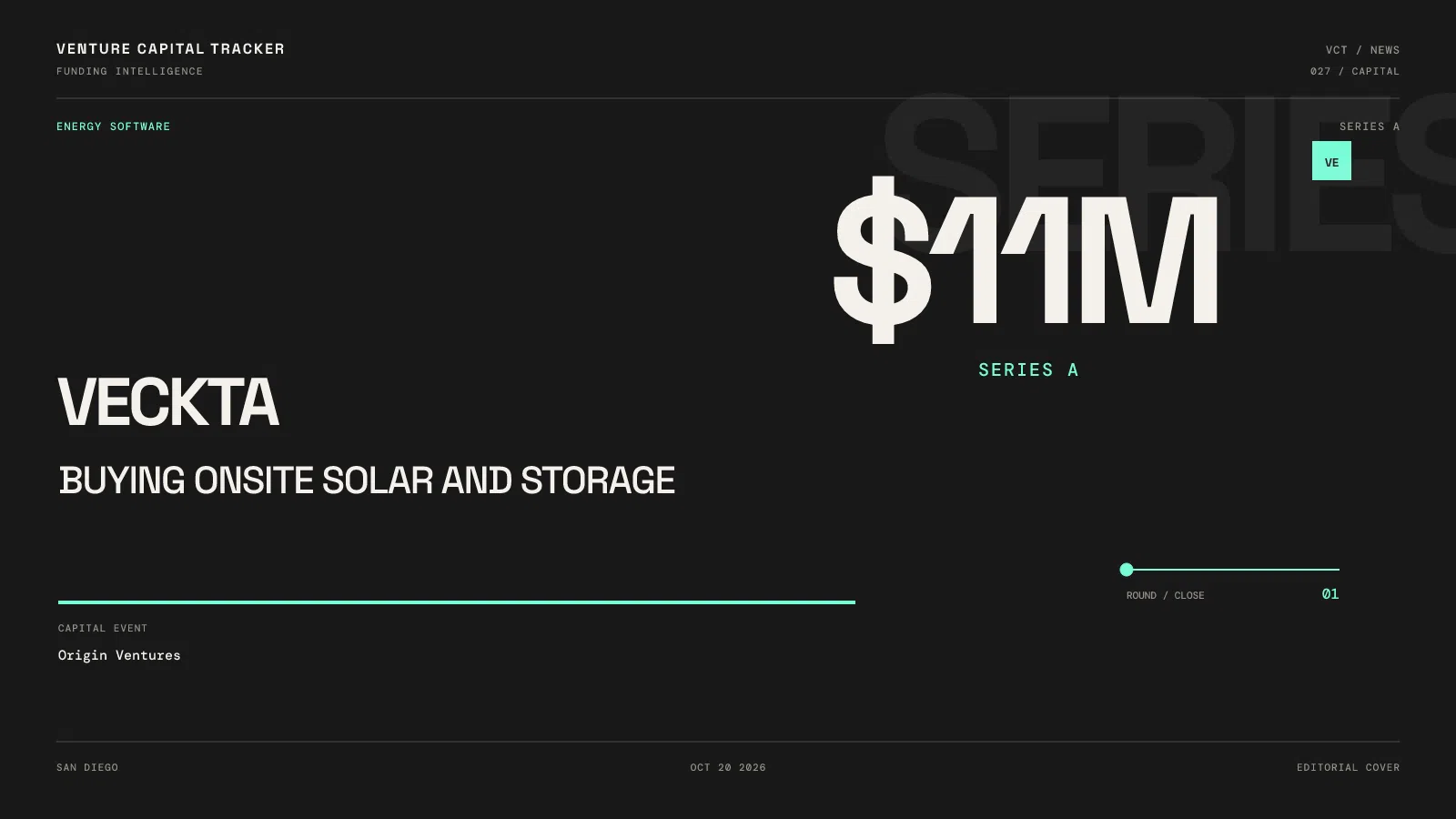
VECKTA announced an $11 million Series A led by Origin Ventures on October 20, 2026. The San Diego company builds planning and procurement software for businesses buying onsite energy systems. Valuation and exact legal closing date were not disclosed.
The syndicate includes Tech Square Ventures, VoLo Earth Ventures, Cove Fund, Catalyst by Wellstar, Engage, Emerald Bay Ventures, She's Independent Investments, and Mobilize AI x Energy Ventures. This is capital for the company. It is separate from financing for customers' solar or storage installations.
The buyer's decision is the product
VECKTA connects site screening, system design, and comparable supplier proposals. Instead of asking a customer to evaluate unrelated installer pitches, it helps define a common project scope and compare bids against it.
The commercial opportunity is reducing the friction between identifying a viable energy project and actually buying it. A large property portfolio may have many possible sites but limited time for engineering, procurement, financing, and internal approval.
Software can make that process more repeatable. Its value depends on the quality of the recommendation and the percentage of screened opportunities that turn into operating assets. A fast assessment is useful only when the assumptions survive detailed diligence and construction.
Savings claims need comparable baselines
VECKTA reports that customers contracted projects at 128 sites this year, with prices 20%–45% below bids they had obtained themselves. The company also describes itself as profitable. These are company-reported claims, not independently audited financial results; the release does not disclose revenue, earnings, or the profit measure used.
A lower bid is not automatically a lower lifetime cost. Buyers need to compare equipment, warranty coverage, maintenance, construction risk, financing, expected output, and performance guarantees. The baseline must describe an equivalent system with equivalent obligations.
That makes procurement quality a defensible part of the product. If a platform can preserve comparability and document the assumptions, it can help a finance team approve a project with greater confidence. If scope differences explain the savings, the headline percentage says much less.
Project value is different from platform revenue
Energy platforms often discuss the dollar value of projects they assess or help procure. That measures opportunity or customer expenditure. It does not establish how much the software company earns.
VECKTA has not disclosed its pricing, revenue mix, take rate, or margins. It would therefore be premature to value the business by applying a software multiple to project volume.
The relevant economics depend on who pays, when payment is earned, whether revenue recurs after procurement, and how much human support each project requires. A portfolio subscription and an installation success fee produce different incentives and cash-flow patterns.
Trust is a competitive asset
Customers can use consultants, engineering firms, installer-led proposals, or internal teams to evaluate onsite generation. VECKTA must demonstrate that its combination of analysis and procurement improves the decision enough to justify another platform.
Independence matters. Buyers should understand whether supplier fees, referral payments, or commercial relationships influence recommendations. Clear selection criteria, disclosed incentives, and a consistent bid process can strengthen confidence without requiring a customer to inspect every calculation.
The more durable product may extend beyond the first purchase. Asset monitoring, tariff changes, maintenance schedules, and re-underwriting can create recurring work after installation. That is an opportunity, but it requires evidence that customers continue using the platform once a project is complete.
What the Series A should demonstrate
The strongest next disclosures would connect procurement activity to business performance: conversion from screened sites to contracts, time to deployment, recurring revenue, customer retention, and realized system output against the original forecast.
The funding builds on an earlier company-announced financing in June 2023. That release did not state an amount, so it should not be assigned a guessed value or added to a fabricated cumulative total.
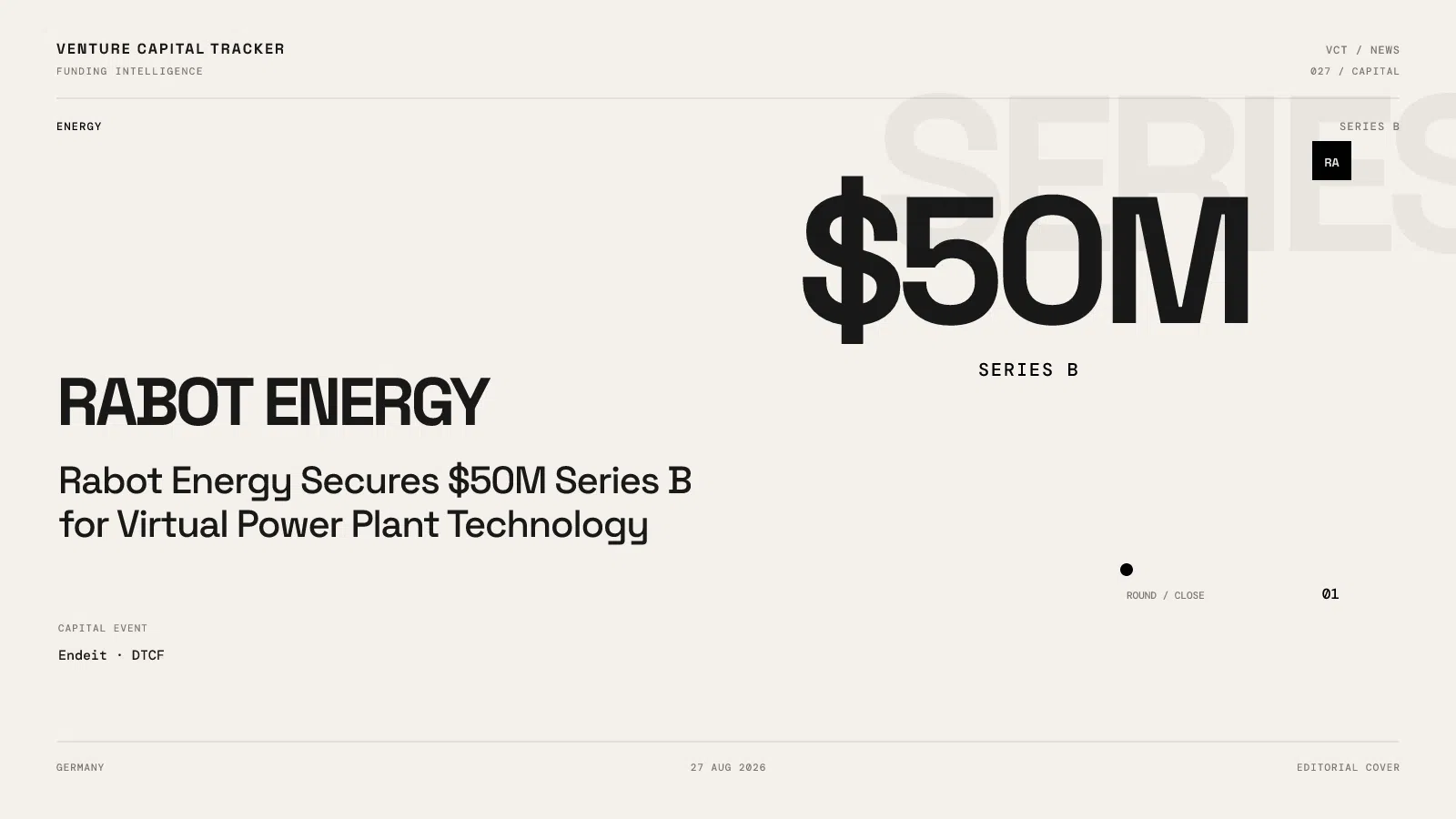
The broader energy theme also appears in Rabot Energy's $50M Series B. Rabot coordinates household energy assets; VECKTA helps commercial buyers decide what to build and procure. The common investment question is how software turns energy complexity into measurable customer returns.
Follow Venture Capital Tracker in Google
Add VCT as a preferred source to make our venture-capital coverage easier to find in Google Search.
Last updated:
Editorial note: AI tools assisted with research, structure, or drafting. Venture Capital Tracker retains human editorial responsibility for factual accuracy, relevance, and source quality before publication.