· Updated · Venture Capital Tracker Editorial · investment-strategies
Angle Health Raises $200M Series C at $2.7B — Plus a $400M Tender
Vitruvian led Angle Health’s $200M Series C (YC W20) at $2.7B with a $400M tender. Who buys level-funded SMB plans, why profitability matters, and why a European growth firm fits.
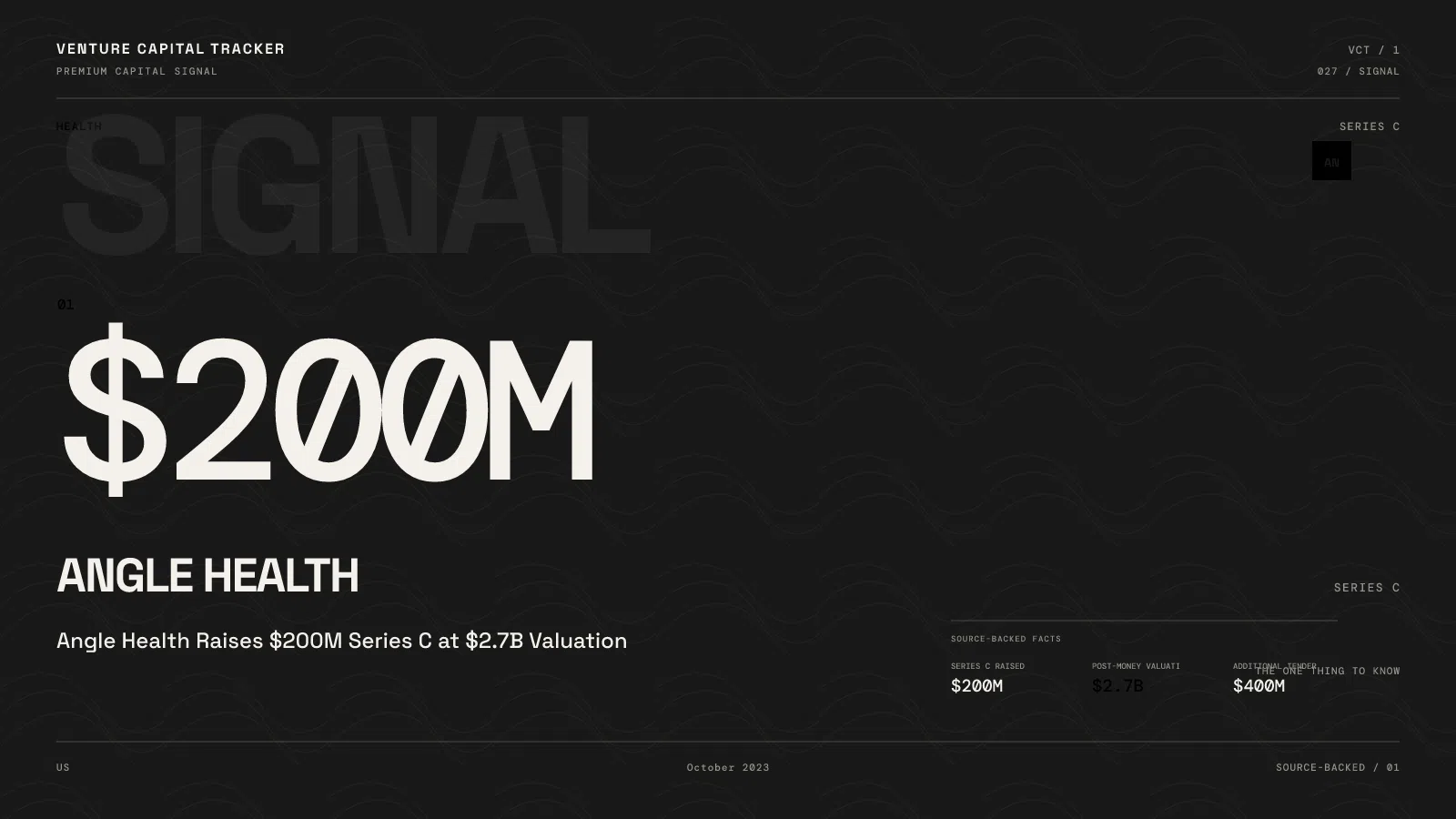
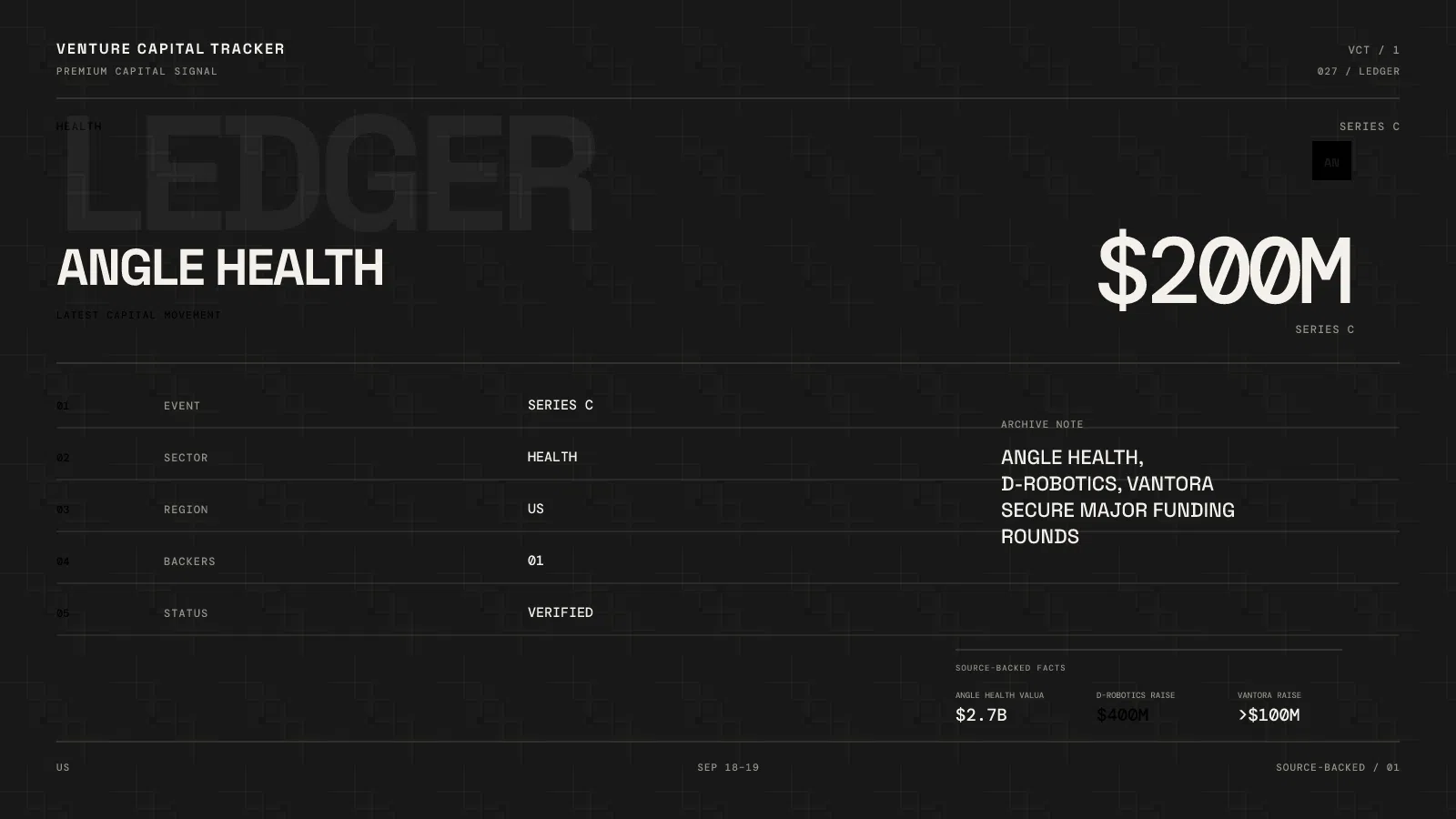
Angle Health announced a $600 million equity package on September 18, 2026: $200 million Series C plus a $400 million tender, at a $2.7 billion valuation. Vitruvian Partners led. Town Hall Ventures joined; Blumberg Capital, Portage Ventures, PruVen Capital, and Y Combinator returned. Closing is expected later this month.
this is not another agent-only Series C. Angle discloses profitability, ~$1 billion annualized premium-equivalents, and 5,000+ employers — then uses two-thirds of the package for liquidity, not growth equity.
Not Angle Protocol.
Key facts
| Field | Detail |
|---|---|
| Company | Angle Health — San Francisco; YC W20 |
| Primary | $200M Series C |
| Tender | $400M (employees / early investors) |
| Headline mark | $2.7B (company) |
| Secondary mark | ~$2.5B (WSJ via TNW) — below primary |
| Lead | Vitruvian Partners |
| New | Town Hall Ventures (Andy Slavitt co-founded) |
| Returning | Blumberg, Portage, PruVen, YC |
| Traction (company) | 5,000+ employers; ~$1B premium-equivalents; 120% YoY growth; 4 quarters EBITDA + GAAP net income |
| Renewal pricing (company) | Median 5–7% vs ~18% SMB market (Morgan Health cited) |
| ARR / take rate | Not disclosed as SaaS ARR |
| Close status | Expected later in September — announced, not yet closed |
Who uses the product — and for what job
Users: U.S. small and midsize employers (as few as two employees in some states), brokers quoting groups, and employees navigating care.
Job: buy level-funded plans — predictable premiums with stop-loss, surplus sharing when claims stay low — without choosing pure fully insured (expensive, predictable) or pure self-funded (volatile). Angle’s Benefit Builder turns a census into underwritten quotes in minutes and layers AI navigation onto care pathways (meds, infusions, outpatient surgery, radiology partners named in the release).
That is an insurance + admin job, closer to a carrier/TPA replacement than to ICHRA budget tooling like Thatch.
Why now
- Employers face the largest health-cost jump in two decades (WSJ cite in Angle’s release) while SMB employment keeps growing.
- Portage’s prior $134M (Dec 2025, per TNW/WSJ) left a mark that this round more than doubles — growth capital arrives with a liquidity event for a 2019-founded company that claims GAAP profitability.
- Vitruvian’s Jeremy Gelber quote frames “industry-leading growth and retention” plus “financial stability” — the Series C sells durable P&L, not a research demo.
Why Vitruvian — portfolio fit
Vitruvian is a London-rooted global growth firm (\$23B+ active funds in its About copy) with healthcare and asset-light tech scale-ups on its list. Angle asked for healthcare × technology × financial-services expertise — the Strategic rationale in the release is explicit.
Y Combinator returning keeps batch signal on a W20 alum now at growth scale. Town Hall adds U.S. health-policy credibility. Portage returning from Series B continuity. **
| Investor | Fit |
|---|---|
| Vitruvian | Growth equity; healthcare/fintech scale muscle |
| YC | Seed continuity; founder network |
| Town Hall | Policy + health services domain |
| Portage / Blumberg / PruVen | Returning conviction |
Strategic rationale: take a growth lead that can follow for years, open a large tender so early holders and employees do not force a sale, and keep YC for talent without needing a U.S. mega-fund to own the round.
Competitive map
- ICHRA platforms (e.g. Thatch) — different product; individual budgets vs level-funded group plans.
- Incumbent carriers / TPAs — Angle’s stated foil on opacity and renewal spikes.
- Broker tools without risk — Angle carries insurance economics; diligence must include loss ratios, not only software margins.
What remains undisclosed
- Exact primary vs secondary ownership after close.
- Whether $2.7B is pre- or post-money wording beyond “valuation.”
- Audited financials behind the GAAP profitability claim.
- Net dollar retention and broker concentration.
Implication
If the profitability and renewal claims hold, Angle is a bet that SMB health admin can look like growth software with an insurance float — and that European growth capital will pay up for U.S. benefits platforms that print cash, not just agent demos. The open question is whether the $400M tender at a lower secondary mark becomes the template for late-stage healthtech liquidity without an IPO.
Sources
- Angle Health announcement (Sep 18, 2026): https://www.anglehealth.com/post/angle-health-secures-series-c-financing
- TechCrunch: https://techcrunch.com/2026/09/18/y-combinator-insurance-tech-alum-angle-health-hits-2-7b-valuation/
- The Next Web (WSJ secondary mark): https://thenextweb.com/news/angle-health-600m-vitruvian-partners-2-7bn-valuation
Follow Venture Capital Tracker in Google
Add VCT as a preferred source to make our venture-capital coverage easier to find in Google Search.
Last updated:
Editorial note: AI tools assisted with research, structure, or drafting. Venture Capital Tracker retains human editorial responsibility for factual accuracy, relevance, and source quality before publication.