XBOW's $120M Series C: Autonomous Pentesting Moves Into the Enterprise
XBOW's Series C shows buyers are willing to pay for AI systems that continuously probe their own attack surface.
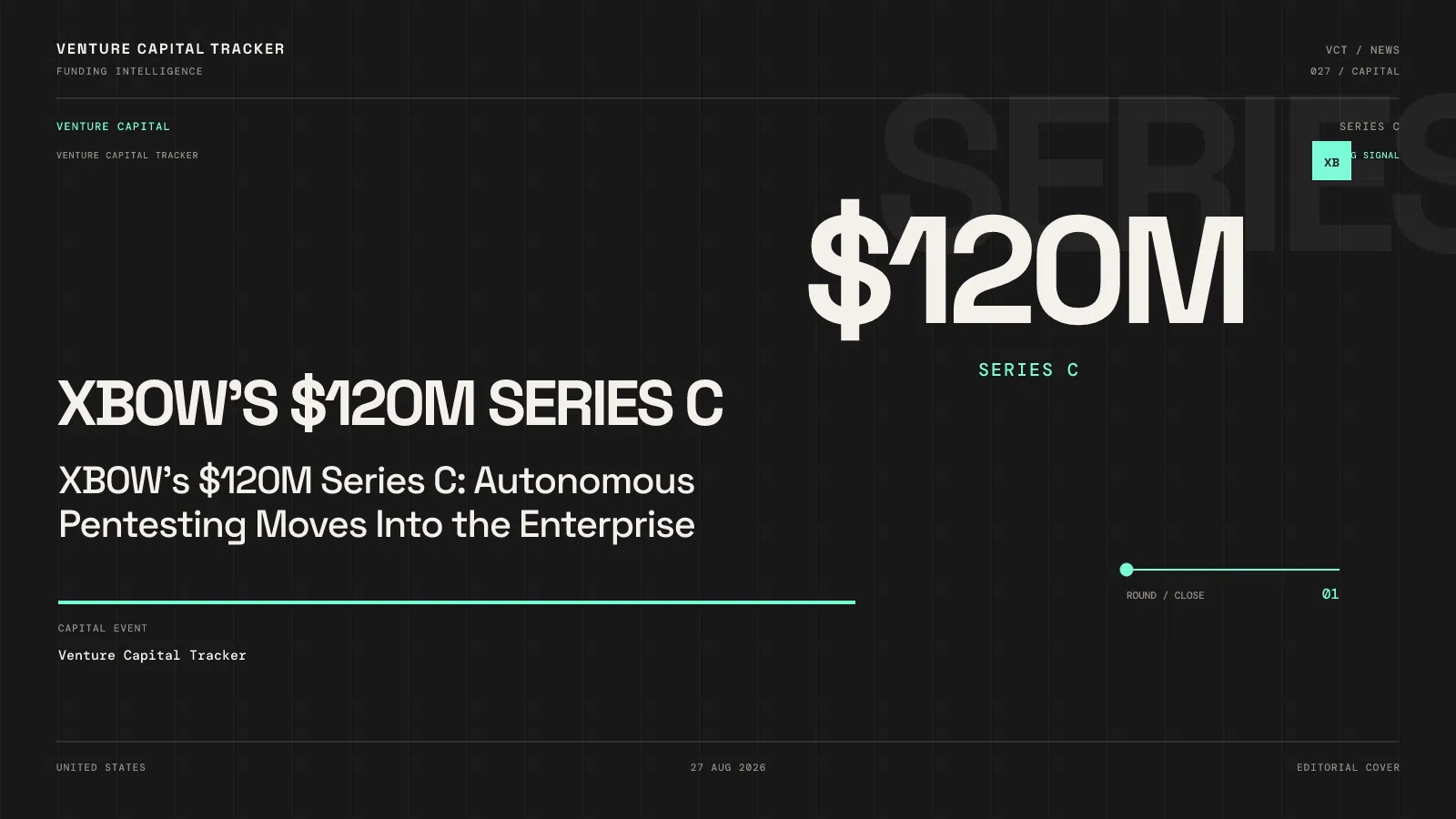
XBOW raised a $120M Series C in Q1 2026 per GeekWire. The company uses LLM-driven agents to perform continuous, automated penetration testing and bug discovery against enterprise environments.
The problem this startup is attacking
Traditional pentesting is point-in-time, bespoke, and expensive. Modern attack surfaces (SaaS integrations, identity providers, ephemeral cloud workloads) change faster than human-led audits can cover.
Why this is a live problem now
- Attack surface is expanding with every new SaaS tool adoption.
- Regulators and cyber insurers want continuous validation, not annual audits.
- LLM-driven agents can reliably execute recon + exploitation chains on many standard vulnerabilities.
Competitive map
- Horizon3.ai, Pentera, Cymulate (autonomous pentesting / BAS).
- Bishop Fox, HackerOne, Bugcrowd (services / crowdsourced).
- CrowdStrike, Microsoft Defender (platform plays).
Market signal (the number to remember)
- Cost of a data breach averaged $4.88M in 2024 (IBM). The ROI math for continuous pentesting is well-understood; budget is available.
Practical takeaway (operator + investor)
- Operators: Validate autonomous pentesting results against your SOC's triage capacity; automated findings without routing are noise.
- Investors: Offensive AI tooling is a category with durable enterprise pull; expect follow-on category winners in identity-layer attack simulation and agent red-teaming.
Sources
- GeekWire Seattle Q1 2026: https://www.geekwire.com/2026/bigger-checks-fewer-bets-seattle-startup-deal-count-drops-to-lowest-level-since-2020/
- IBM Cost of Breach 2024: https://newsroom.ibm.com/2024-07-30-IBM-Report-Escalating-Data-Breach-Disruption-Pushes-Costs-to-New-Highs
Share:
Editorial note: AI tools assisted with research, structure, or drafting. Venture Capital Tracker retains human editorial responsibility for factual accuracy, relevance, and source quality before publication.