Jeito Capital II's €1B European Biopharma Fund: LPs Back EU Healthcare at Scale
Jeito Capital's €1B Fund II cements the case that Europe can fund late-stage biopharma domestically, without exporting all growth-stage capital to the U.S.
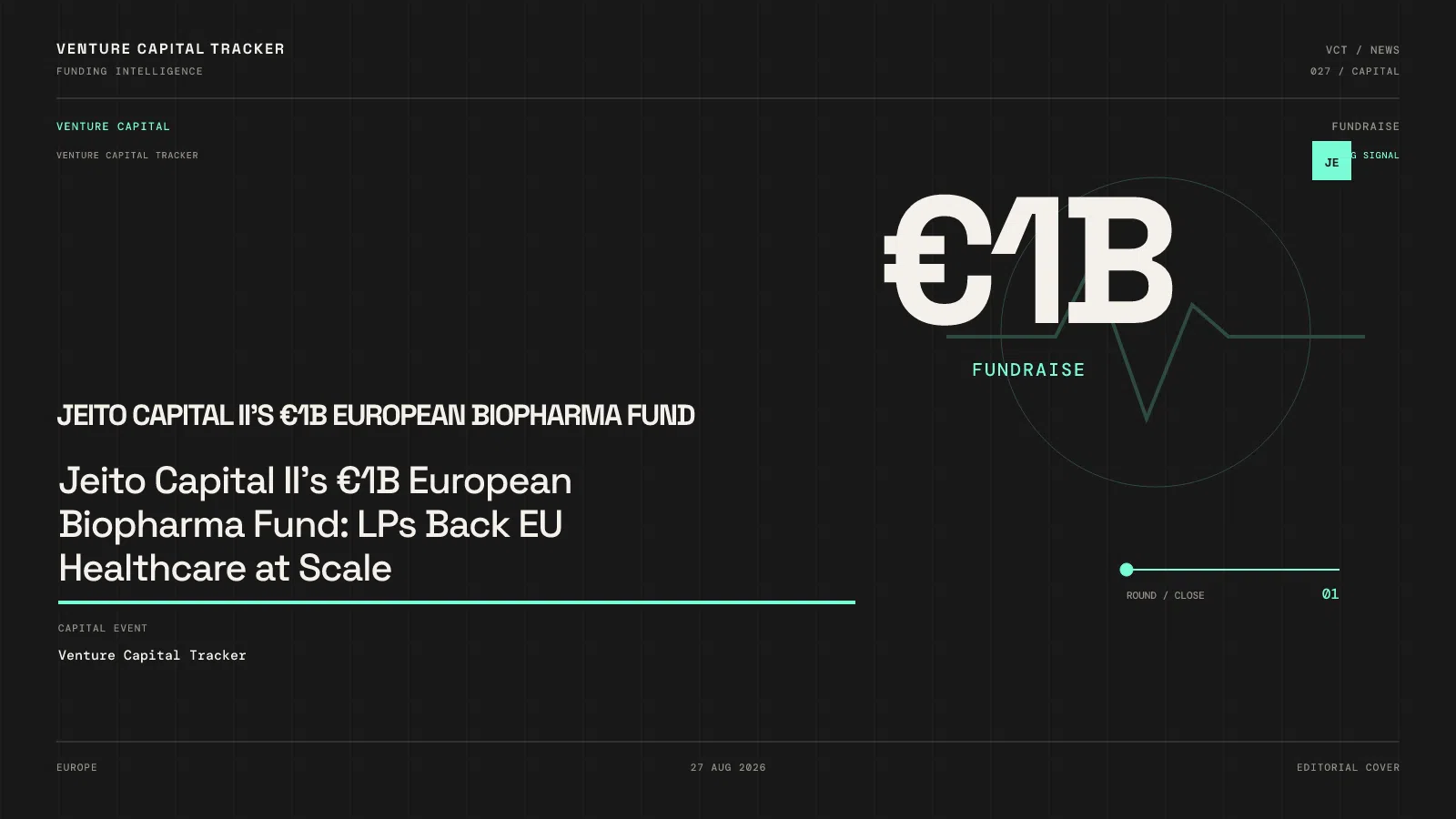
Paris-based Jeito Capital announced Jeito II, a €1B (~$1.2B) fund on April 8, 2026, for mid- to late-stage European biopharma companies.
The problem this fund is attacking
European biopharma has high-quality science but often raises U.S. growth capital, moving HQs and tax bases across the Atlantic. Fund vehicles of this size allow quality European clinical-stage assets to scale without forced relocation.
Why this is a live problem now
- AI-driven drug discovery has compressed pre-clinical timelines, increasing the number of candidates seeking growth capital.
- European universities and spin-outs remain strong sources of differentiated biology.
- Government-backed capital (Bpifrance and others) continues to anchor European biopharma.
Competitive map
- Sofinnova Partners, Forbion, Medicxi, Kurma Partners.
- U.S. firms with EU practices: Arch Venture Partners, OrbiMed, RA Capital.
- Corporate venture arms of pharma giants.
Market signal (the number to remember)
- €1B dedicated to mid-to-late stage European biopharma — in one fund — is unusual and consequential.
Practical takeaway (operator + investor)
- Biotech operators: European late-stage capital is a viable alternative to relocating for a Nasdaq path.
- Investors: EU biopharma funds are competing for a finite set of clinical programs; fund pacing and syndication matter.
Sources
- Yutori Scouts fund tracker: https://scouts.yutori.com/8b847103-9d57-41bd-b907-94108a38ecfe
- 2026-vc-news
- venture-capital
- fund-news
- +3 more
Editorial note: AI tools assisted with research, structure, or drafting. Venture Capital Tracker retains human editorial responsibility for factual accuracy, relevance, and source quality before publication.