Astranis's $455M: Small GEO Satellites for Affordable Connectivity
Astranis raised $455M in May 2026 to scale its small geostationary satellites, bringing dedicated connectivity to underserved regions and customers.
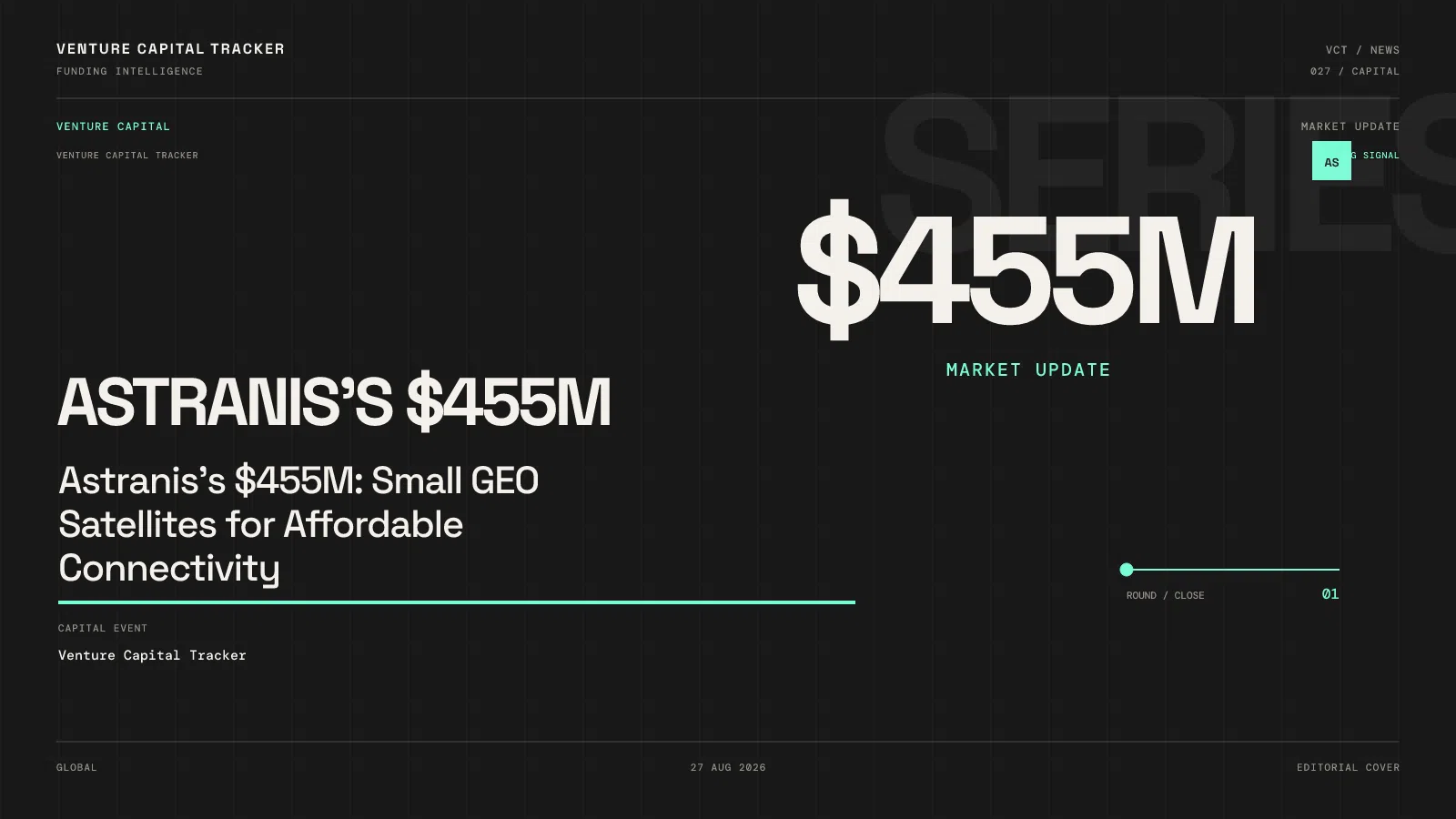
Astranis's $455M raise in May 2026 funds a differentiated space thesis: small, dedicated geostationary satellites that deliver targeted connectivity at a fraction of legacy cost.
The problem this startup is attacking
Traditional GEO satellites are huge, expensive, and slow to build. Astranis makes compact satellites dedicated to specific regions or customers — faster, cheaper, and reconfigurable.
Why this is a live problem now
- Billions still lack reliable broadband.
- Governments and telcos want sovereign, dedicated capacity.
- Small-GEO economics open new markets LEO constellations don't serve.
Competitive map
- LEO constellations (Starlink, OneWeb) for broad coverage.
- Legacy GEO operators (SES, Intelsat, Viasat).
- Other small-satellite manufacturers.
Market signal (the number to remember)
- $455M — a top space-tech round of the month, reflecting investor belief in dedicated-capacity satellites as a durable connectivity niche.
Practical takeaway (operator + investor)
Astranis shows space capital favors clear customer demand and differentiated economics. Founders should target underserved capacity needs; investors should value contracted connectivity demand and manufacturing throughput.
Sources
- PipelineRoad / Crunchbase (Astranis $455M, top 10 rounds): https://pipelineroad.com/news/20260508-top-10-biggest-funding-rounds-this-week-in-ai-and-tech
Follow Venture Capital Tracker in Google
Add VCT as a preferred source to make our venture-capital coverage easier to find in Google Search.
Editorial note: AI tools assisted with research, structure, or drafting. Venture Capital Tracker retains human editorial responsibility for factual accuracy, relevance, and source quality before publication.